

Pediatric Animal-Assisted Intervention at Mary Free Bed Kids
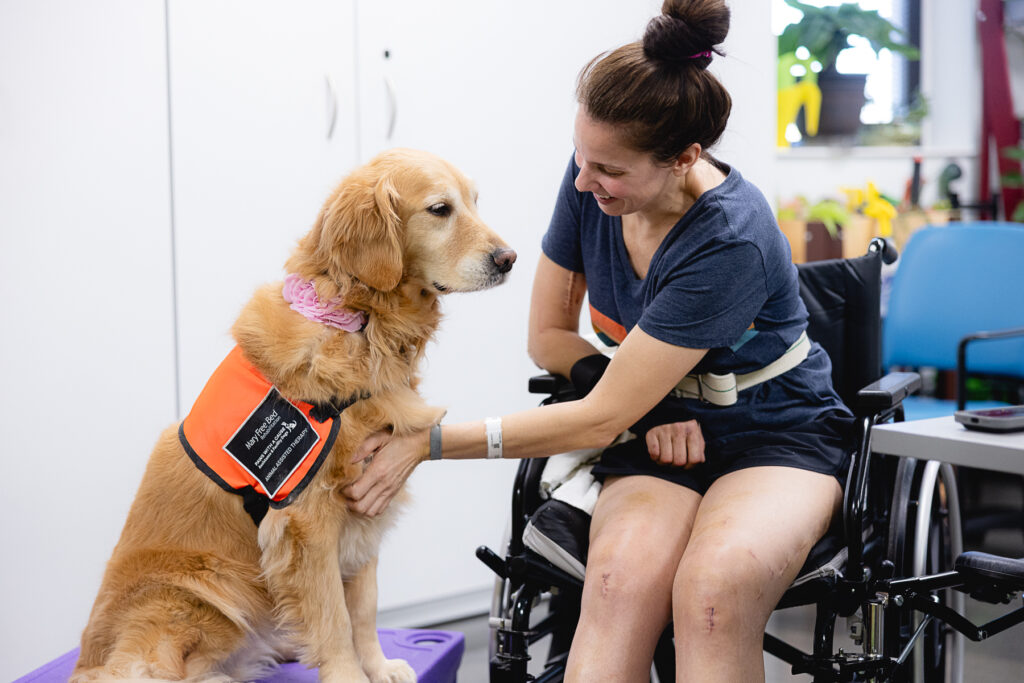
Children heal, learn and grow differently than adults. They explore the world through movement, curiosity, imagination and emotional connection. At Mary Free Bed Kids, we understand how to tailor therapy to a child’s unique emotional and developmental needs. The Animal-Assisted Intervention (AAI) Program blends evidence-based rehabilitation with the joy of interacting with specially trained therapy dogs. This unique program enhances movement, boosts confidence, reduces anxiety and helps children stay engaged during therapy in ways that feel natural, supportive and fun.
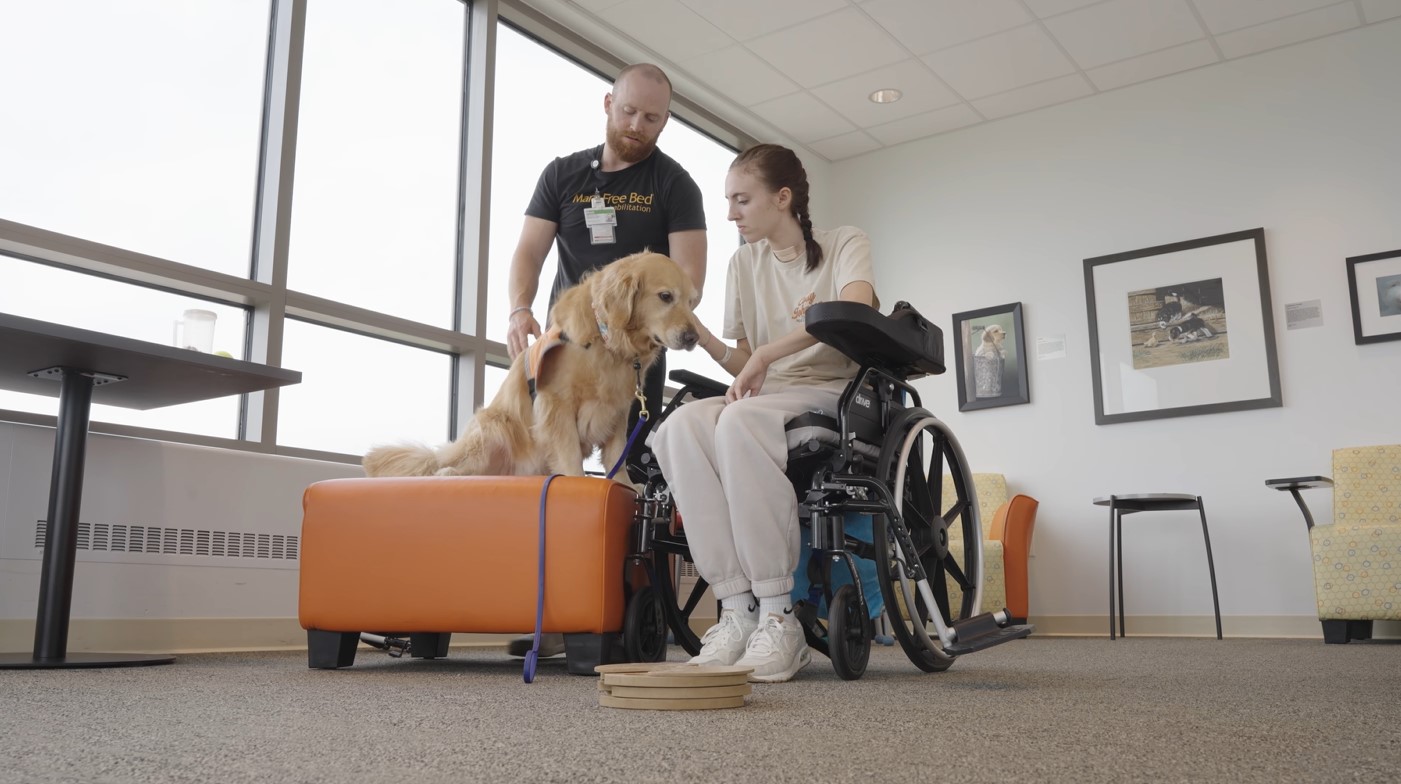
AAI goes beyond visiting with a dog—it’s a structured therapeutic approach that incorporates trained animals into pediatric rehabilitation sessions. Designed for patients 18 and younger, our program supports a wide range of goals, including:
- Improving mobility and stamina.
- Improving coordination and fine-motor skills.
- Strengthening communication and emotional regulation.
For many children, a therapy dog becomes a motivating partner who turns challenging work into joyful progress.
Why Animal-Assisted Intervention Matters
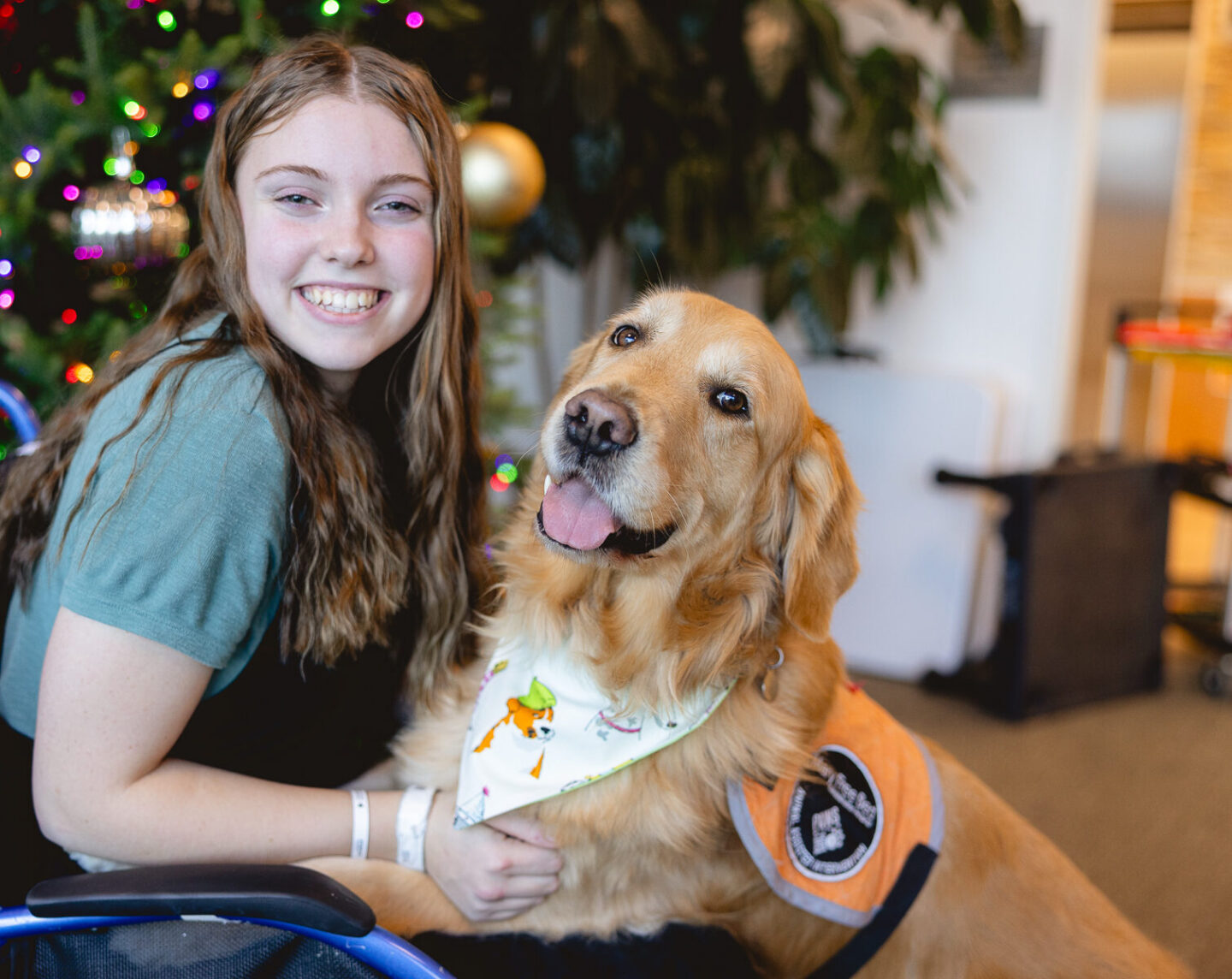
Children process their environment through sensory input, play and relationships. When therapy feels intimidating or overwhelming, engagement decreases, slowing progress. By integrating a therapy dog into a child’s rehabilitation plan:
Comfort and confidence increase.
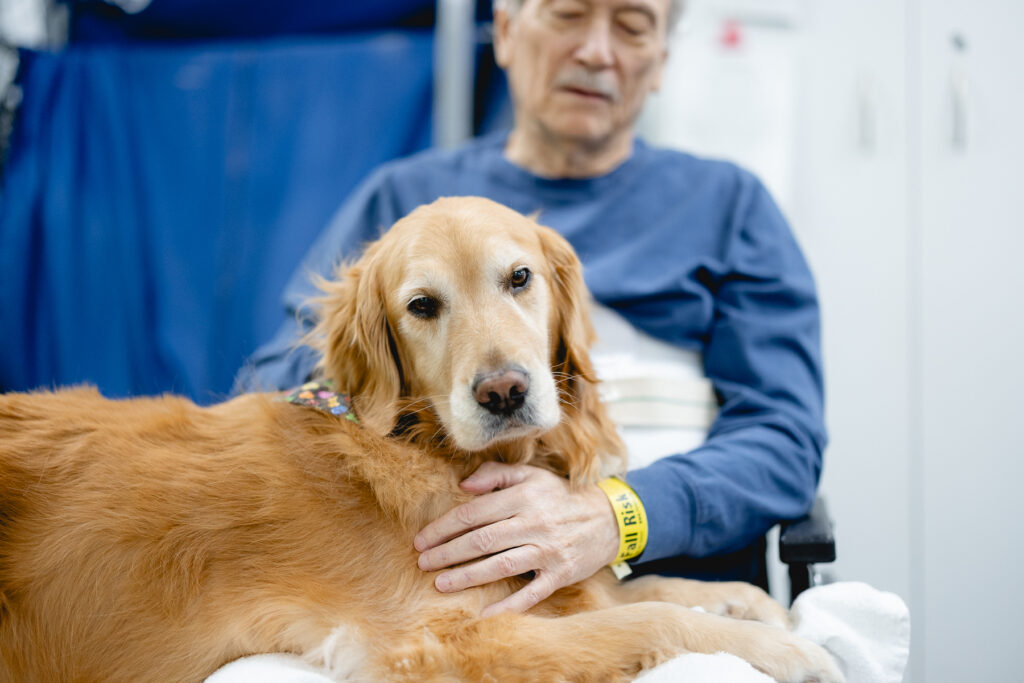
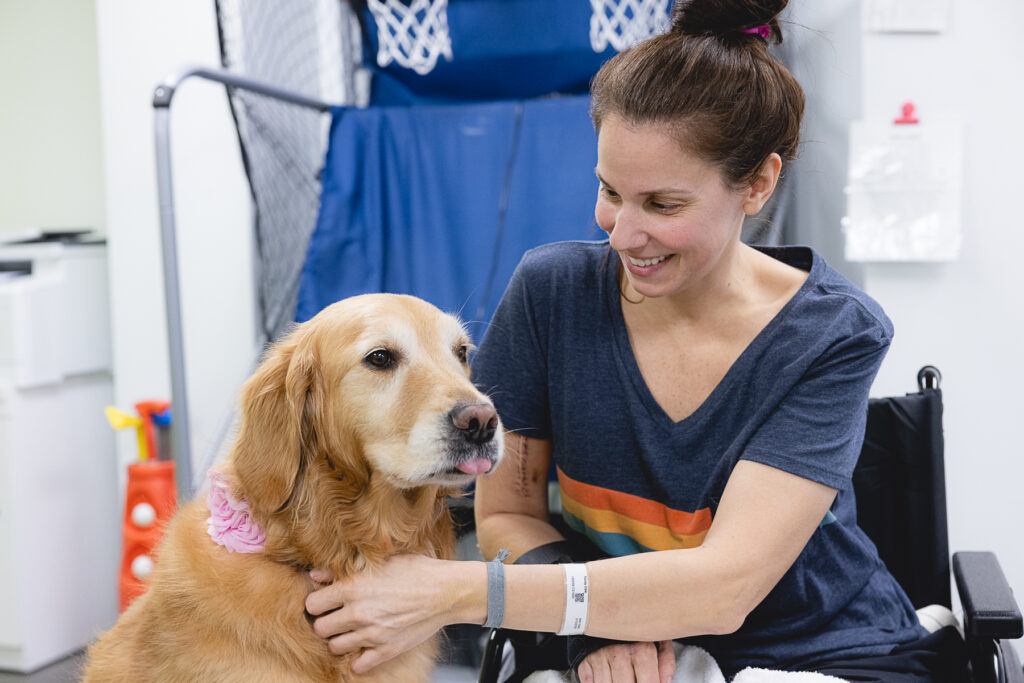
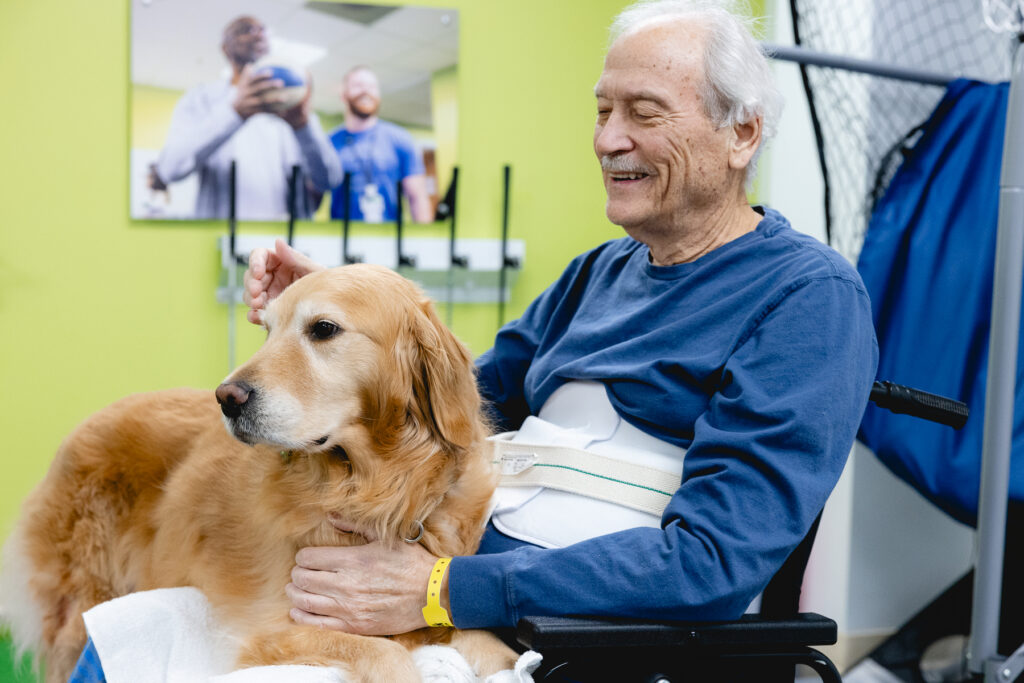
Dogs provide non-judgmental companionship, easing fear, anxiety during separation from caregivers. When children feel safe, they’re more willing to try new tasks.
Therapy becomes more meaningful.
When a child is asked to stand, walk, reach, or speak for the dog, the task becomes more meaningful. Instead of focusing on difficulty or discomfort, children focus on playing and connecting.
Motivation skyrockets.
Many children will walk farther to brush a dog. They’ll also annunciate to give a command, or complete fine-motor tasks to reward their furry partner with a treat.
Children learn how to self-regulate.
AAI boosts social engagement and self-esteem while reducing stress. The calming presence of a dog can help children who struggle with sensory processing, anxiety, trauma histories or difficulty self-regulating in busy environments.
How Our Program Works
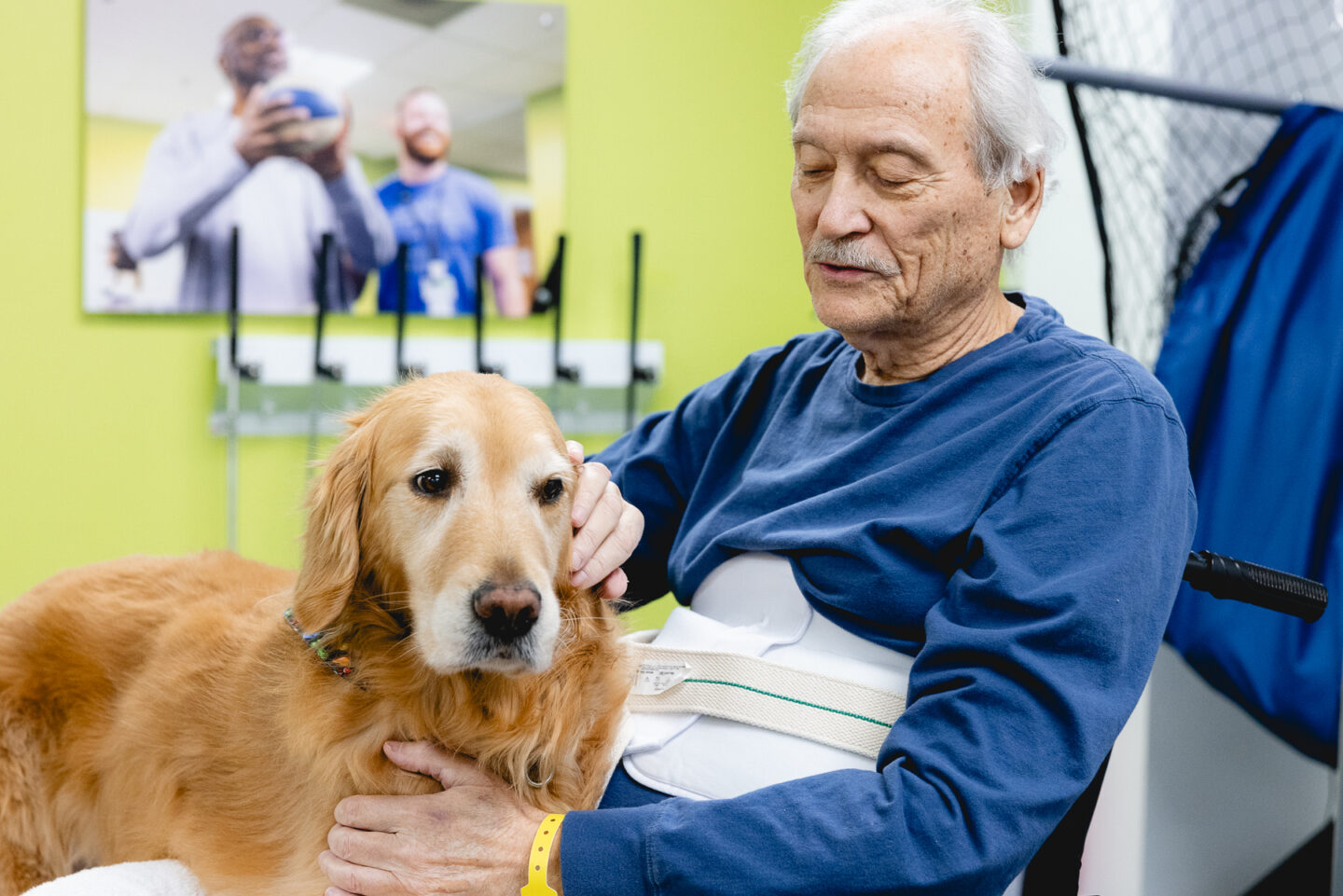
At Mary Free Bed Kids, AAI is intentionally structured as part of a child’s overall rehabilitation plan. Therapy dogs work under the supervision of recreational therapists, who collaborate with physical, occupational and speech therapists to integrate the dog’s skills into treatment goals.
Highly Trained Therapy Dogs
Our dogs undergo rigorous training and certification. They learn how to respond calmly to mobility devices, encourage movement, cue posture and participate in communication-based tasks.
Integrated Treatment Sessions
AAI may be incorporated into physical therapy, occupational therapy, speech-language pathology, recreational therapy or psychology. Each activity is tied to a clinical goal to maximize meaningful progress.
What AAI Sessions Look Like
AAI sessions vary based on a child’s goals.
Physical therapy with an AAI dog includes:
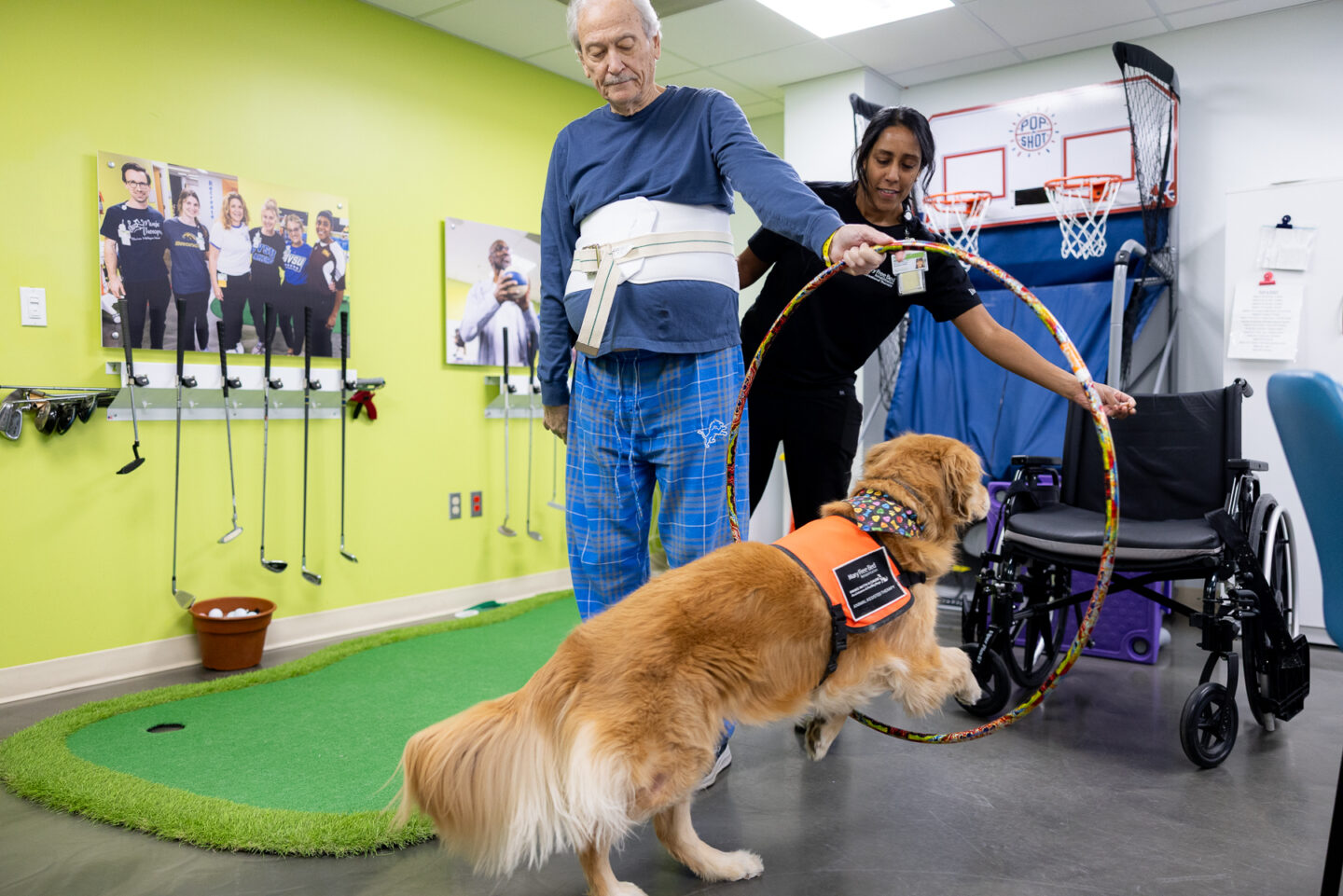
- Walking the dog using an adaptive leash.
- Stepping over obstacles as the dog models movement.
- Throwing a ball to strengthen range of motion.
- Practicing transfers to “get closer” to the dog.
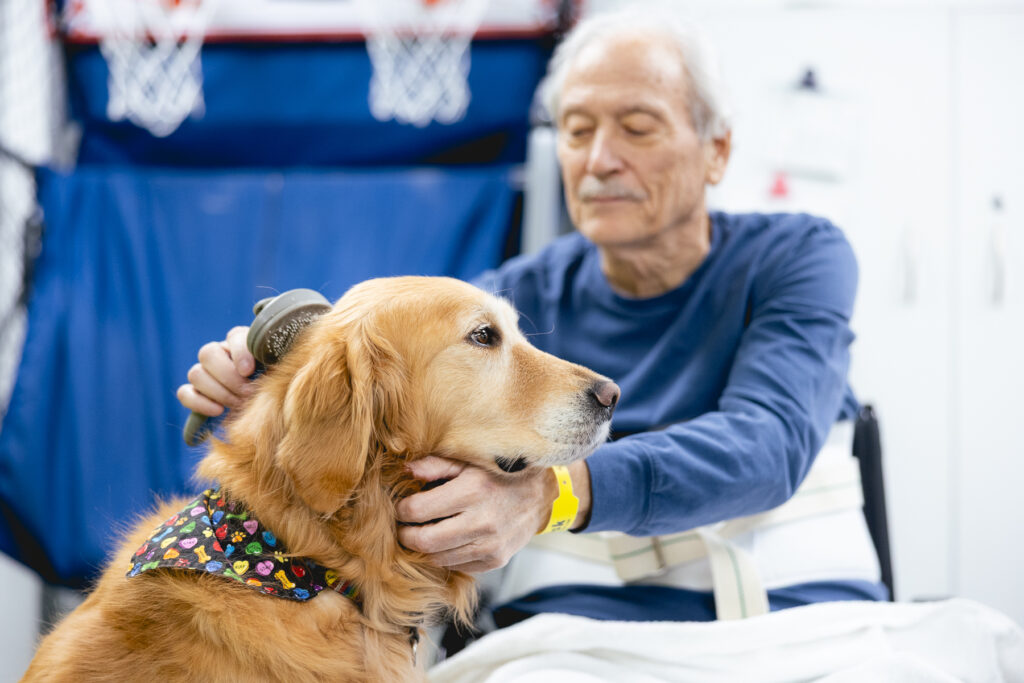
- Balancing while brushing or petting the dog.
Occupational therapy with an AAI dog includes:
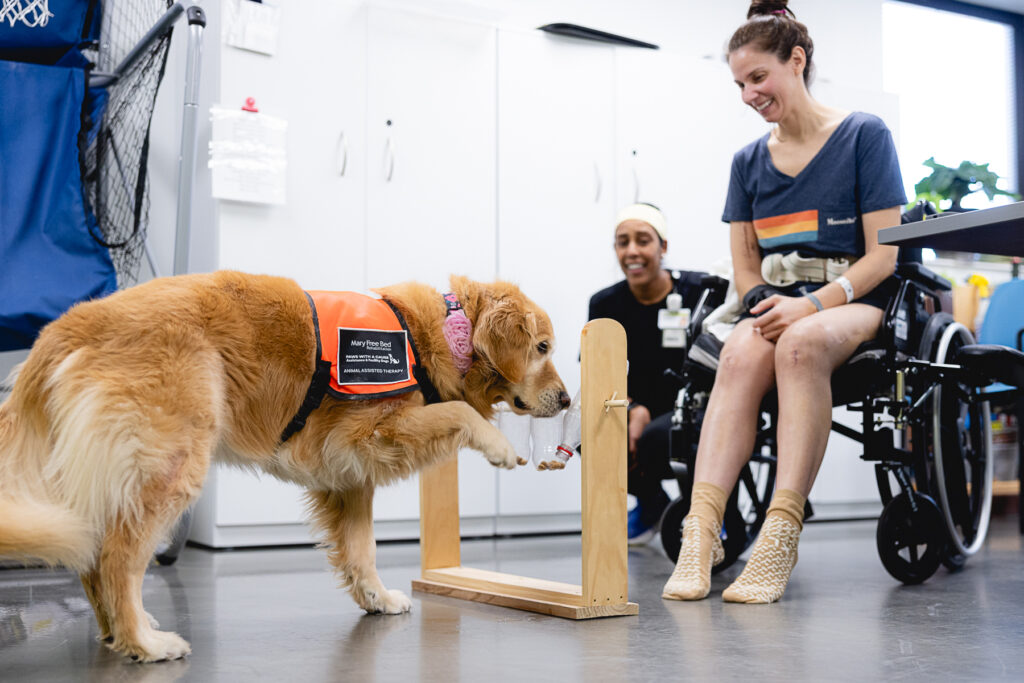
- Fine-motor tasks like clipping leashes or opening treat bags.
- Bilateral coordination activities.
- Sensory exposure through interactive play.
- Strengthening upper-body muscles through play.
Speech therapy with an AAI dog includes:
- Practicing expressive language by asking the dog to sit or shake.
- Articulation work through dog-themed tasks.
- Learning how to take turns and communicate in social settings.
For children struggling with regulation, anxiety or trauma, therapy dogs provide a safe, comforting presence.
Who benefits from AAI?
AAI supports children with:
- Cerebral palsy
- Autism spectrum disorder
- Developmental delays
- Down syndrome
- Traumatic brain injury
- Orthopedic injuries
- Sensory processing disorders
- Anxiety or adjustment-related conditions
- Speech and language delays
- Behavioral regulation needs
- Complex medical conditions
Each child is evaluated individually to ensure AAI is clinically appropriate and aligned with treatment goals.
Supportive Spaces
Our therapy spaces are designed specifically for children and dog-friendly activities. They include child-sized equipment, sensory-aware areas and zones designated for movement and interactive play. Caregivers may participate to reinforce gains at home, and every session integrates seamlessly with the child’s therapy plan.
Safety and Standards
Safety is our top priority. At Mary Free Bed Kids AAI dogs:
- Receive regular health screenings.
- Follow strict grooming protocols.
- Are trained for clinical environments.
- Work limited hours to prevent fatigue.
- Respond calmly to medical equipment.
We follow infection control procedures, allergy checks, parental consent processes and clear guidelines for safe interactions.
What can families expect?
Families often observe:
- Reduced fear during therapy.
- Increased verbal communication.
- Improved participation.
- More confidence and willingness to try new tasks.
- Better emotional regulation.
Many parents also report improved behavior and confidence at home, as well as lasting emotional connections formed through AAI.
Why Families Choose Mary Free Bed Kids
Families choose Mary Free Bed Kids because:
- Our therapists are specially trained in pediatric and adolescent rehabilitation.
- We provide measurable clinical outcomes.
- Our approach to care is family centered.
- We utilize a developmentally aligned, play-based approach
Our mission is to help every child move, communicate, learn and thrive.
Schedule Pediatric Animal-Assisted Intervention
Your child deserves therapy that feels meaningful, motivating and filled with possibility.
Schedule care today to connect with our pediatric rehabilitation team and learn how the Animal-Assisted Intervention Program can enhance your child’s healing, growth and independence.