

Providing limitless opportunities.
What is Assistive Technology?
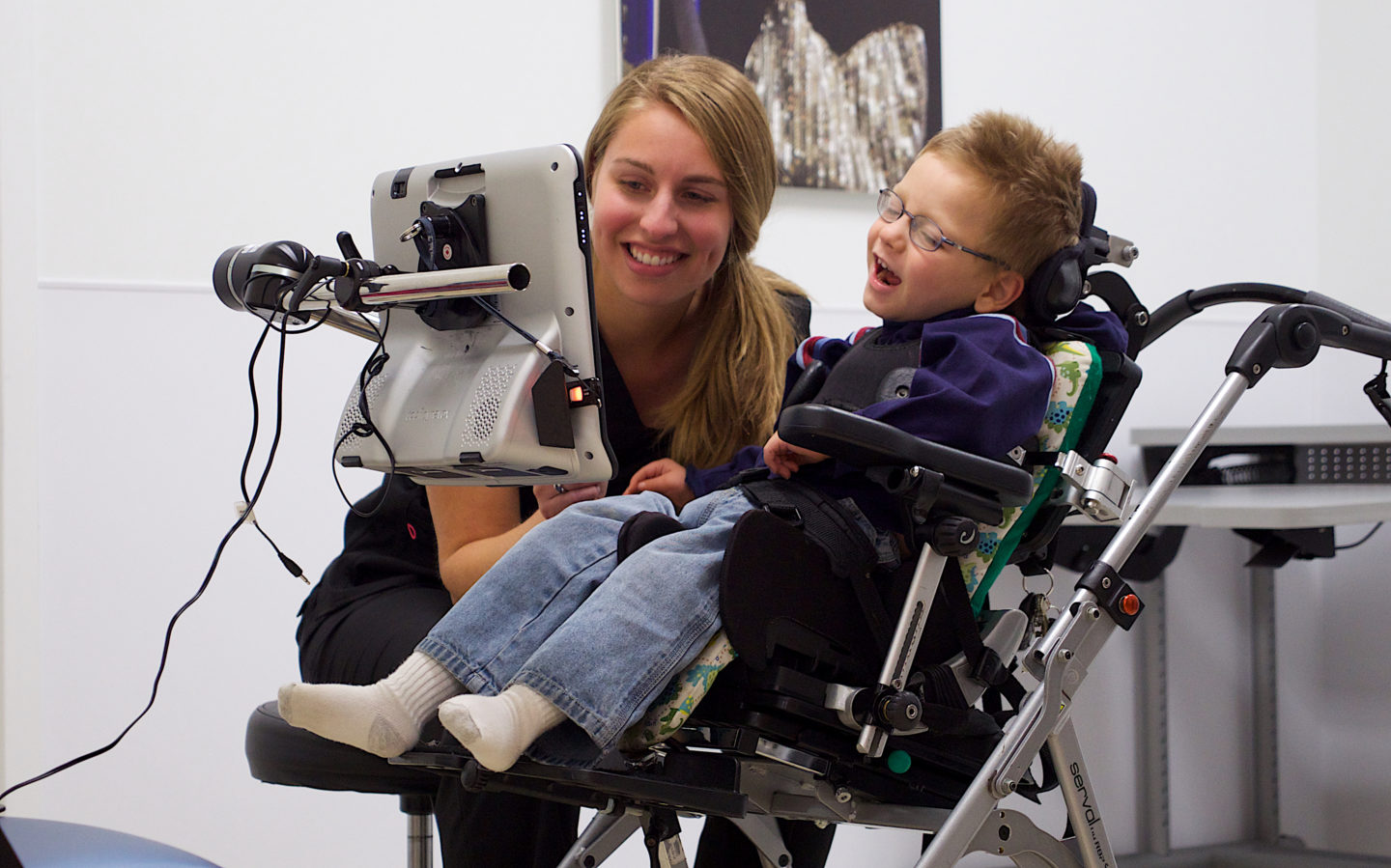
Assistive technology includes devices, equipment, software and customized tools that help children accomplish tasks that may otherwise be difficult due to injury, illness, disability or developmental delays. AT can be as simple as a communication board or as advanced as an eye-gaze computer that allows a child to speak using their eyes. From adaptive devices to augmentative communication tools, our specialists help kids communicate, learn and participate more independently. What matters most is not the technology itself, but how it enhances a child’s daily life and supports their goals.
Because no two children are alike, AT plans at Mary Free Bed Kids are highly individualized. Our specialists select and customize tools based on the child’s strengths, preferences, sensory needs, motor abilities, learning style and communication goals.
Empowering Kids Through Assistive Technology
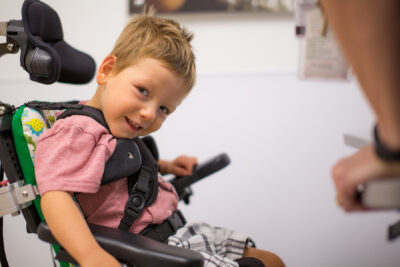
Assistive technology (AT) empowers children to communicate, learn, explore and participate in everyday activities with greater confidence and independence. At Mary Free Bed Kids, our pediatric rehabilitation experts believe that every child deserves a voice and a way to interact with the world—no matter their diagnosis, mobility level or communication challenges. Through innovative technology, personalized evaluation and compassionate support, we help children gain the tools they need to thrive at home, school and in their communities.
Who We Support
Our team works with children who experience a wide range of physical, cognitive, developmental and communication challenges, including:
• Brain injuries, including concussions, traumatic brain injury (TBI) or stroke
• Cerebral palsy and other movement disorders
• Spinal cord injuries
• Neuromuscular conditions such as spinal muscular atrophy (SMA), Charcot-Marie-Tooth
(CMT) disease and muscular dystrophy
• Genetic or congenital conditions that affect motor control or speech
• Autism spectrum disorder and related communication differences
• Developmental delays and intellectual disabilities
• Rett syndrome or other conditions that limit expressive communication
• Conditions that impact fine motor skills, vision or access to technology
If a child struggles to communicate their needs, participate in school or interact independently with their environment, assistive technology may be an important part of their care.
Comprehensive Assistive Technology Services
At Mary Free Bed Kids, we offer a full continuum of assistive technology services designed to grow alongside the child’s abilities. Our multidisciplinary team includes occupational therapists, speech-language pathologists, and certified assistive technology professionals who collaborate to deliver seamless care.
Augmentative & Alternative Communication (AAC)
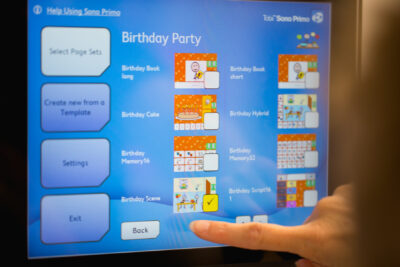
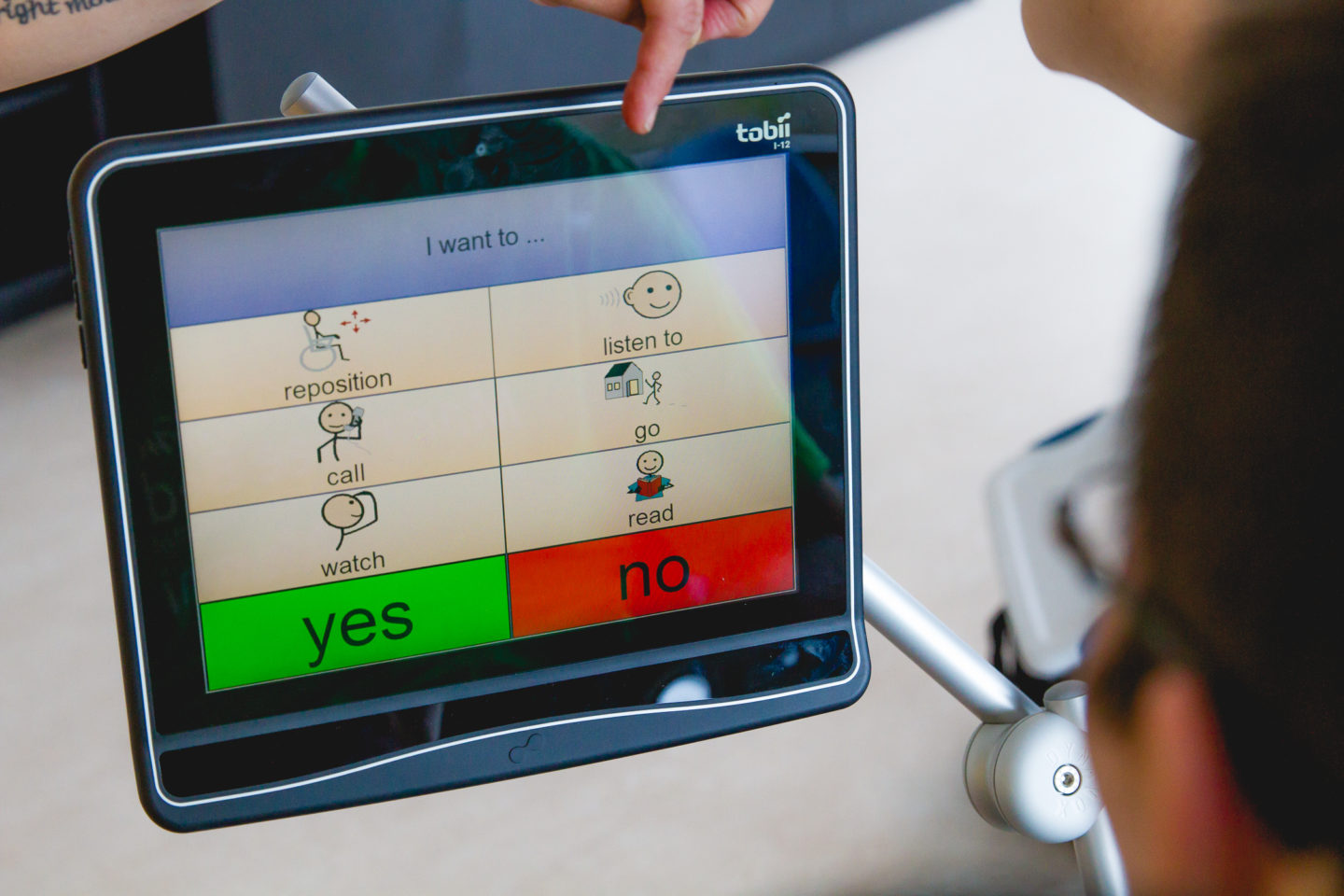
Communication is essential for learning, social connection and emotional expression. For children who have limited or no verbal speech or require support to meet their expressive or receptive language needs, our AAC program helps them develop a reliable, functional way to communicate.
We provide evaluation, device trials, customization and ongoing training for tools such as:
- Picture- and letter-based communication boards
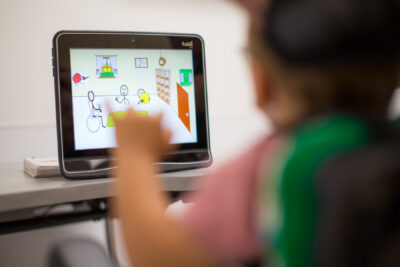
- Speech-generating devices with customizable vocabularies
- Augmentative communication devices
- IOS (Apple), Windows-, and Samsung-based communication systems
- Trialing of multiple communication systems to identify the best fit for each child’s speech, language, and physical needs
- Development and refinement of individualized access methods, including direct selection, stylus control, scanning, switch access, joystick control, head tracking, and eye-gaze technology for children with limited fine and gross motor skills
- Assistance with insurance funding for personal communication devices
- Selection and acquisition of accessories to support communication across environments, including mounts, keyguards, key guides, and access method materials
AAC opens the door to meaningful participation—whether a child is expressing their feelings, answering questions, playing games with their family or engaging in classroom activities.
Technology
Technology is an increasingly important part of learning and daily life. Our computer access services make it possible for children to use computers, tablets and other devices with greater ease and independence. We recommend tools such as:
- Adaptive keyboards with enlarged or reduced key spacing
- Touchscreen devices and specialized styluses
- Switch-enabled computer access
- Eye-tracking systems for hands-free control
- Screen readers or visual supports for children with low vision
- Mounting systems to position possessions securely and safely
It’s important to note that AT is most often an out-of-pocket expense and is not covered by insurance.
Our goal is to help every child engage in schoolwork, communication, recreation and online learning in a way that matches their unique needs and abilities.
Computer Access Support
Computer access support gives children greater control of their environment, improving independence and safety. These systems support essential daily activities and can be adapted for use at home, in school or within a care setting.
Depending on their abilities and goals, children may gain the ability to:
- Turn lights, fans or televisions on and off
- Operate door-opening systems
- Adjust room temperature
- Control music or audio systems
- Use phones through switches or voice commands
- Access call systems for emergencies
- Operate household devices using remotes, apps, switches or voice control
These systems can be integrated with communication devices, tablets, manual and power wheelchairs, smart home devices or communication tools, creating a seamless support system that enhances independence.
A Personalized Approach to Care
Assistive technology is most effective when it reflects the child’s goals, environment and daily routines. Our approach to treatment plans is collaborative and person-first.
Step 1: Comprehensive Evaluation
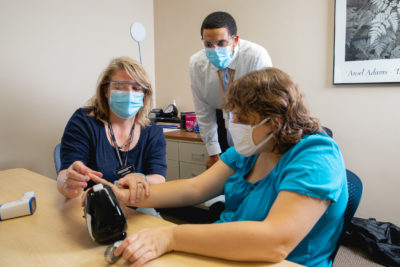
Our team evaluates the child’s motor skills, sensory needs, communication abilities, cognitive strengths, learning preferences, posture and positioning. We also observe the physical environment and daily routines. We listen closely to family goals and challenges to ensure the technology meets real-life needs.
Step 2: Customized Recommendations
Following the evaluation, we recommend one or more assistive technology solutions tailored to the child’s goals—whether it’s increased communication, improved participation in school or greater independence in daily activities.
Step 3: Device Trials and Adjustments
Children can try recommended devices during structured trials. Our team adjusts settings, access methods, positioning and vocabulary to ensure the tools feel comfortable, intuitive and effective.
Step 4: Funding, Documentation and Support
We help families navigate the insurance process and identify funding sources when needed. Our specialists provide detailed reports, justification letters and documentation to support approvals and equipment acquisition.
Step 5: Training and Long-Term Follow-Up
Children, caregivers, teachers and support staff receive hands-on training. As a child grows or their needs change, we provide ongoing support, reevaluation and device updates. Assistive technology is not a one-time service—it’s a partnership that evolves over time.
Why Assistive Technology Matters
Assistive technology can dramatically improve a child’s daily life. With the right tools and support, children often experience:
- Improved communication and expressive language
- Increased participation in school activities
- Greater independence and confidence
- Safer mobility and environmental access
- Stronger social connections with peers and family
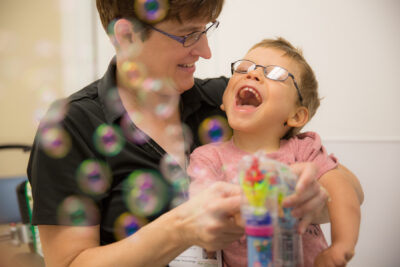
- Opportunities for creative expression and play
- Reduced frustration and increased emotional well-being
Most importantly, AT gives children the ability to explore their interests, learn new skills and participate more fully in everyday life.
Contact Us
If you think your child may benefit from assistive technology, our team is here to help. Mary Free Bed Kids offers expert evaluation, compassionate guidance and customized solutions that support every stage of your child’s journey.
Contact Mary Free Bed Kids today to schedule an evaluation or learn more about our assistive technology services.