

Music Therapy at Mary Free Bed Kids
At Mary Free Bed Kids, music therapy is a vibrant, evidence-based therapeutic service that uses music to support children’s emotional, cognitive, social and physical development. Through rhythm, sound and movement, music becomes a powerful tool for expression, connection and healing.
Our Pediatric Music Therapy Program is designed for infants, children and teens facing medical or emotional challenges, including developmental delays or inpatient rehabilitation. Most importantly, music therapy gives children a way to communicate and grow in a way that feel fun and meaningful.
What is music therapy?
Music therapy is a clinical discipline. Board-certified music therapists use musical experiences to help individuals achieve therapeutic goals. For children, music can open doors to emotional expression, cognitive engagement, physical activation and social connection that may be difficult to access through words alone.
Music therapy may include:
- Singing and vocal play
- Playing instruments and improvising
- Rhythm activities and drumming
- Moving to music
- Music-assisted relaxation
Music therapy prioritizes the process of making and responding to music to support healthy development and well-being.
Why Music Therapy Matters for Kids
Music is more than entertainment—it’s a powerful therapeutic medium, especially for children with limited verbal ability, medical stress or developmental challenges. Music provides:
- A non-threatening way to express emotions
- Opportunities for positive social interaction
- Motivation to participate in therapeutic tasks
- Support for movement, coordination and motor planning
- Opportunities to regulate emotions and reduce anxiety
Whether a child is recovering from injury, adjusting to disability, coping with pain or working on developmental skills, music can be a bridge to participation, confidence and achievement.
Our Approach
The Pediatric Music Therapy Program at Mary Free Bed Kids is rooted in evidence-based practice, developmental understanding, and individualized care. Our music therapists are licensed and credentialed professionals with specialized training in pediatric populations. They collaborate with families and the interdisciplinary care team to integrate music into each child’s overall treatment plan.
Key principles of our approach include:
- Child-centered engagement: Sessions are tailored to each child’s interests, developmental level, and goals.
- Playful, motivating activities: Music becomes a fun and motivating way to strengthen communication skills and regulate emotions.
- Personalized goals: Musical experiences are designed to support measurable therapeutic goals identified by the therapist in collaboration with families and care teams.
- Family involvement: Families are encouraged to participate in sessions and learn how to use music as a supportive tool at home.
Music therapists use creativity, flexibility, and evidence-based techniques to help children explore music in ways that are emotionally safe, physically engaging and developmentally supportive.
Who benefits from music therapy?
Music therapy is effective for children of all ages and developmental stages. It supports children whose needs include, but are not limited to:
- Neurological conditions (cerebral palsy, brain injury, stroke)
- Motor challenges and physical rehabilitation goals
- Speech, language, and communication delays
- Sensory processing needs
- Pain management and procedural support
- Social engagement and confidence building
Music therapy adapts to each child’s strengths and therapeutic goals, whether the focus is physical, cognitive, emotional or social.
What happens in a music therapy session?
Music therapy sessions are dynamic, interactive, and tailored to each child’s unique needs. A typical session may include:
Playing Instruments
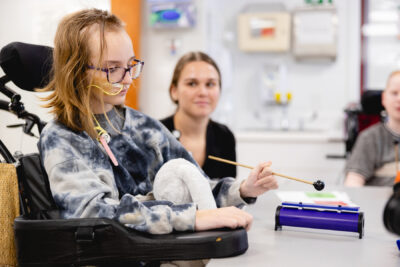
Children explore rhythm, tempo and sound using a variety of instruments—from drums and shakers to keyboards and mallet instruments. Playing instruments helps:
- Fine and gross motor skills
- Coordination and timing
- Attention and focus
- Sensory exploration
For example, drumming patterns can support rhythm and motor planning. Playing the keyboard can encourage hand-eye coordination.
Singing and Vocalization
Singing supports language development and breath control. On an emotional level, singing provides space for self-expression, and emotional processing. Children may sing familiar songs, create new lyrics or use vocal play to express feelings and thoughts.
Movement and Rhythm
Music naturally encourages movement. Therapists may use rhythmic activities to support:
- Balance and coordination
- Motor planning
- Gait improvement
- Body awareness
Children may march, dance or sway, linking music with functional movement goals.
Music-Assisted Relaxation
Music can be used to reduce stress, especially before medical procedures or during moments of anxiety. Techniques may include guided listening or gentle soundscapes.
Throughout each session, the music therapist observes not only what the child creates, but also how the child responds—emotionally, socially and physically—to inform the next steps of the therapy plan.
Music Therapy Goals and Outcomes
Music therapy goals are developed collaboratively between therapists, families and the care team. While the goals are individualized, they often focus on:
Communication and Language
- Vocalizations
- Taking turns during conversations
- Working on articulation through rhythm and speech cues
- Using expressive language
Social Interaction
- Interacting with caregivers
- Making eye contact during social interactions
- Participating in group activities
Motor and Physical Goals
- Improving coordination through rhythmic movement
- Increasing strength and endurance through music-guided activities
- Support for functional mobility goals
Emotional and Behavioral Support
- Reducing anxiety and stress through music-assisted relaxation
- Enhancing emotional expression through songwriting
- Developing coping strategies through music
Music therapy goals are measurable and meaningful. They’re designed to help children achieve skills that matter in everyday life.
Music Therapy During Pediatric Care
Music therapy services at Mary Free Bed Kids are delivered across multiple settings to support children at every stage of care.
Inpatient Rehabilitation
In the inpatient setting, music therapy helps children:
- Adjust to being in the hospital
- Cope with medical stress
- Participate in therapeutic routines
- Engage socially in a positive, joyful way
- Reduce fear and anxiety
Music becomes a comforting and motivating presence during times of medical complexity.
Family Involvement and Education
Families are essential partners in pediatric music therapy. Therapists work with caregivers to:
- Share strategies for incorporating music into daily routines
- Support emotional well-being beyond therapy sessions
- Help siblings and family members participate in music experiences Music becomes a shared language that strengthens family bonds and supports connection through creativity.