
Your Guide to Tummy Time
Tummy Time at Mary Free Bed Kids
Tummy time helps babies develop the strength and motor skills they need for developmental milestones like rolling, crawling and sitting. At Mary Free Bed Kids, our pediatric therapists provide guidance and support for families to ensure tummy time is safe and effective for every baby.
Why Tummy Time Matters
Spending time on their tummy helps babies strengthen neck, shoulder, arm and back muscles. It also promotes motor development, encourages coordination and helps prevent flat spots on the head. Babies who consistently engage in tummy time often reach developmental milestones with improved confidence and stability.
How We Support Families
Our Pediatric Therapy Team works with caregivers to create tummy time routines that fit naturally into daily life.
We teach:
- Positioning and safe techniques
- Ways to support babies who may resist tummy time
- Strategies for babies with special medical or developmental needs
Our goal is to make tummy time interactive, playful and fun.
When to Start
Tummy time can begin as soon as a baby comes home from the hospital. Early sessions may last just a few seconds, gradually increasing as your baby becomes stronger and more comfortable. Our specialists help families understand what is age‑appropriate and how to safely progress over time.
Tummy Time Tips
- Incorporate tummy time into your daily routines like diaper changes or playtime.
- Start with short sessions for only a few seconds, then gradually increase duration.
- Play with your baby using toys or mirrors to keep them engaged.
- Use a rolled towel or positioning aid to provide additional comfort and support.
- Make sure tummy time is supervised and takes place on a safe surface.
Who May Need Extra Help
Your baby may need extra support during tummy time if they:
- Were born prematurely
- Experience motor delays
- Were diagnosed with torticollis
- Experience muscle weakness
Positioning During Daily Activities
Like all of us, your baby needs to eat, sleep and be active. The way your baby is positioned during these tasks helps build strong muscles.
Watch the video to see proper alignment for the following daily activities:
- Feeding
- Burping
- Diapering
- Riding in a car seat
- Sleeping
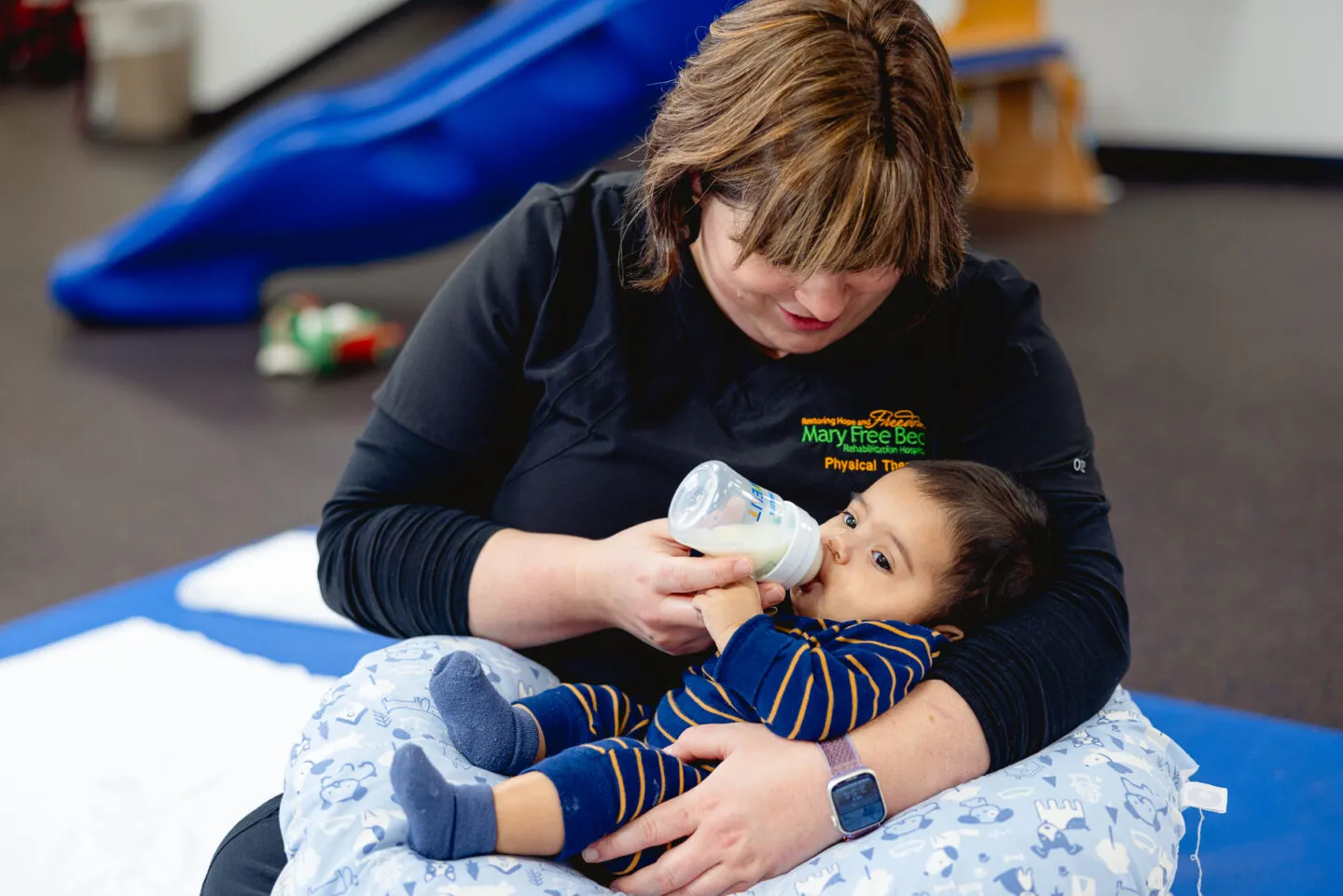
Daily Activities
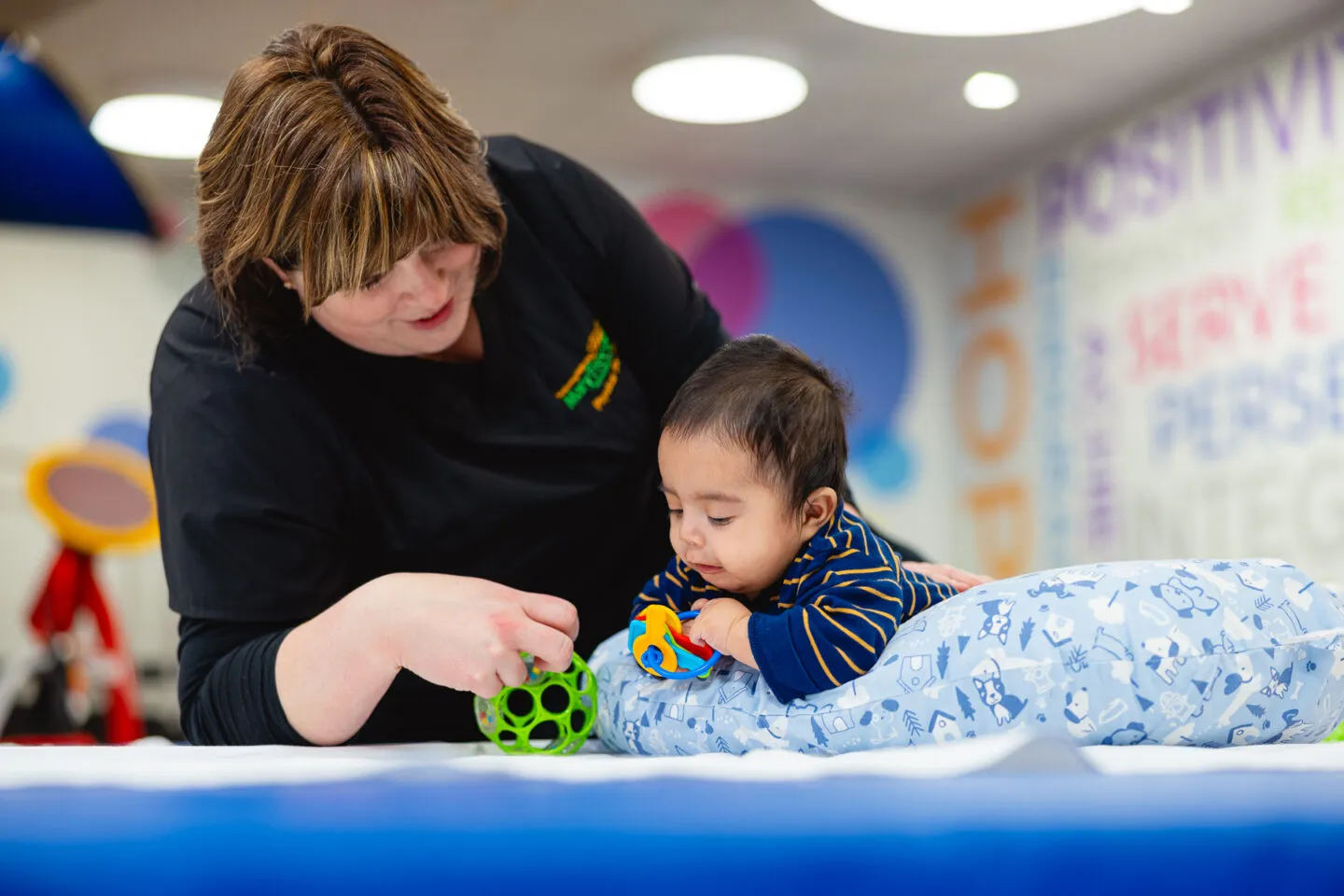
Positioning During Playtime
Your baby learns to move by playing on the floor on their tummy, back and sides. Remember, positioning is important!
Watch the video for positioning for the following playtime activities:
- Tummy
- Tummy – over a Boppy™ pillow
- Playing on side
- Back
- Back, with feet support
- Back, with towel support
- Playing with toys
- Sitting
- Carrying or holding
Playtime Activities
Tummy Time Alternatives
At first, your baby might have a hard time staying on their tummy. They can tire easily and cry.
Tummy time alternatives help make it a little easier – at least until your little one is strong enough to lay on the floor. Start by putting your baby on your chest or lap, then move to a blanket.
Watch the video to learn positioning for the following activities:
- Laying baby across your lap
- Baby laying on your chest
- Baby laying on an exercise ball
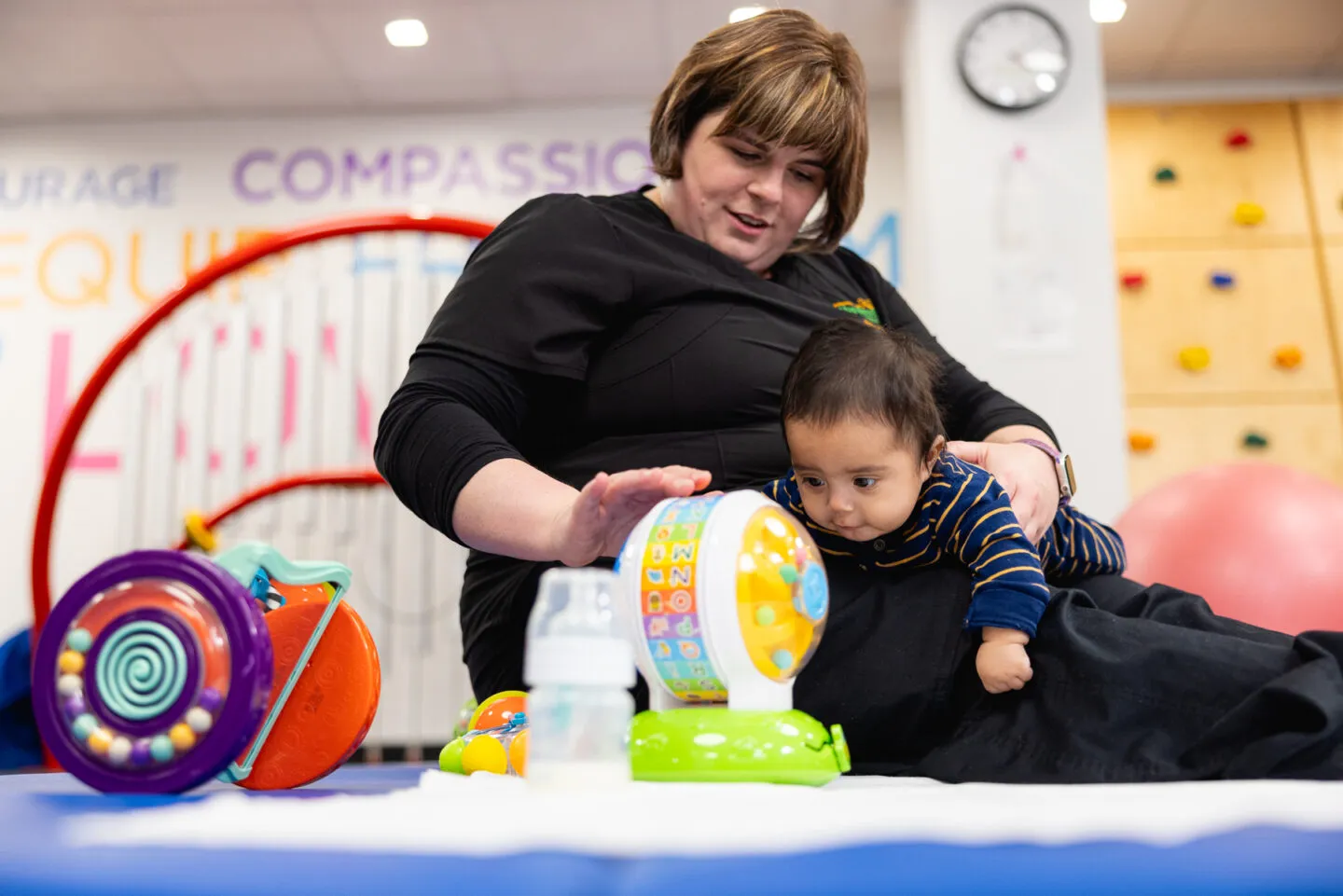
Tummy Time Alternatives
How to Begin
If you have questions about tummy time, notice your baby struggling or want support from a pediatric specialist, the first step is a developmental evaluation. Our team will assess your child’s needs and answer any questions you may have. From there, the Pediatric Therapy Team will create a personalized treatment plan for your child to support their growth and development.
Schedule Pediatric Therapy Support
Schedule care today to connect with our Pediatric Therapy Team and begin building a strong foundation for movement and growth.
Ask For Mary
If you have concerns about your baby’s development, talk to your pediatrician or family physician. Your doctor may refer your little one to Mary Free Bed’s outpatient pediatric program for physical or occupational therapy.