
Occupational Therapy
Restoring Hope and Freedom

Empowering Children to Build Skills for Everyday Life
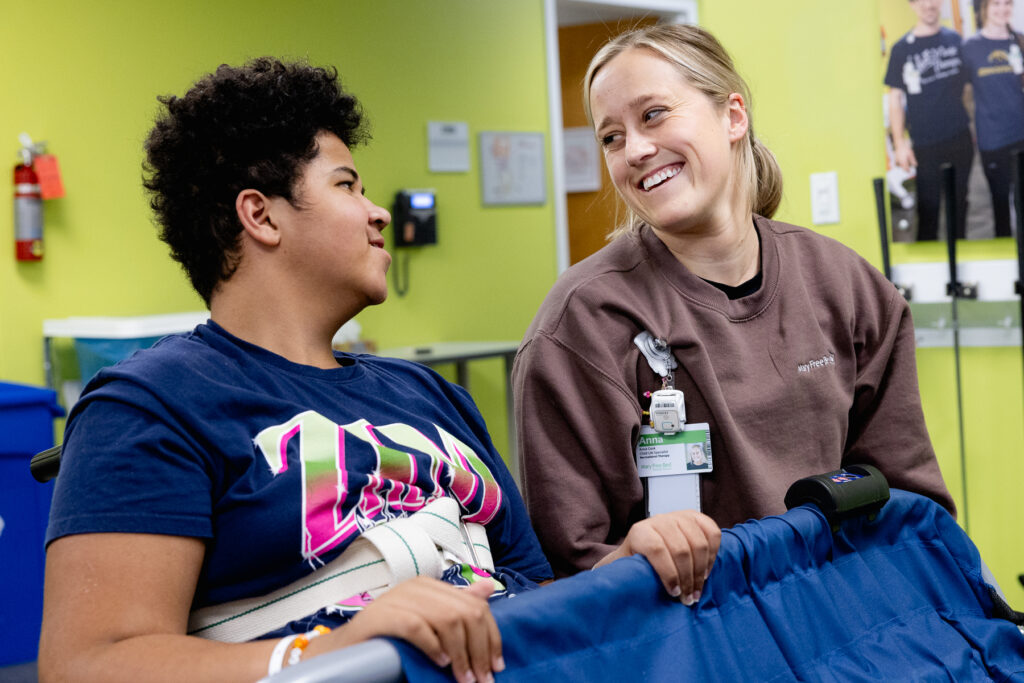
At Mary Free Bed Kids, our Pediatric Occupational Therapy Team is dedicated to helping kids build the skills they need to participate in everyday life. Childhood is a time of rapid growth; the ability to play, explore, communicate and care for oneself lays the groundwork for future independence. Our pediatric occupational therapists (OTs) understand how each of these areas connect. They use therapeutic techniques rooted in child development, neuroscience and family-centered care to support meaningful progress.
Children come to us with many different abilities and challenges. Some are recovering from illness or injury, while others have complex medical conditions that impact their daily routines. Many children simply need additional support as they learn fine motor skills, sensory regulation, feeding, self-care or tolerance for new environments. No matter the reason for referral, our team will meet your child where they are. Our approach to care is rooted in compassion and creativity. By creating therapy environments that feel safe, engaging and playful, we empower children as they try new things as they learn and grow.
Children come to us with many different abilities and challenges. Some are recovering from illness or injury, while others have complex medical conditions that impact their daily routines. Many children simply need additional support as they learn fine motor skills, sensory regulation, feeding, self-care or tolerance for new environments. No matter the reason for referral, our team will meet your child where they are. Our approach to care is rooted in compassion and creativity. By creating therapy environments that feel safe, engaging and playful, we empower children as they try new things as they learn and grow.
What is pediatric occupational therapy?
Pediatric occupational therapy focuses on helping children participate in the daily activities that are essential to their development and well-being. Infants and toddlers learn how to explore their environment and interact with caregivers. As they learn how to interact with the world around them, infants and toddlers also learn how to respond to sensory input like textures and temperatures.
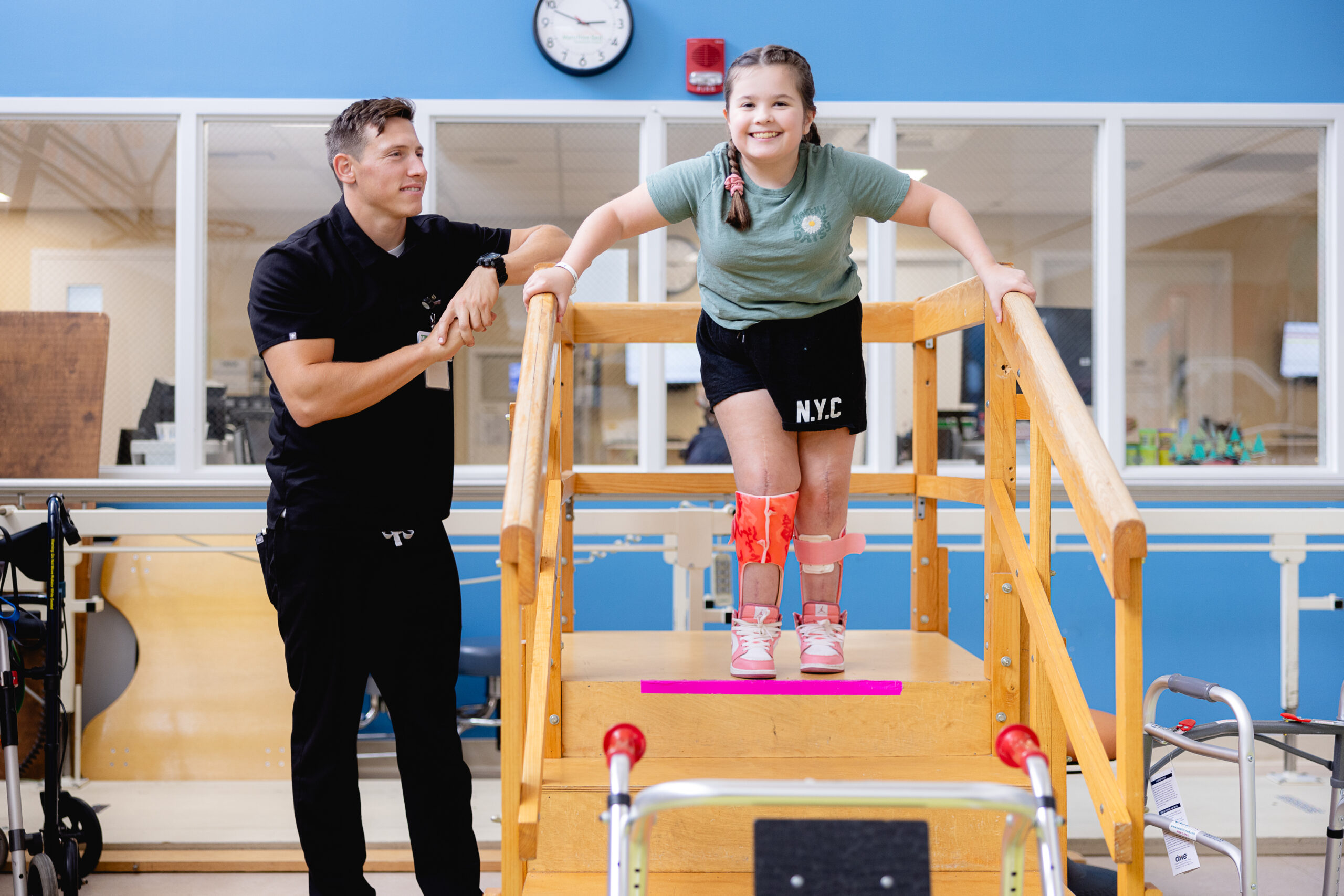
For school-aged children, occupational therapy includes problem-solving, completing routines and socializing with peers. For adolescents, occupational therapy expands to include increasing independence, planning, and preparing for life skills.
Our occupational therapists support children across a wide range of developmental areas, including:
- Fine motor development necessary for grasping toys, holding utensils, manipulating buttons and writing
- Visual-motor and visual-perceptual integration, which support reading readiness, hand-eye coordination and academic tasks
- Cognitive skills such as attention, sequencing and memory
- Emotional regulation and frustration tolerance
- Activities of daily living (ADLs) such as getting dressed, brushing teeth, bathing, feeding and toileting
- Problem-solving for children with physical, sensory or cognitive limitations

Sensory Processing: Helping Children Make Sense of the World
Sensory processing is a critical part of child development. It refers to how the brain interprets and organizes information from the senses—including touch, sound, taste, movement, sight and smell.
When sensory processing is working well, children can tolerate clothing textures and enjoy playing with their peers. During school they can follow classroom routines and respond calmly to changes in their environment. When kids have difficulty processing sensory input, everyday experiences can feel unpredictable, overwhelming or confusing.
Some children may react strongly to certain sensory inputs. They may find loud sounds, certain textures, bright lights, unexpected movement or specific food textures to be distressing.

Others may seek out more intense input, craving deep pressure, jumping, spinning or crashing into cushions. Many children experience a combination of both. Occupational therapists at Mary Free Bed Kids are highly trained in identifying sensory patterns and using structured, playful activities to help children build regulation and comfort.
When kids learn to tolerate different sensations, they can participate in school and socialize with their peers. Daily routines and mealtimes become less stressful. Our therapists also provide families with practical home strategies, including:
- Sensory diets
- Calming routines
- Environmental adjustments
- Movement activities

Common Signs of Sensory Processing Challenges
Parents and caregivers often notice patterns long before a child receives a sensory evaluation. Signs your child may have trouble processing sensory input include:
- Strong reactions to sounds, lights, smells, or textures
- Avoiding or becoming distressed during messy play
- Difficulty transitioning between activities
- Frequent meltdowns or trouble calming down
- Seeking intense movement or pressure-based activities
- Difficulty knowing how much pressure or force to apply during fine or gross motor activities like writing
- Clothing sensitivities, such as refusing socks, jeans or coats
- Food aversions or extreme picky eating
- Difficulty falling or staying asleep
- Visual motor delays such as trouble catching or throwing
How OT Supports Sensory Integration
Our occupational therapists use a combination of structured play, movement-based activities and customized sensory experiences to help children understand, organize and respond to sensory input more effectively. Treatment may include:- Swings
- Obstacle courses
- Tactile play
- Deep pressure input
- Calming strategies
- Visual-motor activities
- Sensory-based tools

Pediatric Feeding Support
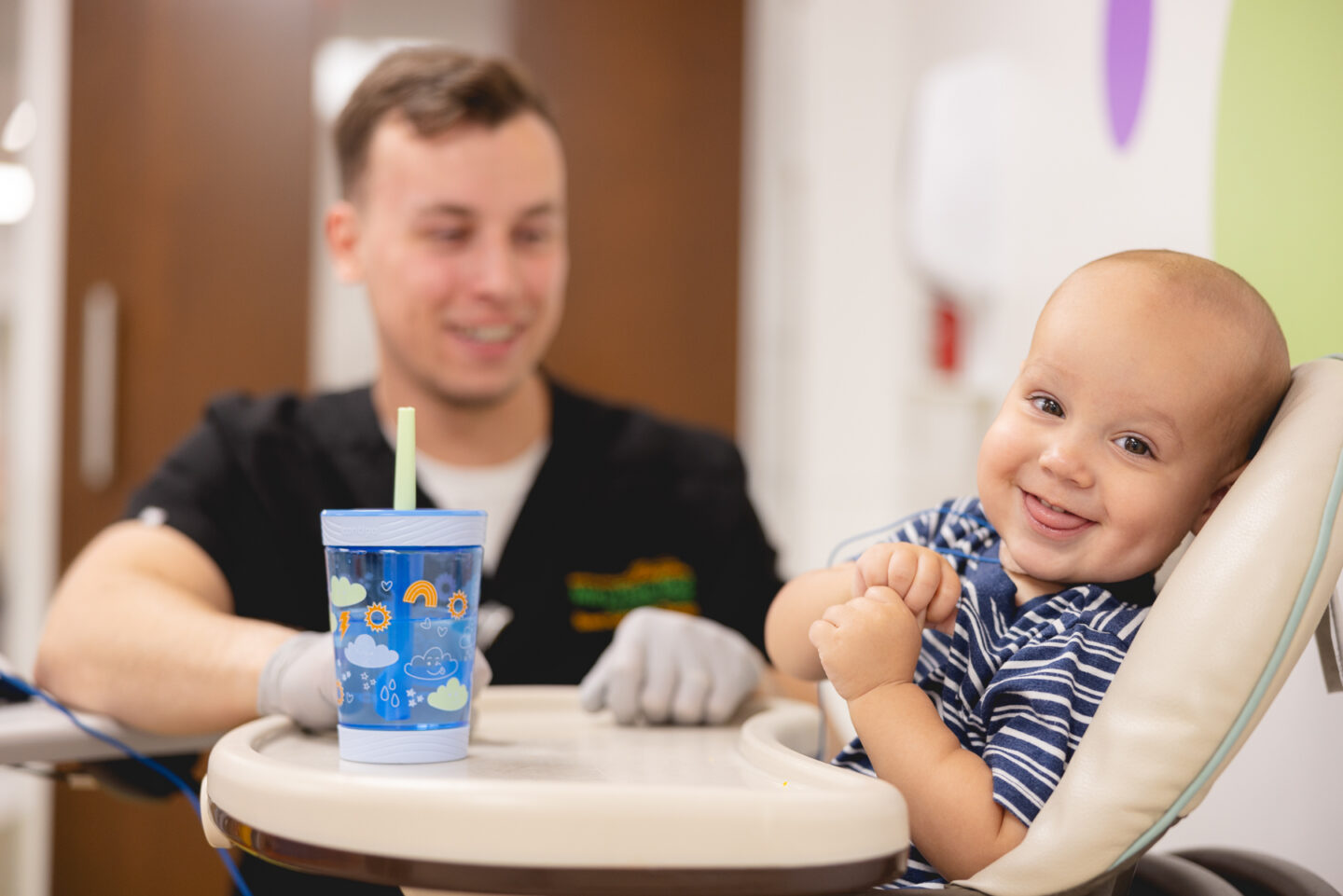
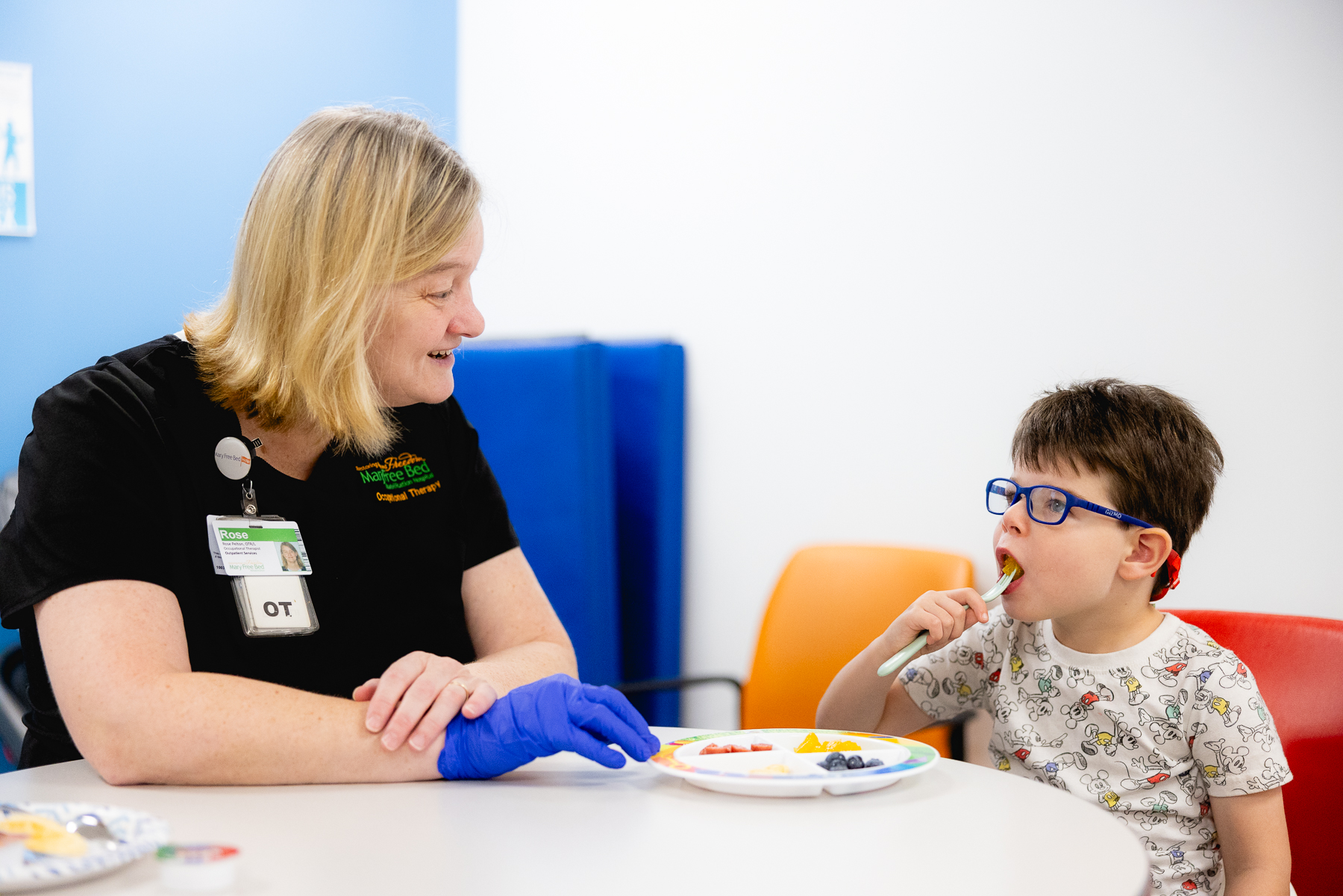
Feeding and eating are complex tasks that require coordination of sensory, motor, behavioral, and emotional skills. When a child has difficulty chewing, swallowing or tolerating new textures, mealtimes can become stressful for both the child and their caregivers.
Mary Free Bed Kids offers specialized feeding support through our multidisciplinary Pediatric Feeding Program, where occupational therapists play a key role in evaluating oral motor abilities, sensory responses, feeding routines and safe swallowing practices.
Feeding concerns may arise due to medical conditions and developmental differences. Feeding concerns can also coincide with sensory sensitivities or difficulties with posture, strength or coordination. Early identification and intervention can prevent long-term nutritional, developmental and emotional challenges related to eating.
Signs Your Child May Need Feeding Support
Some signs a child may benefit from feeding-focused occupational therapy include:
- Difficulty chewing or managing certain textures
- Prolonged mealtimes or refusal to eat
- Coughing, gagging or vomiting during meals
- Poor coordination of breathing and swallowing
- Strong food aversions or refusal to try new foods
- Difficulty sitting upright or maintaining safe posture during meals
- Limited weight gain or growth concerns
- Pocketing food in the mouth
How Our Feeding Team Helps
The Pediatric Feeding Program includes occupational therapists, speech-language pathologists, dietitians, nurses, and physicians. Together, they provide:
- Oral motor evaluations
- Strategies to improve chewing, swallowing and safe intake
- Sensory-based feeding interventions
- Positioning and postural support
- Exposure to new foods through gradual, child-centered approaches
- Caregiver training to support positive mealtime routines

What to Expect: Your Child’s OT Journey
Your child’s occupational therapy experience begins with a comprehensive evaluation. The evaluation considers:
- Sensory processing
- Motor skills
- Fine motor development
- Feeding
- Emotional regulation
- Daily routines at school and at home
- Occupational therapists
- Speech-language pathologists
- Physical therapists
- Psychologists
- Care managers
- Physicians and specialists
Who We Help
The Pediatric Occupational Therapy Team supports children with:
- Sensory processing disorders
- Autism spectrum disorder
- Developmental delays
- Cerebral palsy
- Orthopedic and neurological conditions
- Feeding disorders
- Traumatic brain or spinal cord injuries
- Emotional regulation challenges
- Visual-motor and fine motor delays
- Behavioral or attention-related needs
Locations & Access to Care
Mary Free Bed Kids provides pediatric occupational therapy services across several locations throughout West Michigan, including Grand Rapids, Holland, Kalamazoo and Muskegon. Families can access services through a referral from their pediatrician. Our care managers can help explain next steps and answer any questions you may have about insurance or scheduling.
Contact Us
We’re here to help your child thrive. Whether you have concerns about sensory processing, feeding, motor development, emotional regulation or daily routines, our team is ready to support your family.Locations & Access to Care
Mary Free Bed Kids provides pediatric occupational therapy services across several locations throughout West Michigan, including Grand Rapids, Holland, Kalamazoo and Muskegon. Families can access services through a referral from their pediatrician. Our care managers can help explain next steps and answer any questions you may have about insurance or scheduling.
Contact Us
We’re here to help your child thrive. Whether you have concerns about sensory processing, feeding, motor development, emotional regulation or daily routines, our team is ready to support your family.

Ready to Get Started With Mary Free Bed?
Wherever your child is on their rehabilitation journey, we’re here to help every step of the way. Our pediatric specialists are ready to listen, support and guide your family through recovery. Whether your child is just beginning treatment or continuing progress from earlier care, our team is committed to encouraging their growth, celebrating milestones and supporting every goal—big and small.
Our Locations

Great Lakes Bay Region

Northern Michigan

Southwest Michigan

West Michigan

Mid-Michigan

Southeast Michigan

Indiana

Virginia