For Manuel “Tony” Rodriguez, the phrase long haul used to describe his career as a truck driver.
Today, it describes something far more personal: his road to recovery following a brain injury.
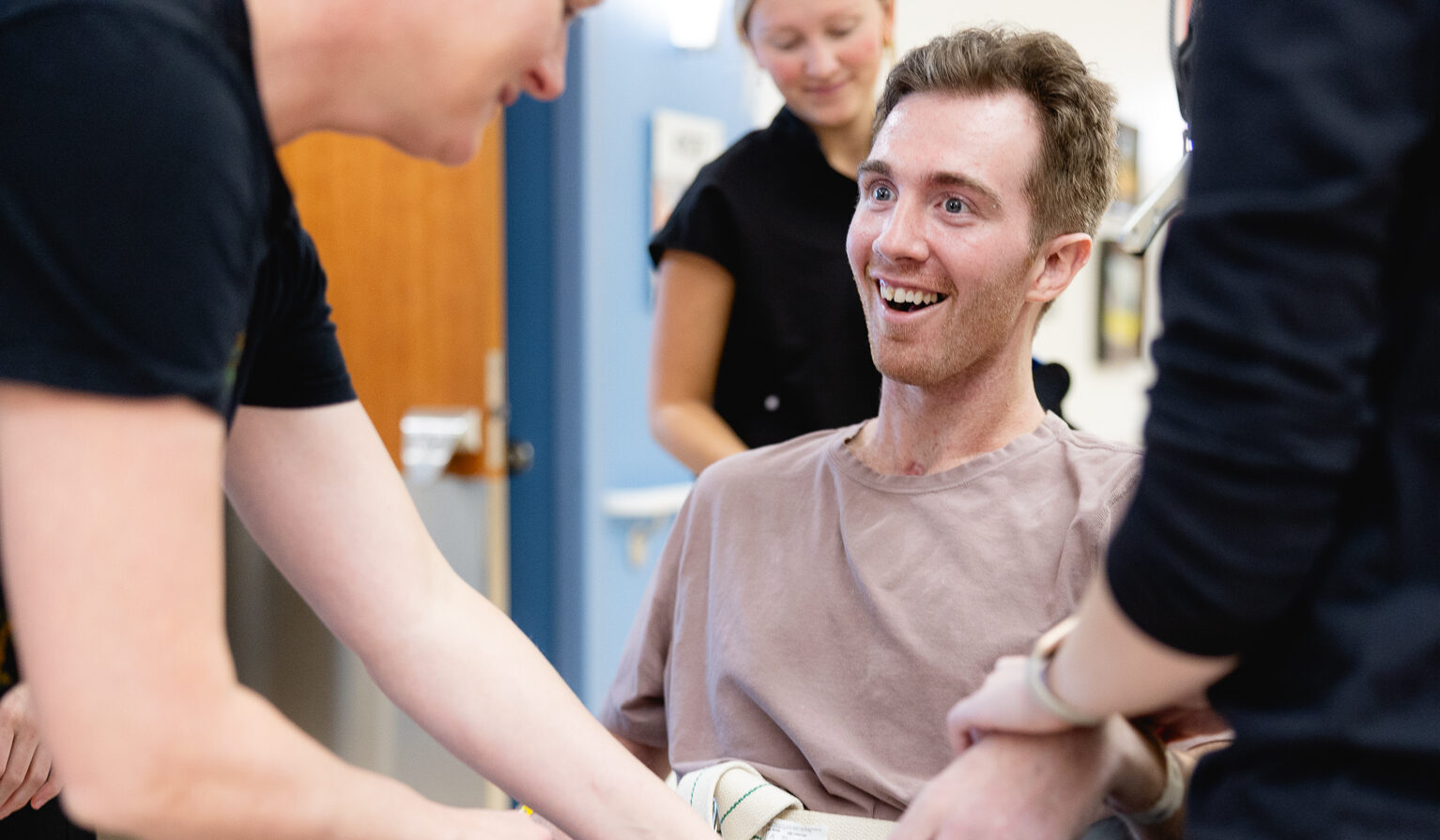
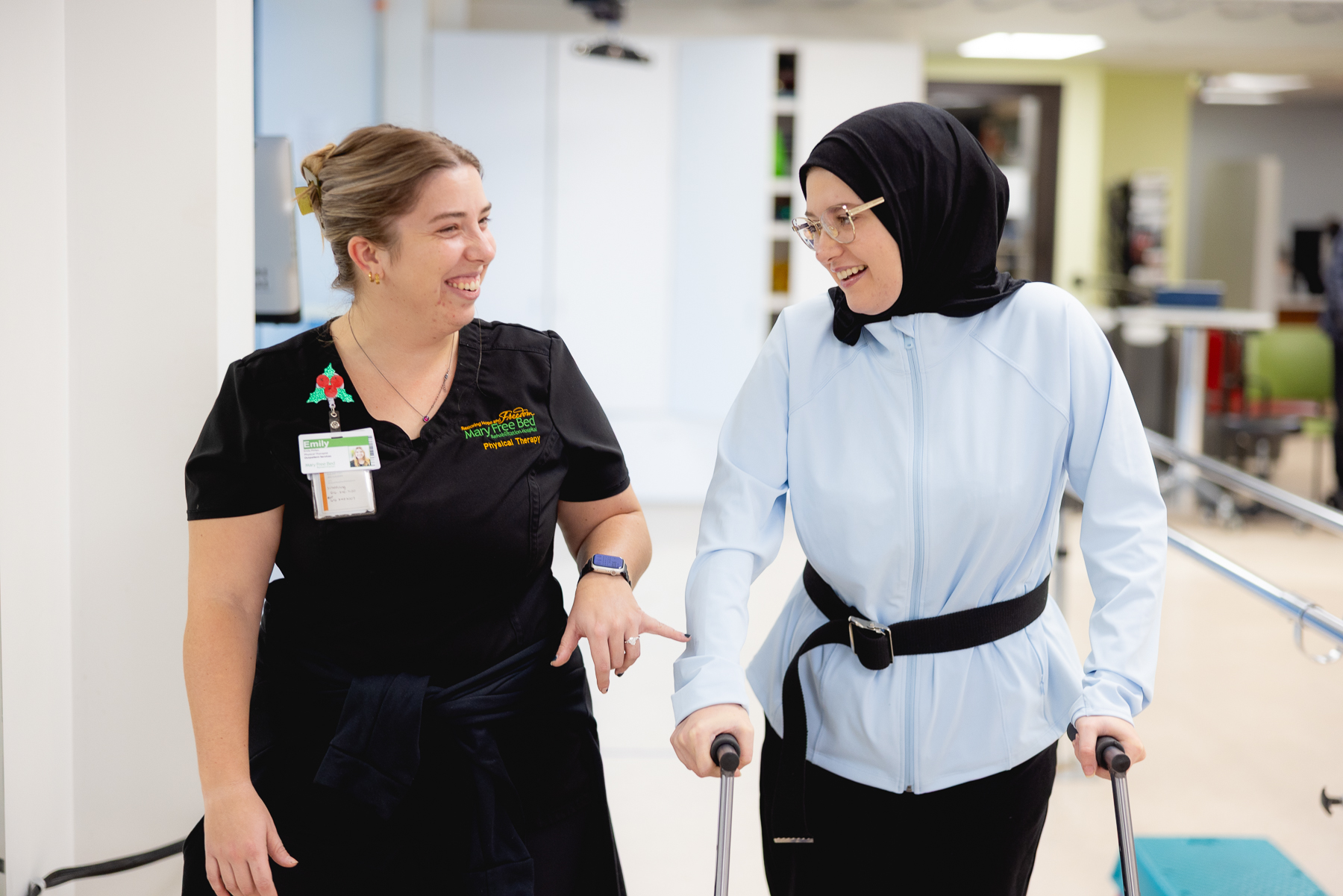
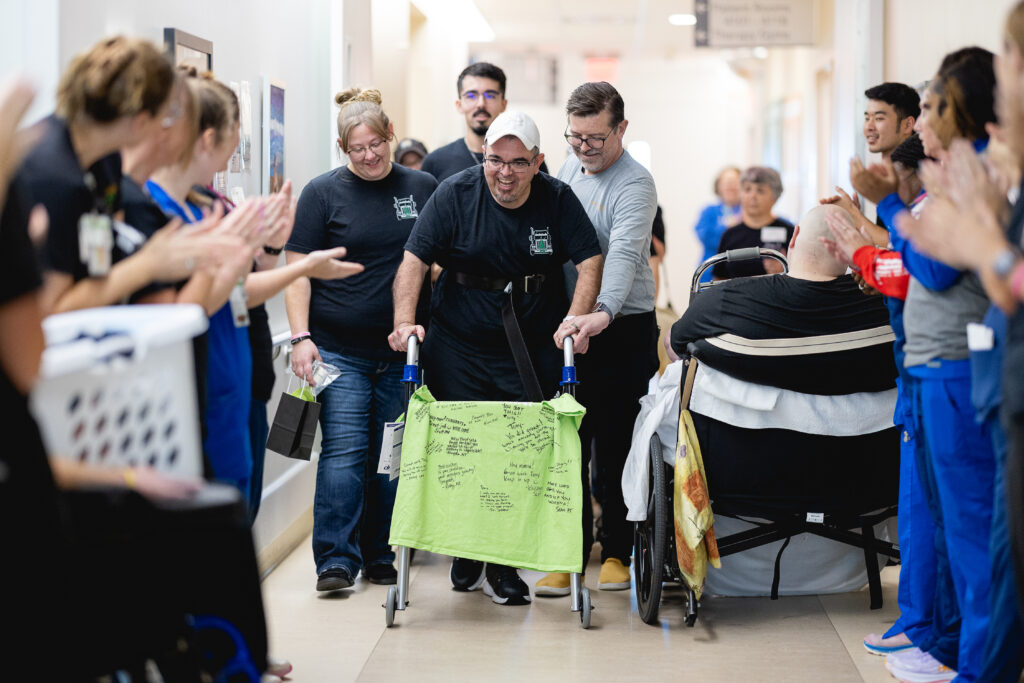
Step by step, Tony moves down the halls of the Mary Free Bed Grand Rapids Campus with a walker, a gait belt around his waist and a therapy team by his side. A gait belt is a safety strap therapists use to support patients while walking during rehabilitation. Each step is part of a comeback months in the making.
What started as an ordinary workday quickly became a life-changing moment for Tony and his family.
A Split-Second Accident
Tony stopped between truckloads at the shop where he works in Three Rivers, Michigan, to change tires on the semi he drives. While searching for an airline leak beneath the truck, the truck suddenly slipped from the jack and fell onto him.
Tony managed to free himself as his boss called 911—and then Tony’s wife, Betsy.
“I had just talked to him half an hour before,” Betsy recalled. “Being a car person, that’s always my biggest fear.”
Paramedics rushed Tony to Bronson Methodist Hospital, where doctors discovered seven broken ribs on his right side along with severe trauma to his lungs, chest and torso.
Doctors warned the family that crush injuries can be unpredictable.
“They told us it could get worse before it gets better,” Betsy said.
That’s exactly what happened. Tony’s lungs and chest cavity began filling with fluid, and he developed pneumonia. Despite attempts with CPAP and BiPAP breathing support, doctors and family agreed that placing Tony on a ventilator would give him the best chance to recover.
For several days, Tony remained sedated as doctors worked to stabilize his condition.
A Devastating Turn
While in the Bronson trauma unit, slowly, signs of improvement began to appear. Tony started becoming more alert, communicating with his family by tracing letters on his stomach.
“We were talking, crying and telling him everything that had happened over the last eight days,” Betsy said.
Doctors believed Tony might be ready to try breathing on his own again. But when the breathing tube was removed, Tony’s airway collapsed on his first breath.
Without oxygen, his heart stopped.
Doctors immediately began CPR, working for around 20 minutes to stabilize his heartbeat and breathing. The lifesaving effort came with additional injuries—three new broken ribs on his left side and a cracked sternum.
Tony also sustained an anoxic brain injury, caused by lack of oxygen to the brain.
“We went from celebrating progress to devastation and wondering if he would wake up again,” Betsy said.
Tony was placed back on the ventilator and later received a tracheostomy as doctors worked to support his breathing.
For weeks, the Rodriguez family waited for Tony to wake up so doctors could better understand the extent of his brain injury.
Signs of Hope
When Tony began to wake up, progress came slowly.
He couldn’t move. He couldn’t see. He had very limited control of his body. Still, Betsy could tell her husband was there.
“He could squeeze our hands when we asked him to,” she said. “He would look toward whoever was speaking.”
Following a traumatic injury, patients typically first go into an acute care setting, followed by sub-acute, until they’re ready for rehabilitation. Tony was eventually transferred to Beacon Plainwell, as the family began discussing the next step: rehabilitation.
Long-term acute care hospitals (LTACH) take care of people, like Tony, with multiple severe or chronic medically unstable conditions that require more clinical care. Patients typically stay around 30 days; Tony was there for approximately three weeks. There’s a set of criteria that must be met when patients are admitted to the Mary Free Bed Inpatient Rehabilitation Program. Patients must be medically stable, demonstrate rehabilitative potential and be capable of participating in a minimum of three hours of therapy per day. They must also meet certain cognitive threshold levels on the Rancho Los Amigos Scale of Cognitive Functioning.
When Tony got to that point, his care team asked Betsy what she hoped for.
Her answer was simple.
“My goal was to get him the best therapy possible,” she said. “I believed he could do it. And of course, Mary Free Bed is your go-to.”
Intensive Brain Injury Rehabilitation
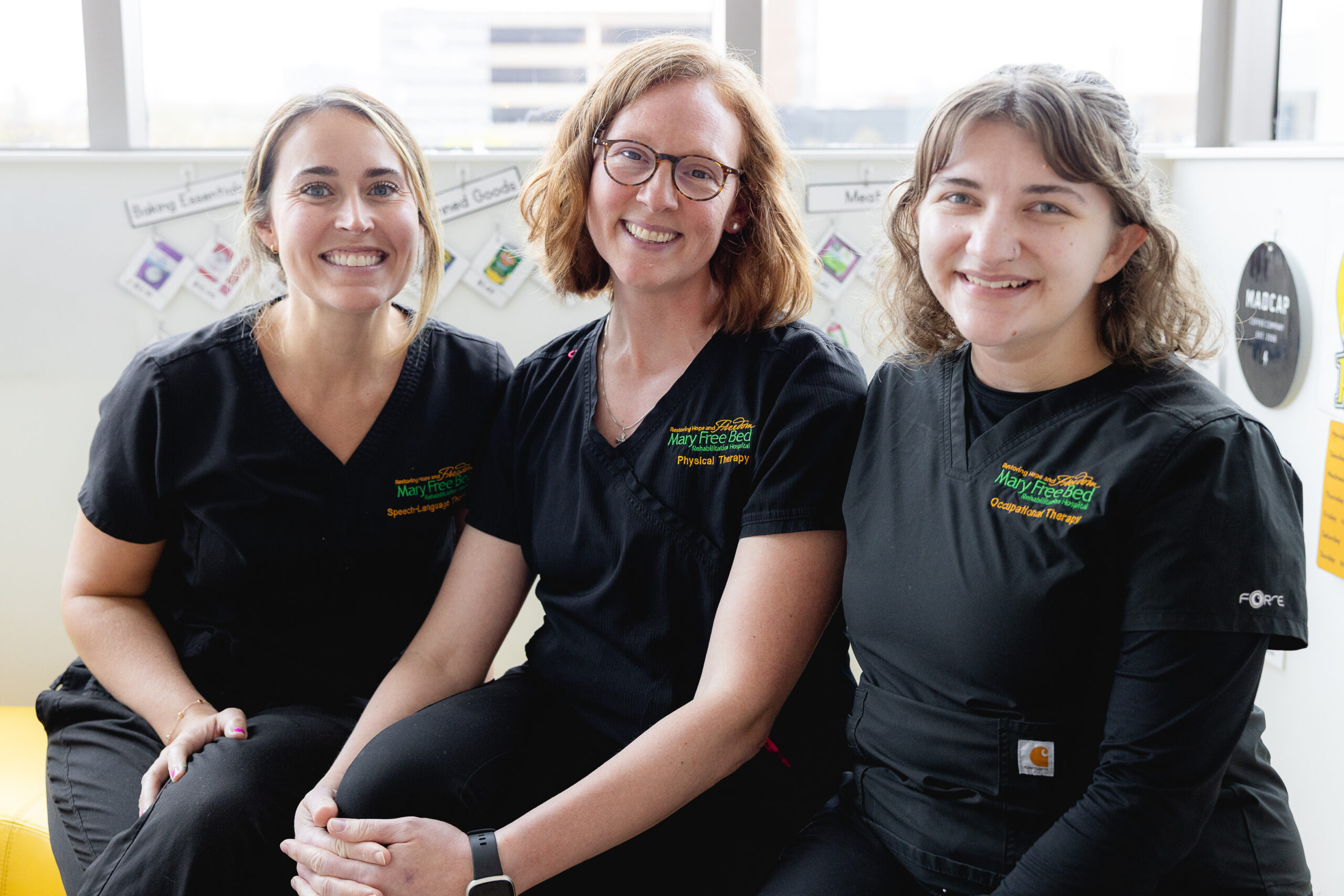
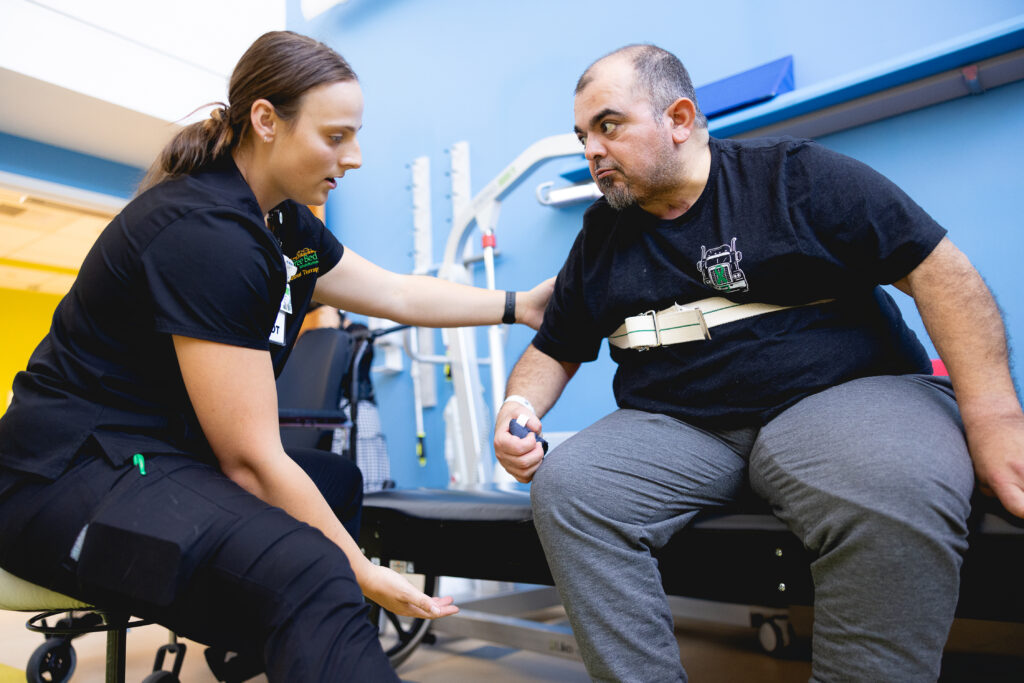
Recovering from a traumatic brain injury often requires intensive inpatient rehabilitation, where patients work with a coordinated team of specialists, including physicians, physical therapists, occupational therapists, speech-language pathologists and rehabilitation nurses.
About six weeks after his injury, Tony came to the Mary Free Bed Adult Inpatient Brain Injury Rehabilitation Program in Grand Rapids, Michigan.
At Mary Free Bed, adult inpatients with brain injury average 3.24 hours of daily therapy over a five-day week to rebuild strength, coordination and independence. Our inpatient and outpatient brain injury rehabilitation programs are accredited by the Commission on Accreditation of Rehabilitation Facilities International (CARF). This rigorous process ensures the highest level of care from physicians, therapists and nurses who specialize in brain injury rehabilitation and recovery.
When he first arrived, Tony couldn’t stand or get out of bed. He was still unable to eat, drink or speak because his trach was capped. The brain injury also impacted his vision.
For Tony, the early days focused on the basics—like sitting up, breathing more independently and regaining small movements.
“Those first steps were huge,” Betsy said. “Things most people never think about became victories.”
His tracheostomy tube was removed, and he began eating without a feeding tube.
Each milestone marked another step forward.
Soon, Tony was standing. Then walking. Then walking farther. With therapists supporting him on both sides, Tony began covering hundreds of feet using a walker.
“Every day we saw progress,” Betsy said. “The team believed in him even on the hard days.”
104 Days of Progress
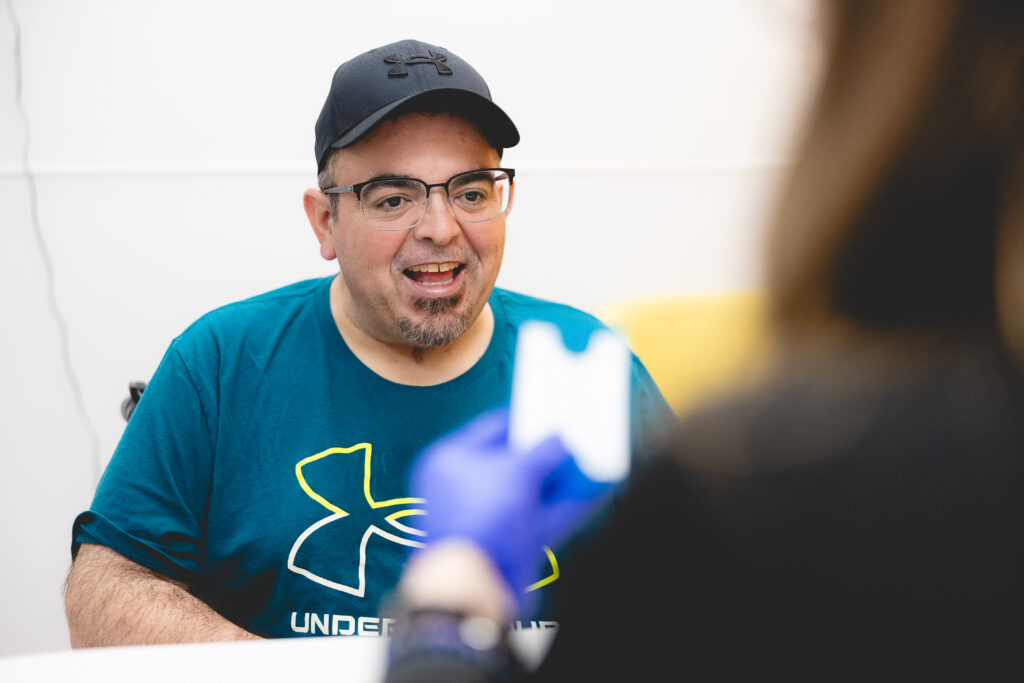
At Mary Free Bed, a patient’s length of stay depends on the severity of their injury, current functionality and progress. Patients typically stay anywhere from a few days to several weeks.
Tony spent 104 days in inpatient rehabilitation—pushing through therapy sessions, rebuilding strength and relearning everyday skills.
Along the way, his family and care team adopted a phrase that perfectly matched Tony’s trucking background:
“Keep on truckin’.”
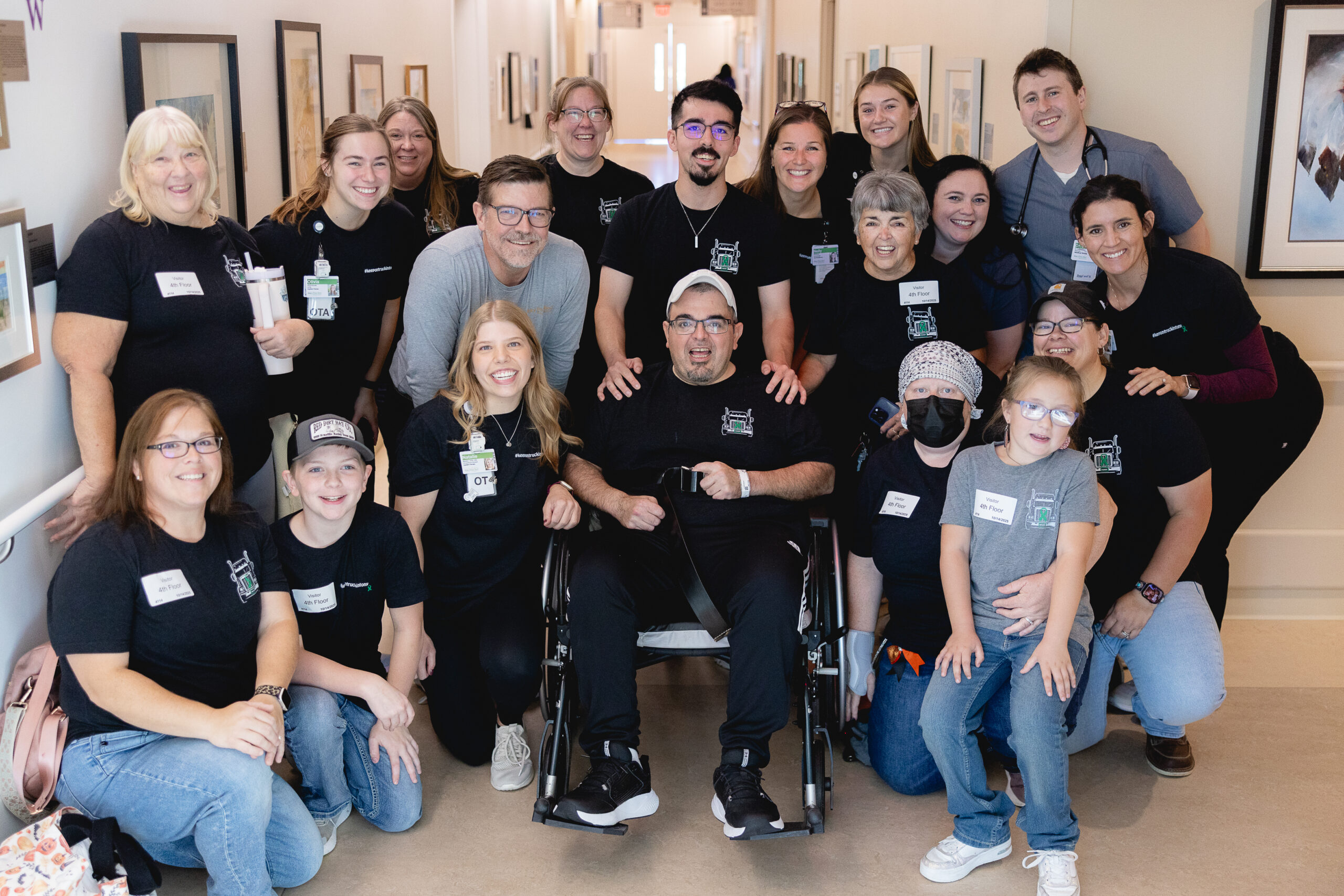
The phrase quickly became a rallying cry. Friends and family began wearing shirts with the message during visits. Therapists used it to encourage Tony through difficult therapy sessions.
When it came time for Tony to graduate from the inpatient program, that phrase followed him once again. Surrounded by family, friends and his therapy team, Tony stood tall on his own two feet—smiling as he prepared for the next phase of recovery.
“It felt like we had climbed a mountain together,” Betsy said.
Continuing Recovery Through Outpatient Therapy
Recovery doesn’t end when you leave Mary Free Bed. We provide a continuum of care designed to help patients maintain and build on their progress.
Although the greatest neurological recovery can be made in the first six months after injury, our teams continue to see great improvements up to a year post-injury. Recovery can continue after the first six months, but it’s usually slower, which is why starting outpatient therapy early on in recovery is so important.
After completing inpatient rehabilitation, Tony continued his progress through outpatient therapy closer to home at Mary Free Bed in Kalamazoo, Michigan.
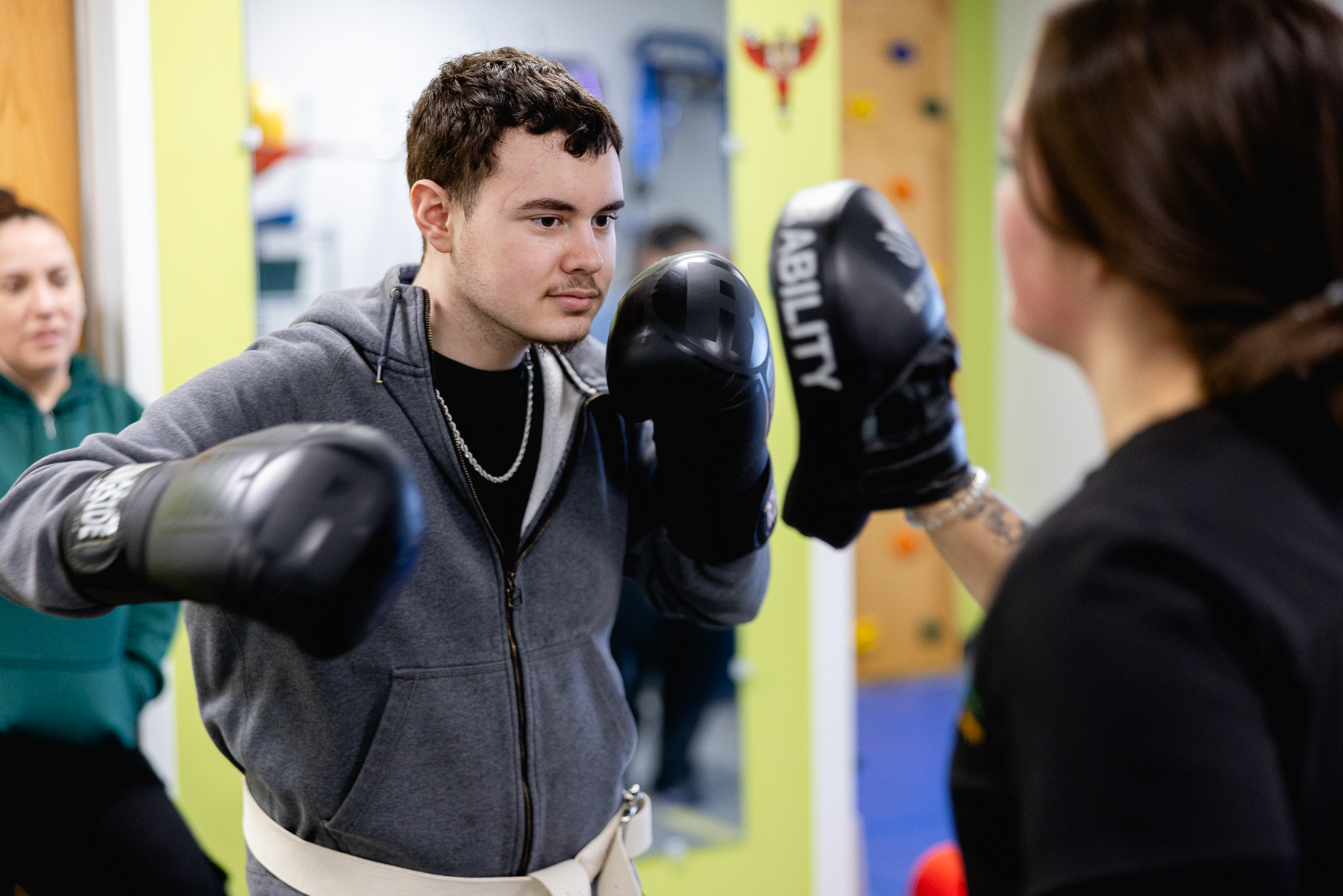
Outpatient rehabilitation following a brain injury allows patients to keep building strength, mobility and communication skills while living at home. Whether you want to get back to cooking your favorite meal or dancing at a family wedding, Mary Free Bed’s outpatient offices have the equipment and expertise to maximize recovery.
Tony began attending therapy several days each week, working with specialists in:
· Physical therapy
· Occupational therapy
· Speech therapy
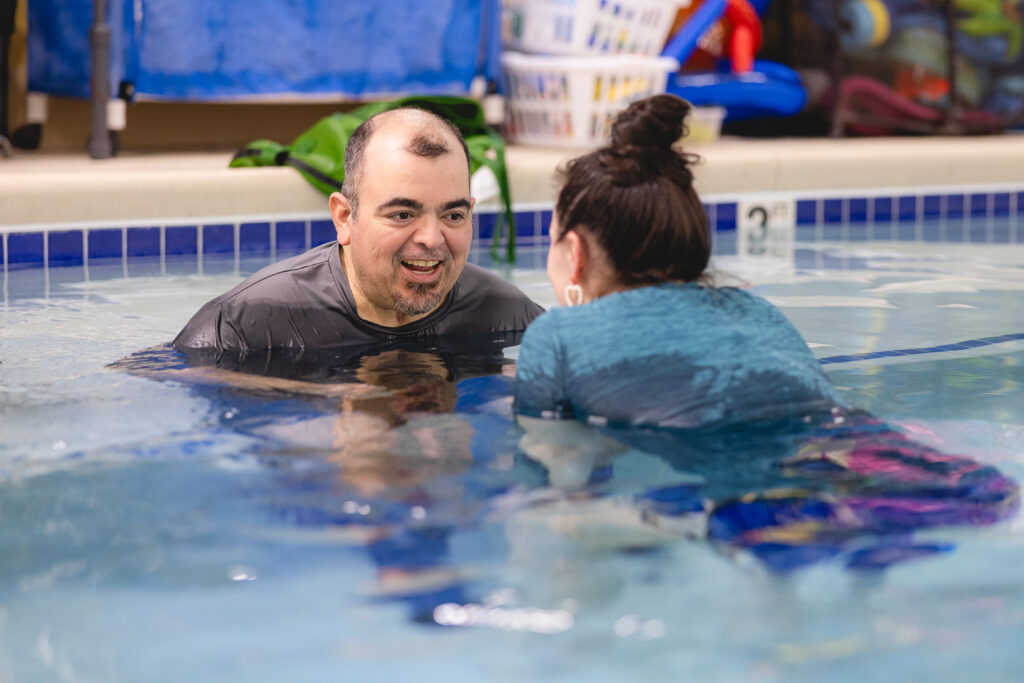
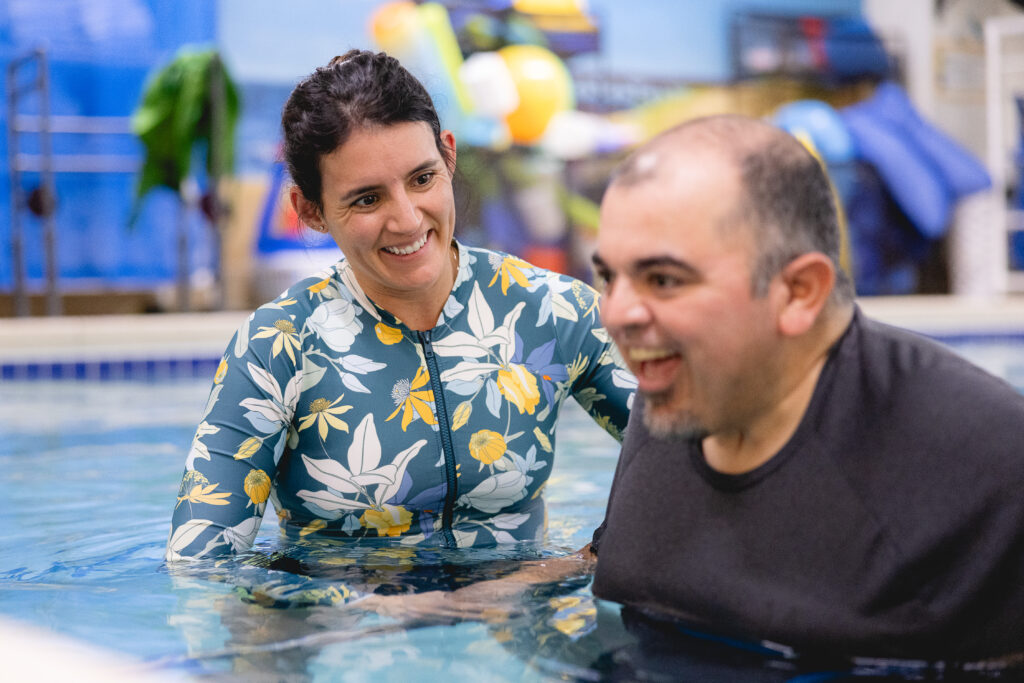
He also participates in aquatic therapy, where the buoyancy of water helps patients practice movements that may be difficult on land.
“The pool has been one of his favorite places,” Betsy said. “He’s able to move in ways that remind him of how strong he used to be.”
Tony first split his therapy between Mary Free Bed Kalamazoo and Grand Rapids, before transitioning all his outpatient therapy to the Mary Free Bed Grand Rapids Campus to streamline his care and continue working with a consistent rehabilitation team.
Tony had to continue working to improve his speech clarity, swallowing and mobility.
While it remains uncertain whether his vision will fully return, he continues making meaningful progress.
Adjusting to Changes After a Serious Brain Injury
Life after a traumatic brain injury can require major adjustments.
For Tony and Betsy, that has meant navigating new accessibility needs and adapting routines they once took for granted. But they continue to find ways to enjoy the activities they love. The couple spends time with family and still attends sporting events together, celebrating each milestone along the way.
“We celebrate every step,” Betsy said. “We’ve learned not to take anything for granted.”
Tony’s comeback isn’t finished.
But every day brings him one step closer to greater independence.
And true to the phrase that carried him through months of rehabilitation, Tony keeps on truckin’.
Brain Injury Rehabilitation at Mary Free Bed
Brain injuries—whether mild or traumatic—are complex. No two recovery journeys look alike.
At Mary Free Bed, the road to brain injury rehabilitation begins by understanding what matters most to you: your goals, your motivations and the life you want to return to.
With that foundation, our specialized brain injury recovery team creates a personalized rehabilitation plan designed to help patients rebuild strength, regain independence and move forward after injury.
If you or a loved one has experienced a brain injury, the Mary Free Bed Brain Injury Rehabilitation Program can help. Talk to your physician about a referral, or inquire today to learn more.
Because every comeback deserves expert care—and every patient deserves the chance to restore hope and freedom for their long haul.