Nour Yahya is thoughtful, kind and extraordinarily resilient.
After a car crash caused a traumatic brain injury, the 23-year-old spent a year in the Mary Free Bed Day Rehab Program, rebuilding herself – and her independence – through specialized brain injury rehabilitation.
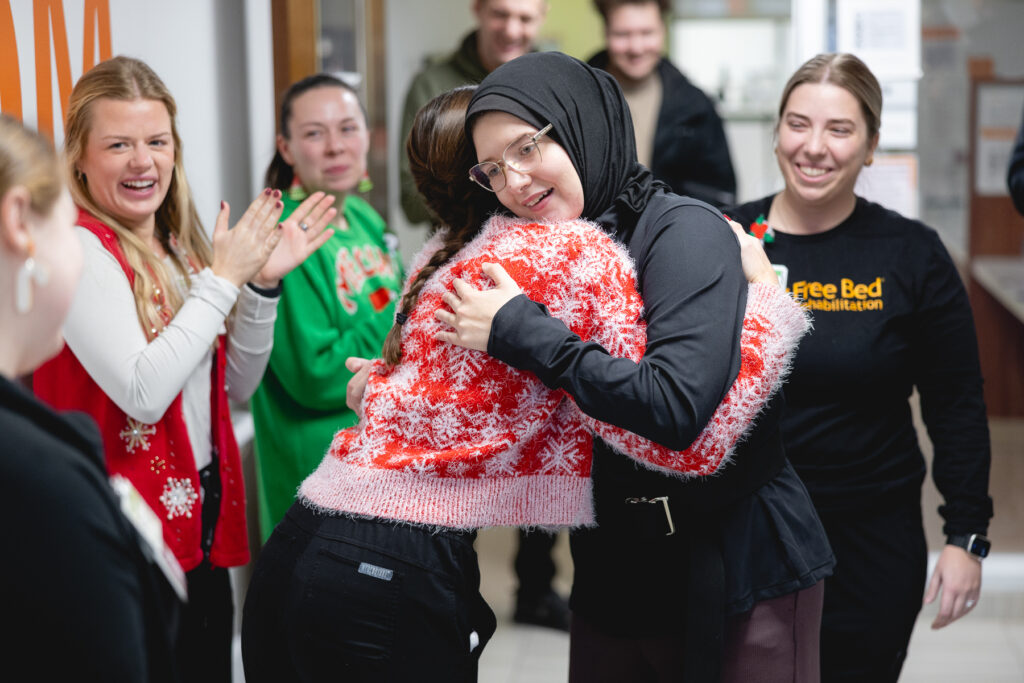
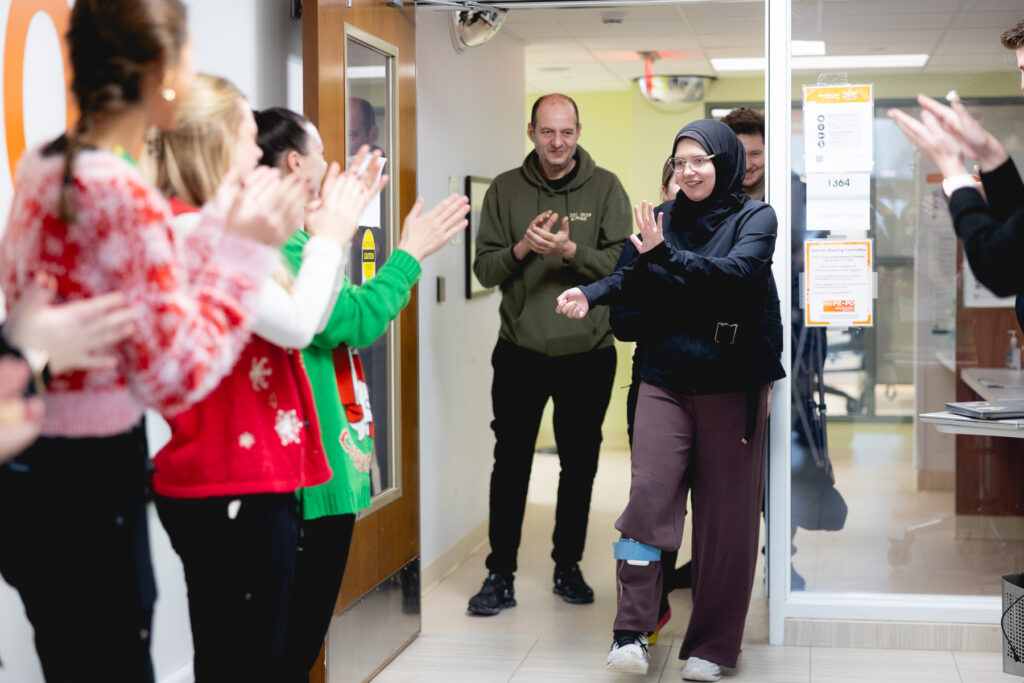
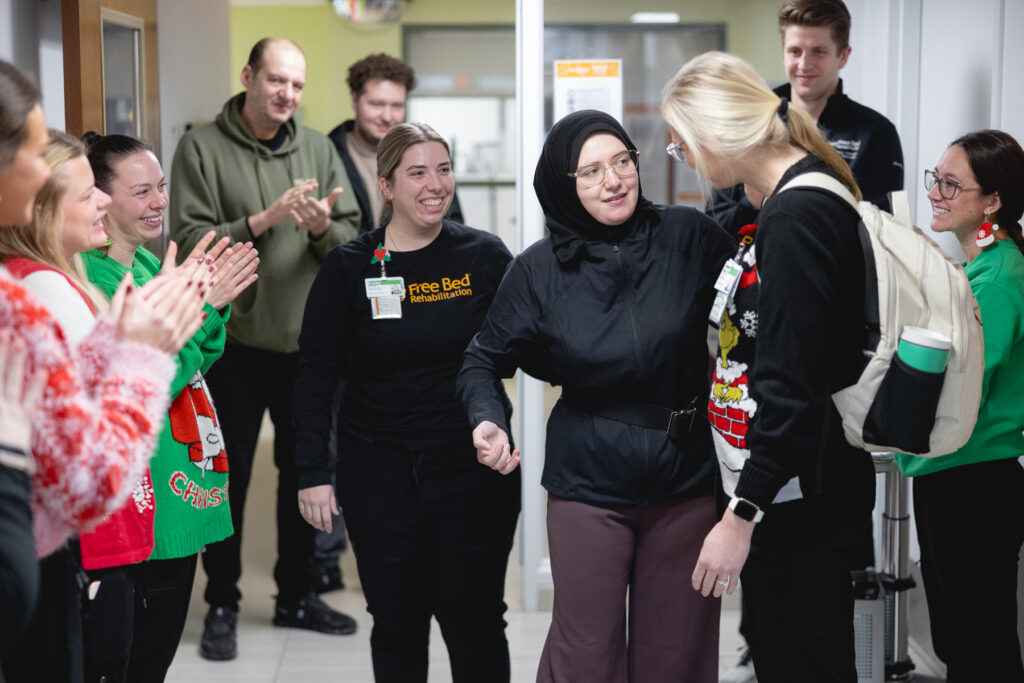
Fast forward one year to the day she graduates from physical therapy. Her smile fills the hallway. Therapists line up, cheering her on as she hugs every single one of them.
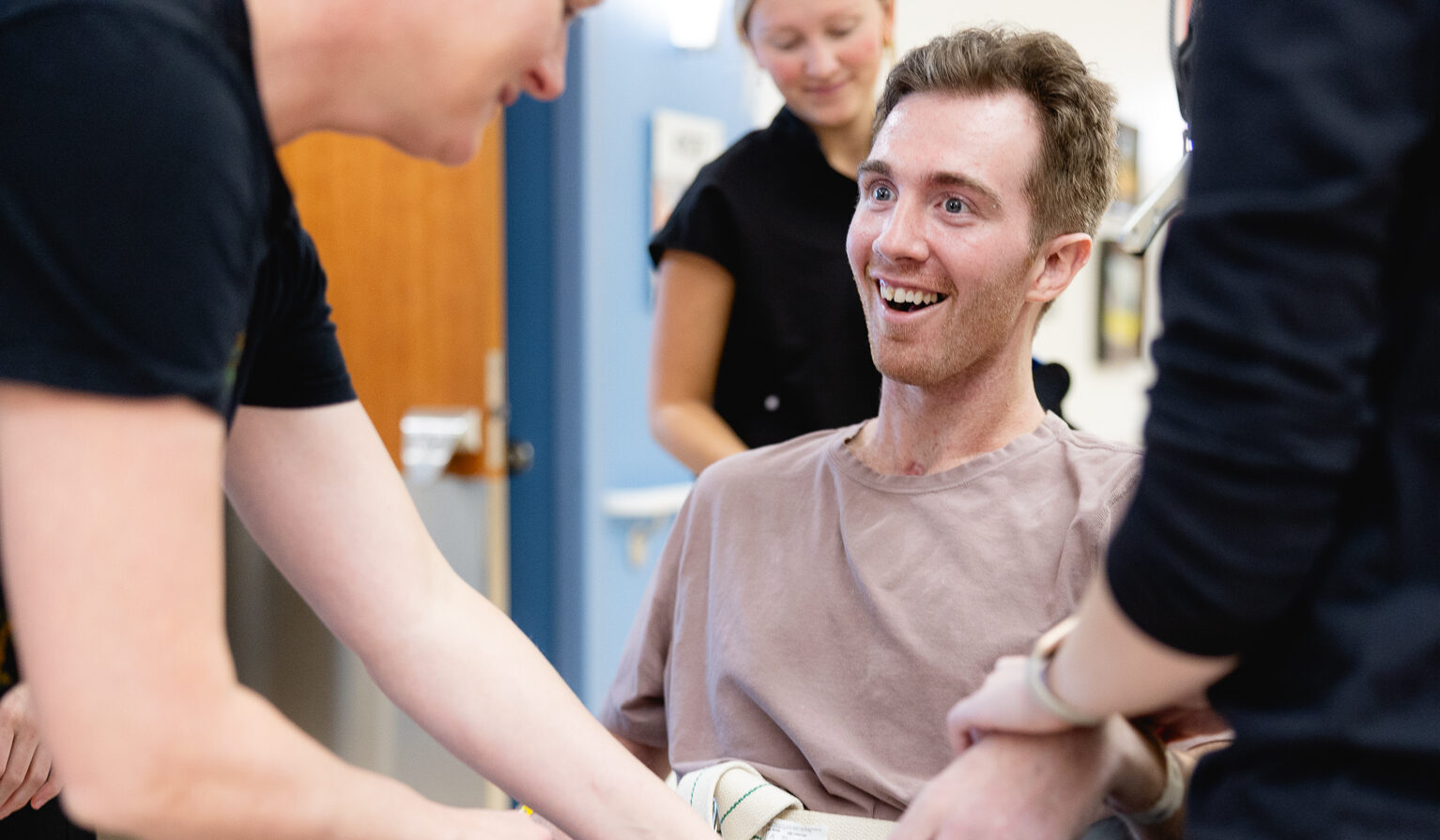
“When I started therapy, I didn’t know my therapists’ names,” Nour said. “Now they’re all my friends.”
At Mary Free Bed, graduation tunnels often mark the transition from inpatient rehab to home and community life. Nour’s was different. Hers represented 12 months of commitment, resilience and steady progress in outpatient rehabilitation.
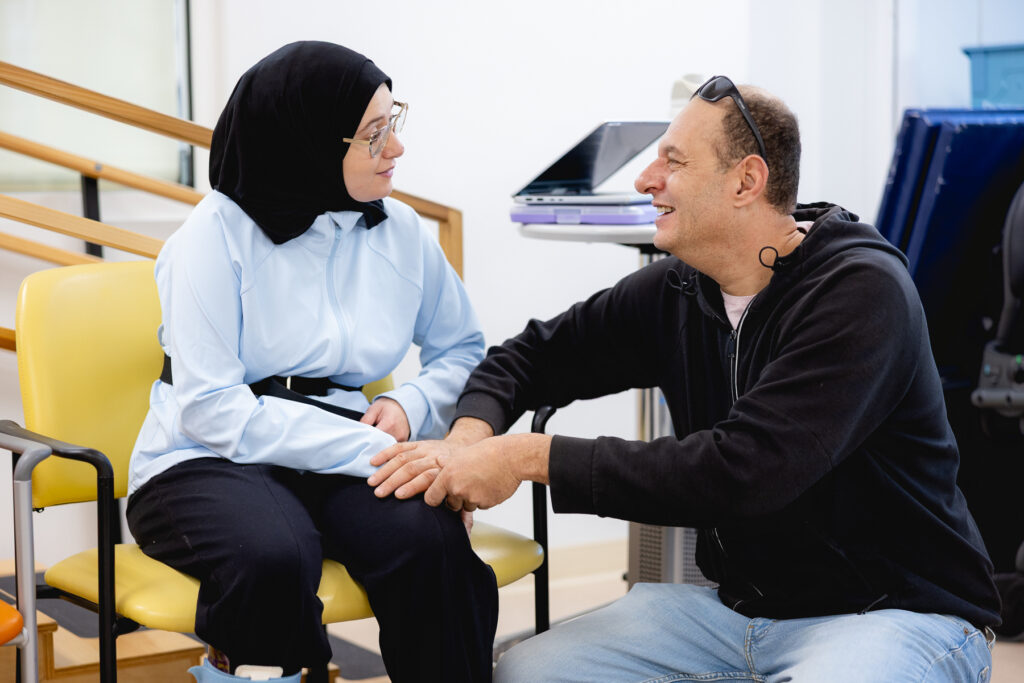
“It’s been awesome. It’s a great community,” said her dad, Fadi. “They give you a friends-and-family vibe.”
Comebacks don’t happen overnight. Nour worked with grit and determination one skill, one milestone, and one day at a time.
What Is Day Rehab at Mary Free Bed?
A Structured Alternative to Inpatient Rehabilitation
Day Rehab is structured, intensive therapy—without an overnight hospital stay. Patients receive coordinated neurological rehabilitation during the day and return home each evening, allowing them to practice skills in real-life settings while maintaining clinical momentum.
The outpatient Mary Free Bed Day Rehab Program runs Monday through Thursday, combining 2-3 therapy disciplines per day. The consistent schedule helps patients need to build confidence, endurance and measurable progress throughout recovery.
What a Typical Day Rehab Schedule Looks Like
Each therapy session lasts approximately 45 minutes, with a predictable schedule that allows patients to:
- Build on skills learned the day before.
- Focus on specific goals within each therapy discipline.
- Maintain consistency, which is one of the most important drivers of neurological recovery.
This structure helps reduce fatigue, reinforce learning and support long-term progress.
Why Going Home Each Night Matters
Going home is part of the therapy.
One of the most powerful benefits of day rehabilitation is what happens outside the therapy session.
Patients practice new skills at home—like cooking, communicating and moving through daily routines. The next day, they return to reflect, adjust and refine those skills with their therapy team. This creates a built-in feedback loop that accelerates learning and confidence.
For Nour, that meant family involvement. Caregivers often learn strategies to reinforce therapy goals at home, ask questions and actively participate in recovery.
Her siblings, Aya and Mohamed, became an extended therapy team—trying new techniques at home in the evenings and reporting back to therapists the next morning.
“They help us help her,” Mohamed said.
Who Benefits from Day Rehabilitation?
Day Rehab can benefit individuals recovering from:
- Traumatic brain injury (TBI)
- Stroke
- Spinal cord injury (SCI)
- Multiple trauma or complex neurological conditions
For many patients, Day Rehab bridges the gap between inpatient rehabilitation and full independence—offering the intensity of inpatient therapy with the comfort of sleeping in your own bed.
How Day Rehab Supports Brain Injury Recovery
Brain injury recovery is complex—and it takes time. But, like Nour, the brain is also remarkably resilient.
Through a process called neuroplasticity, the brain can rewire itself by forming new neural connections around damaged areas. This ability is what makes day rehabilitation after a brain injury so effective, especially when therapy begins early and is delivered consistently.
The first year after a traumatic brain injury is particularly important. During this window—often referred to as “good brain time”—the brain is most responsive to neurological rehabilitation, making structured, repetitive therapy essential for regaining function.
“The sooner rehabilitation begins, the more receptive the brain is to healing,” said Megan Nickelson, speech-language pathologist and site leader for the Adult Neuro Day Rehab Team at Mary Free Bed.
By combining intensive, team-based therapy with a predictable schedule, Day Rehab helps patients strengthen skills, build new neural pathways, and steadily reclaim independence, one day at a time.
Speech Therapy After Brain Injury
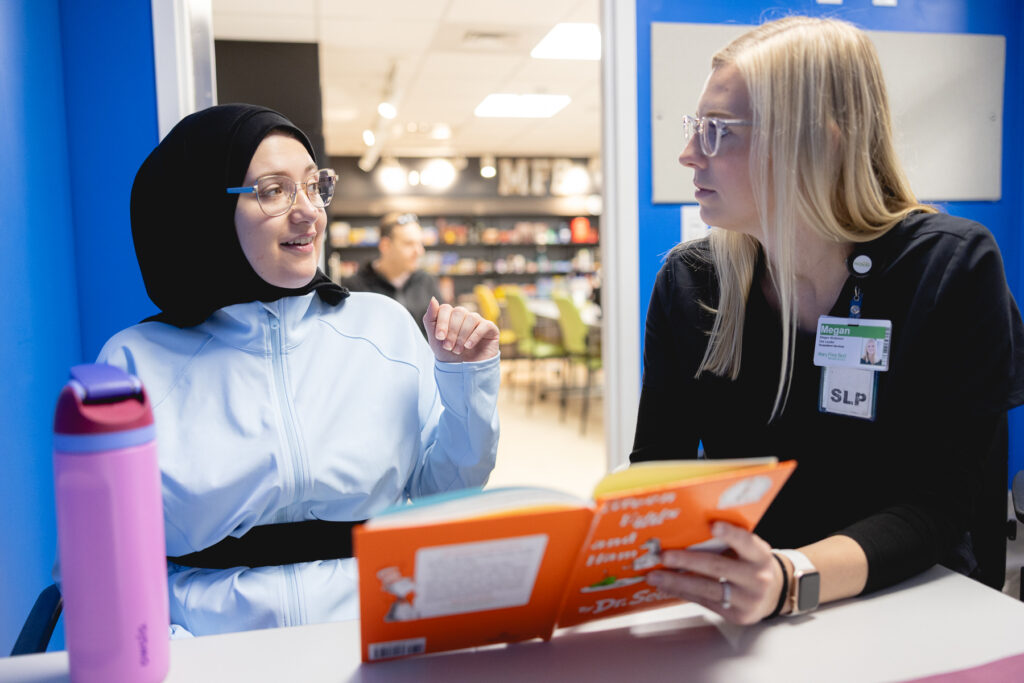
As a speech-language pathologist, Megan worked with Nour for more than 100 sessions.
Speech therapy in brain injury rehabilitation focuses on communication, memory, cognition and safe swallowing. For patients with aphasia, therapy may include scripting everyday conversations like ordering coffee, making appointments and managing daily life.
Nour couldn’t speak verbally when she began the program. She communicated by typing, and she was determined to talk again.
“Me and Megan, we learned every letter,” Nour said.
When Nour started Day Rehab, she also relied on a feeding tube. Together, she and Megan strengthened her swallowing muscles, carefully modifying meals to be safe and meaningful.
Nour’s family brought their favorite Lebanese recipes to therapy. Her mom, Zeinab, made kibbeh. When Nour wanted salad, they tried fattoush.
“I wanted the food to be personal, to reflect her culture,” Megan said.
Today, Nour enjoys a fully unrestricted diet (kibbeh included).
Occupational Therapy and Physical Therapy after TBI
Therapists work together to put life skills in motion.
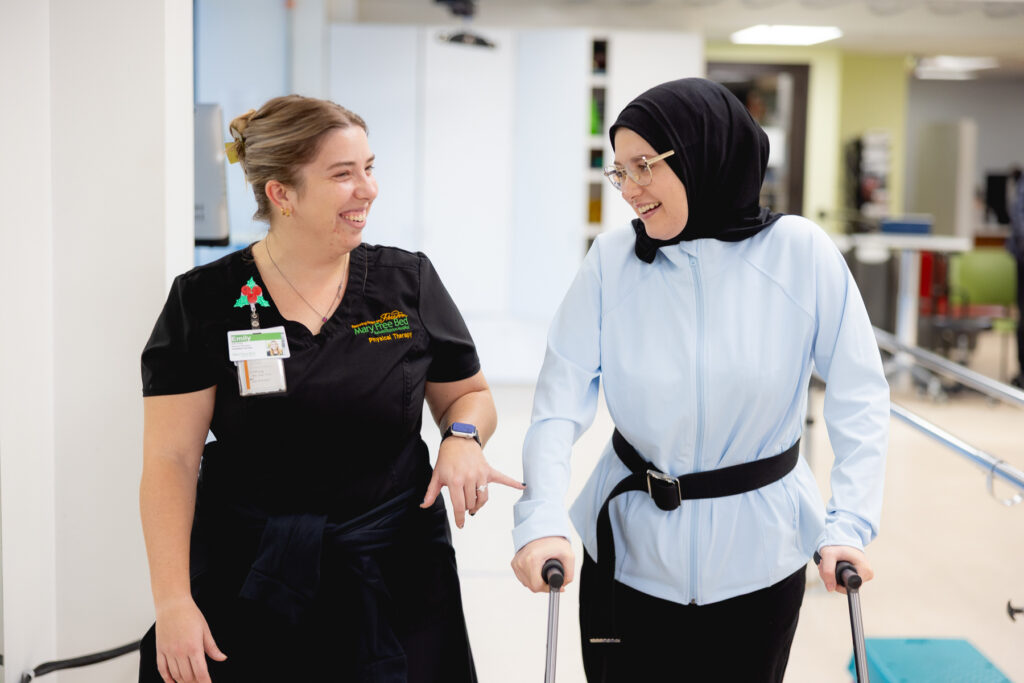
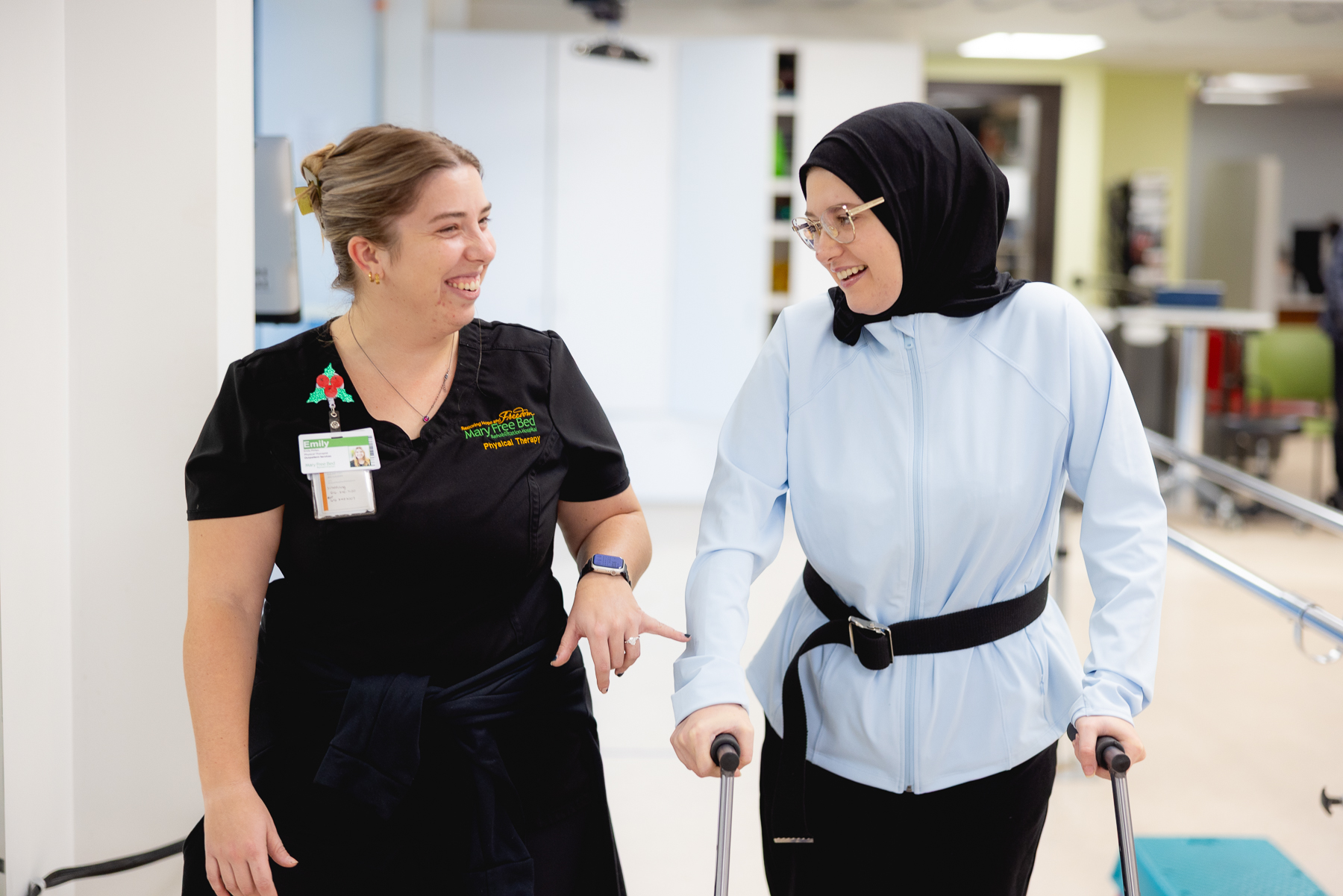
Occupational therapist Katie O’Brien and physical therapist Emily Philips often work as a back-to-back team, helping patients translate progress into daily life.
Occupational therapy after a brain injury focuses on activities that matter most. Activities like cooking, dressing, personal care and returning to routines are part of therapy. With Katie’s help, Nour relearned how to put on her hijab each morning.
“You don’t learn that in OT school,” Aya joked.
Mary Free Bed’s built-in Activities of Daily Living therapy apartment allows patients to practice real-world tasks side by side with therapists.
“OT is about your daily life,” Katie said. “If it matters to you, it matters to us.”
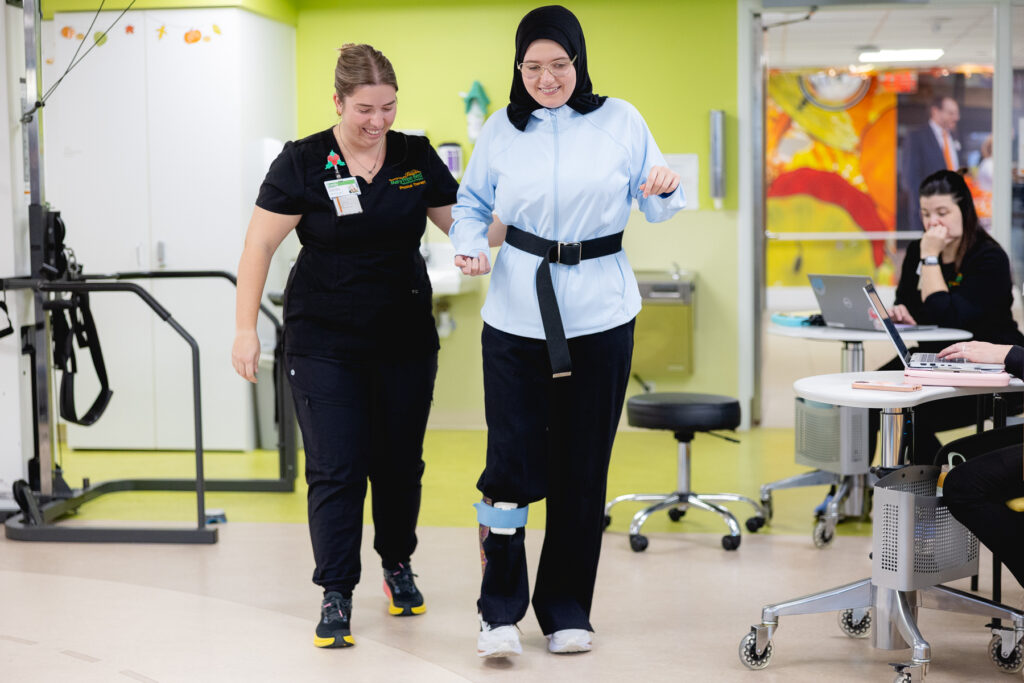
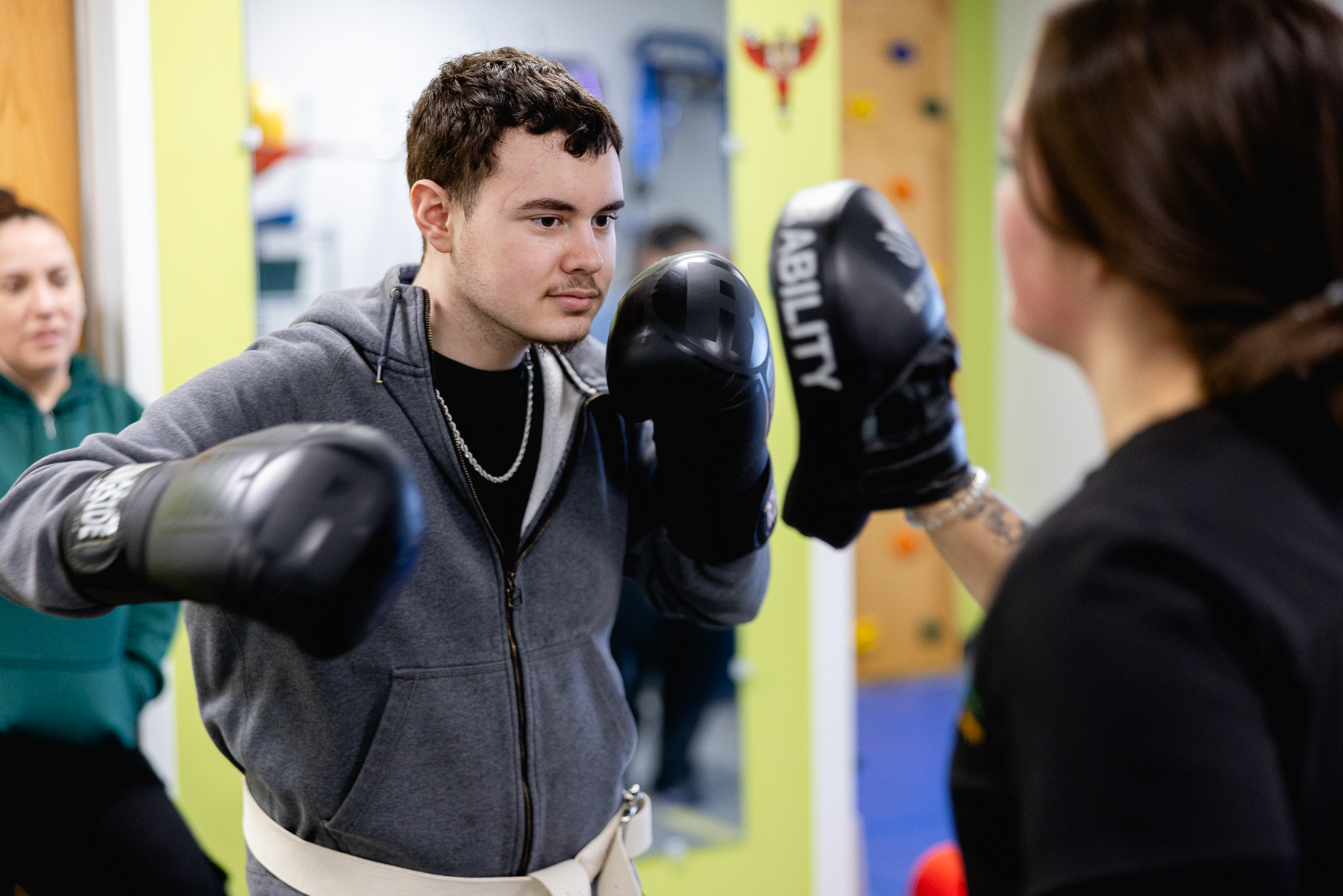
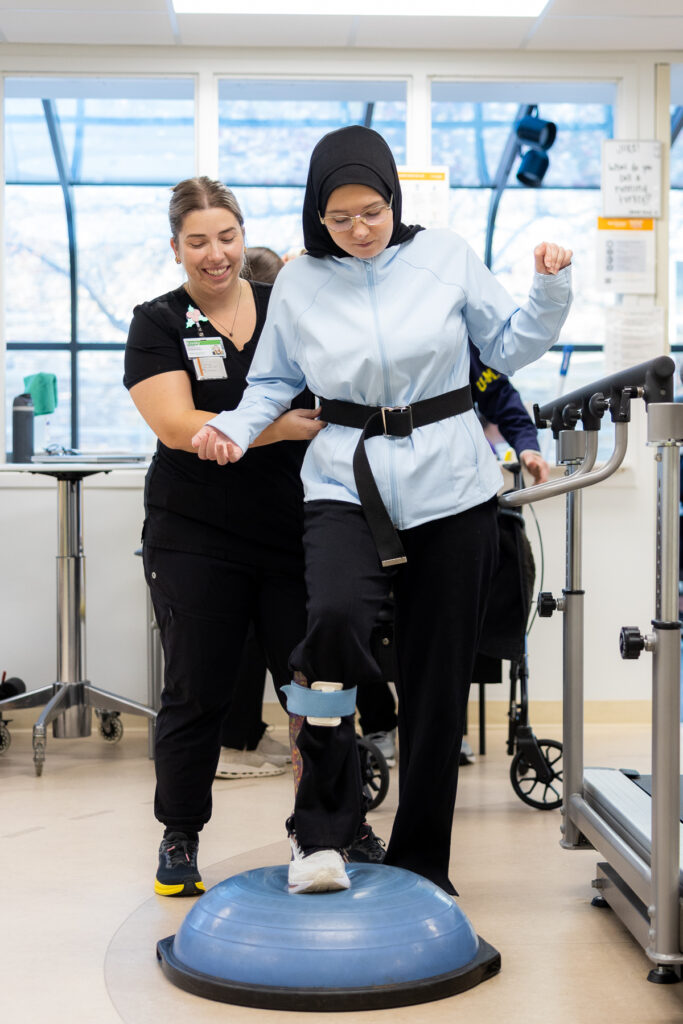
Physical therapy focuses on strength, balance, coordination, and mobility. Nour arrived in a wheelchair. She now walks independently.
“I came here in a wheelchair. Now I’m walking on my own,” Nour said.
Emily even helped her prepare for a family wedding. A highlight? Relearning traditional Lebanese dance steps.
“They played the music in the gym and everything,” Fadi laughed.
Family, Community and Life After Rehab
Over the course of a year, Nour’s family traveled to Grand Rapids from Sparta, Michigan. What started as attending Day Rehab sessions led to becoming part of the Mary Free Bed community.
“It’s like a big family here,” Zeinab said.
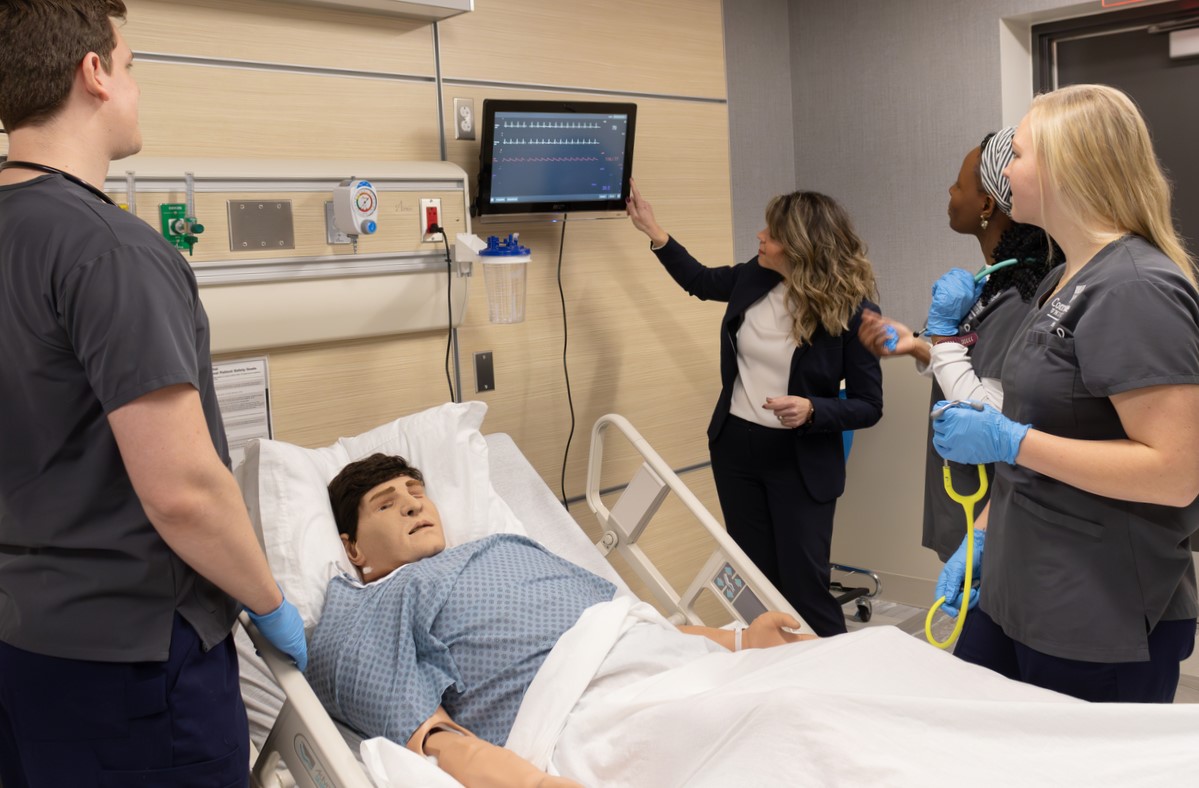
Inspired by Nour’s journey, her twin sister, Aya, began volunteering at Mary Free Bed. Aya also attended the College Student Nursing Program, where she was able to observe patient care and support nursing staff.
During downtime, she hung out in the social areas and listened to other families tell their stories. “I just wanted to be that kind of person for other people here,” Aya said. She’s now pursuing a career as a physician assistant.
Nour’s also preparing to return to school—this time for a master’s degree in public health. To help her prepare to return to the classroom, her speech therapy sessions shifted toward cognition: notetaking, scheduling and managing coursework.
Megan modeled their sessions after college lectures, challenging Nour to write a research paper on a topic of her choice. Nour turned in a paper on brain injury, with perfect citations.
“If I’d known where she’d be now on day one, I would’ve been blown away,” Megan said.
“I want to thank everyone for helping me find myself again,” Nour said. “I lost myself, but I found it again.”
Her message to other patients is simple:
“You can only see improvement from here.”
Destination Rehab Starts Here
Families travel from across Michigan and beyond for destination rehabilitation at Mary Free Bed.
From inpatient brain injury rehabilitation to the outpatient Day Rehab Program, our teams provide specialized interdisciplinary care, advanced therapies and unwavering support—whether you’re here for weeks, months or longer.
Nour Yahya’s recovery didn’t happen all at once. It happened day by day through repetition, determination, and a year of specialized brain injury rehabilitation at Mary Free Bed. Ask for Mary. No matter how far you travel, we’ll help you get back to doing what you love.