Maverick Martin experienced a brain injury moments before completing his first 5K; his heartbeat stopped steps from the finish line.
30-year-old Maverick and his wife, Jamie, were running in the LeRoy Razzasque Days 5k in July. He was flying through the race with impressive speed. His wife was about 10 minutes behind. Maverick was racing against his cousin, with a goal of getting first, but before he could set a PR, Maverick dropped to the ground. The healthy, athletic, 30-year-old was experiencing cardiac arrest, a life-threatening condition that also resulted in a brain injury.
Maverick spent this past summer undergoing a new kind of training when he came to the Inpatient Brain Injury Rehabilitation Program at Mary Free Bed Rehabilitation in Grand Rapids, Michigan.
What’s the difference between cardiac arrest and a heart attack?
Cardiac arrest happens when the heartbeat becomes irregular, which causes the heart to stop pumping effectively or even shut down. A heart attack occurs when blood-flow to the heart is disrupted, most commonly due to a blocked artery. Symptoms of a heart attack include:
- Chest pain or discomfort that’s often described as a “crushing sensation.”
- Pain in the arms, jaw or back.
- Cold sweats, nausea or feeling lightheaded.
For many people, Maverick included, cardiac arrest symptoms occur without warning. But some people experience symptoms prior to cardiac arrest, like:
- Chest discomfort.
- Heart palpitations (a fluttering heartbeat).
- Sudden weakness.
Maverick collapsed and lost consciousness.
“A police officer and his grandpa saw him go down, so CPR started immediately with his grandpa’s help,” Jamie recalled.
When Jamie initially saw her husband lying on the side of the road, she thought he’d passed out.
When bystanders started CPR, Jamie and his cousin started yelling to try and get through to him. Within seconds, medics found a shockable rhythm and brought him back. The only thing Maverick remembers is hearing his wife’s voice shouting, “We need you.”
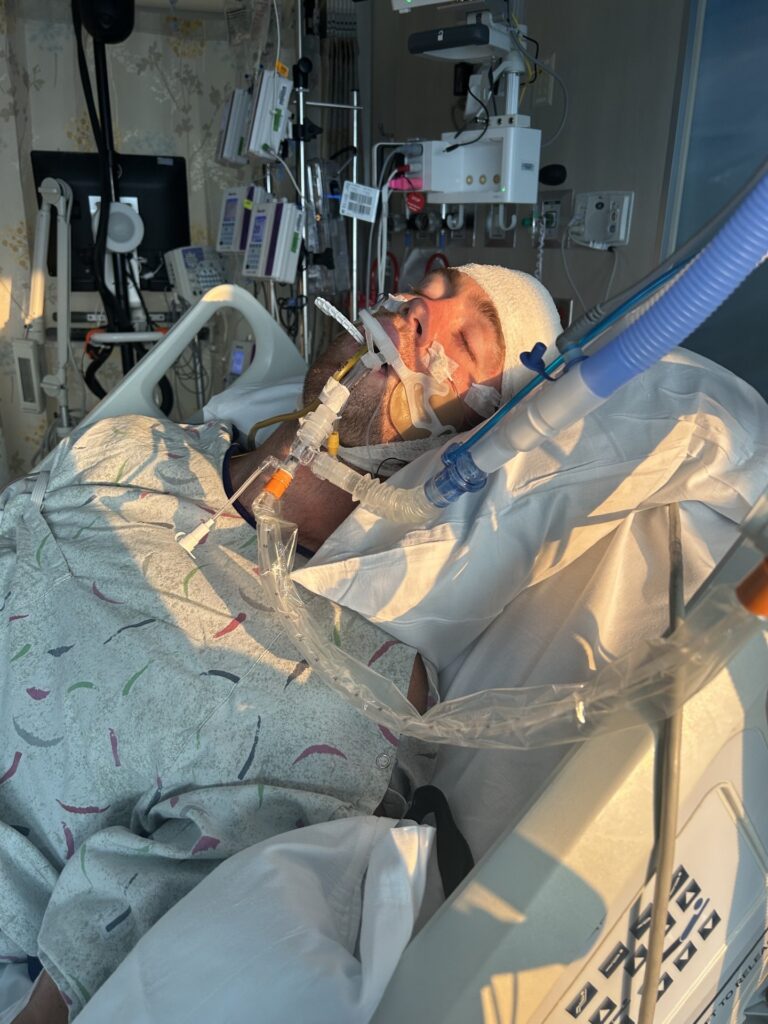
He was revived at the scene, following 26 rounds of CPR. The lack of oxygen led to an anoxic brain injury. However, early interventions, like CPR, can improve long-term outcomes following a brain injury.
What are the symptoms of an anoxic brain injury?
Anoxic brain injuries can present with a variety of symptoms, including:
- Trouble concentrating
- Poor coordination
- Headaches
- Dizziness
- Confusion
- Loss of consciousness.
“We didn’t know if he was going to wake up–especially in the first few weeks,” Jamie explained.
Conversations with their then 1-year-old daughter, Rory, and 3-year-old son, Otto, were especially difficult. Eventually, Jamie decided it was best to try and explain the situation in a way the kids could understand.
Otto saw his dad in the hospital for the first time on his birthday. “He was very nervous. He asked, ‘Why is my dad not talking? Why is he so sick?’” Jamie recalled.
What to Expect During Inpatient Rehabilitation for Brain Injury
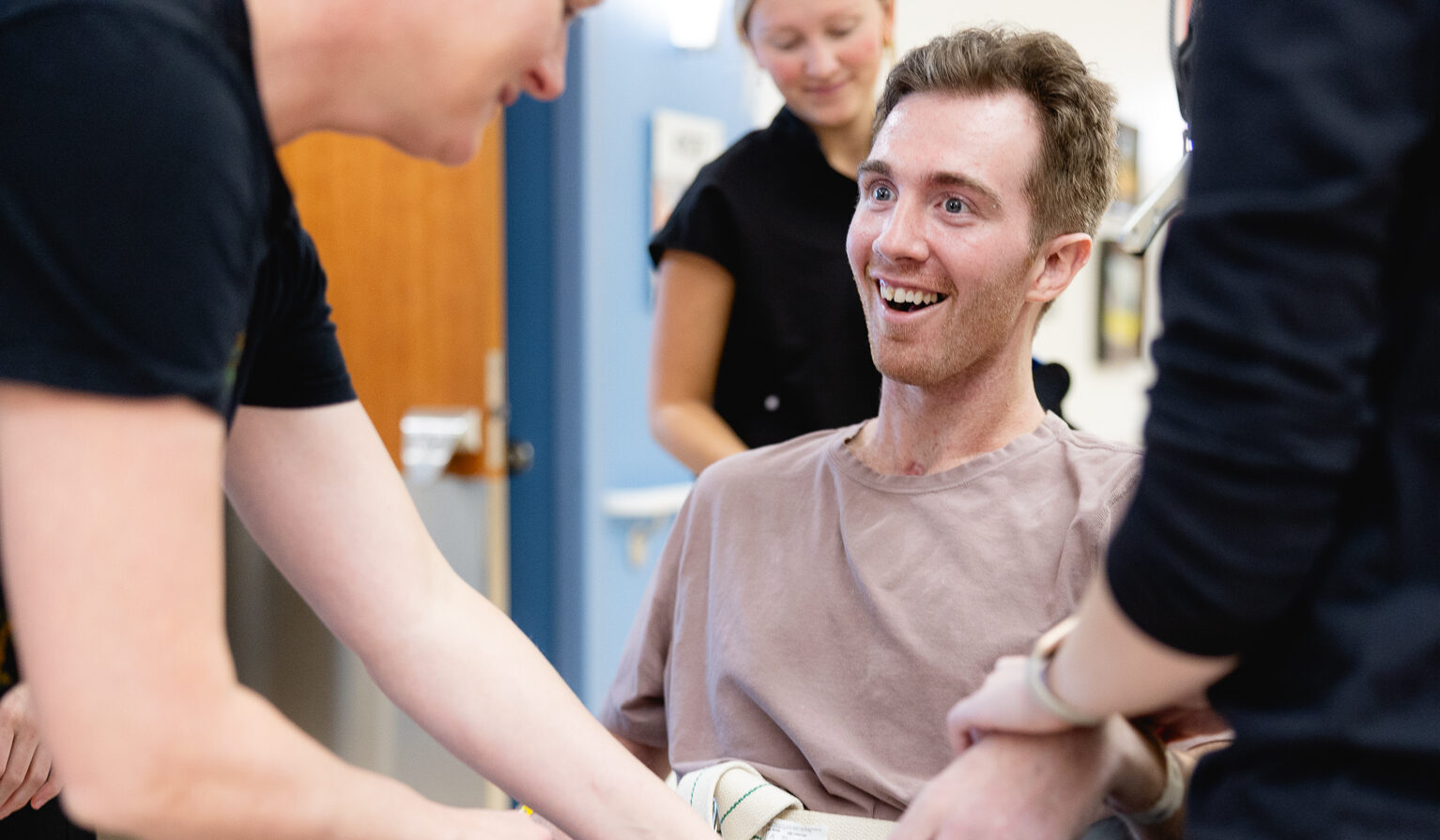
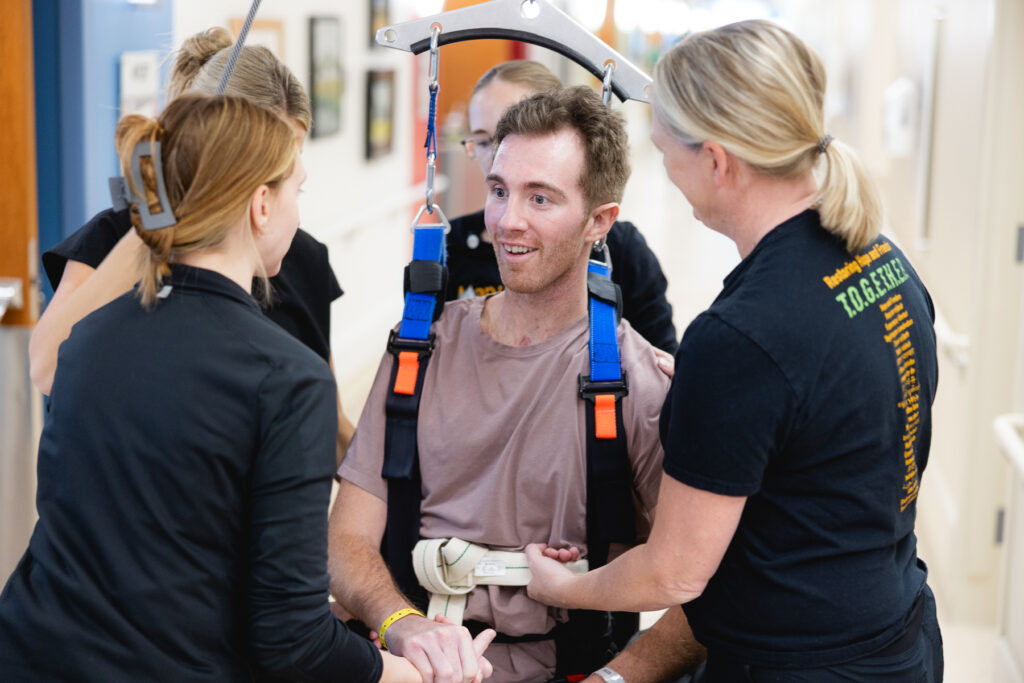
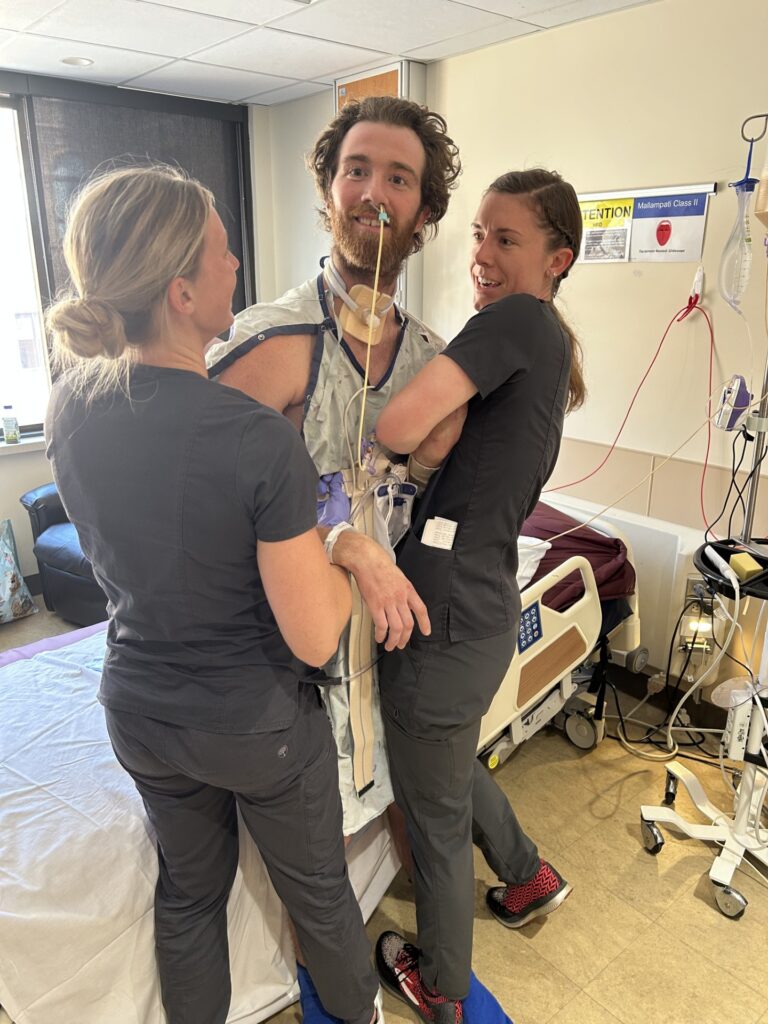
On August 29, Maverick was admitted to Mary Free Bed’s Inpatient Brain Injury Rehabilitation Program. His family recalls being given a bleak prognosis during his acute care stay, which they believe is what motivated him to beat the odds. Maverick spent the next 57 days working with physical therapists, occupational therapists and speech-language pathologists to regain his independence.
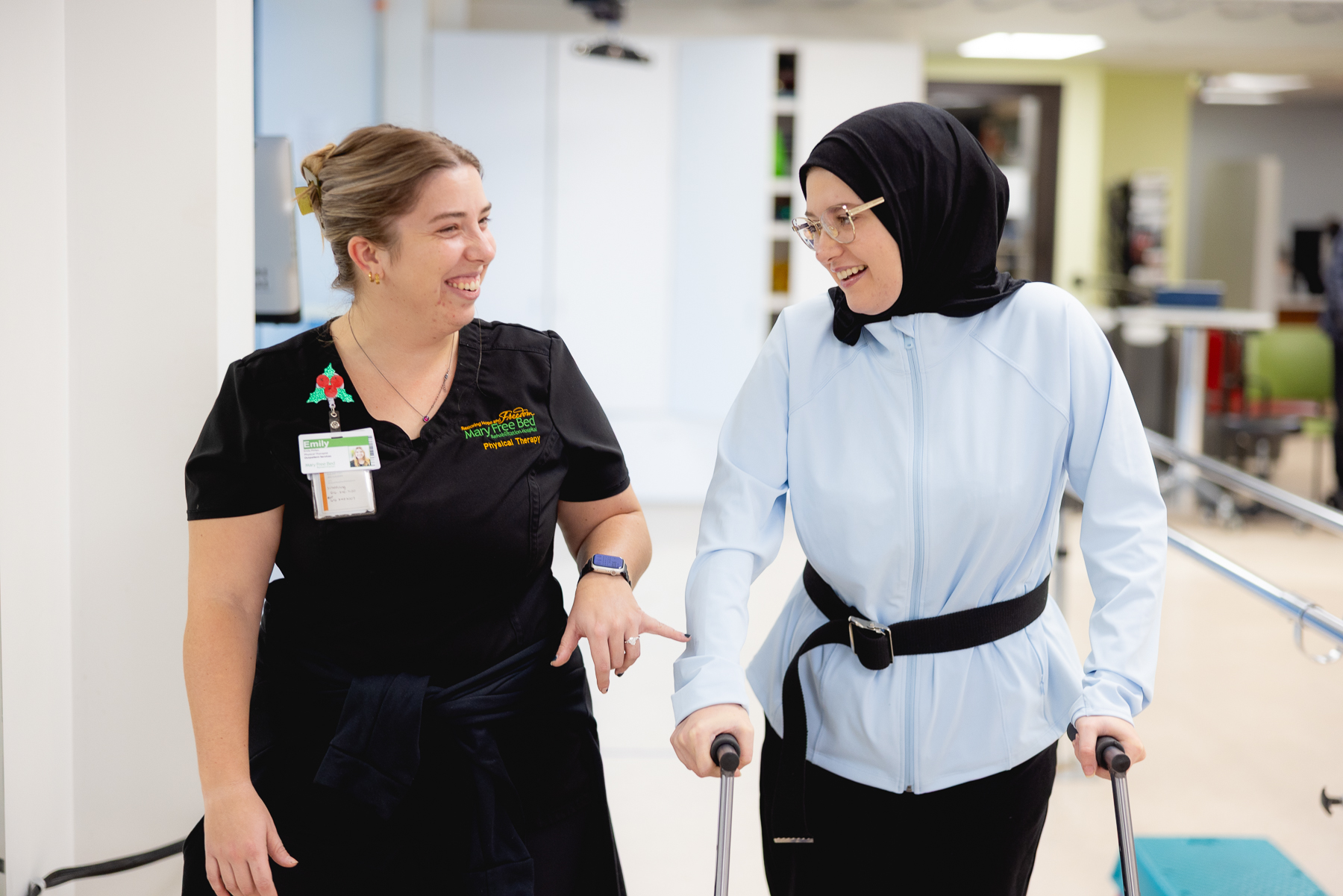
During inpatient rehabilitation for a brain injury, patients receive therapy for three hours a day, five days a week.
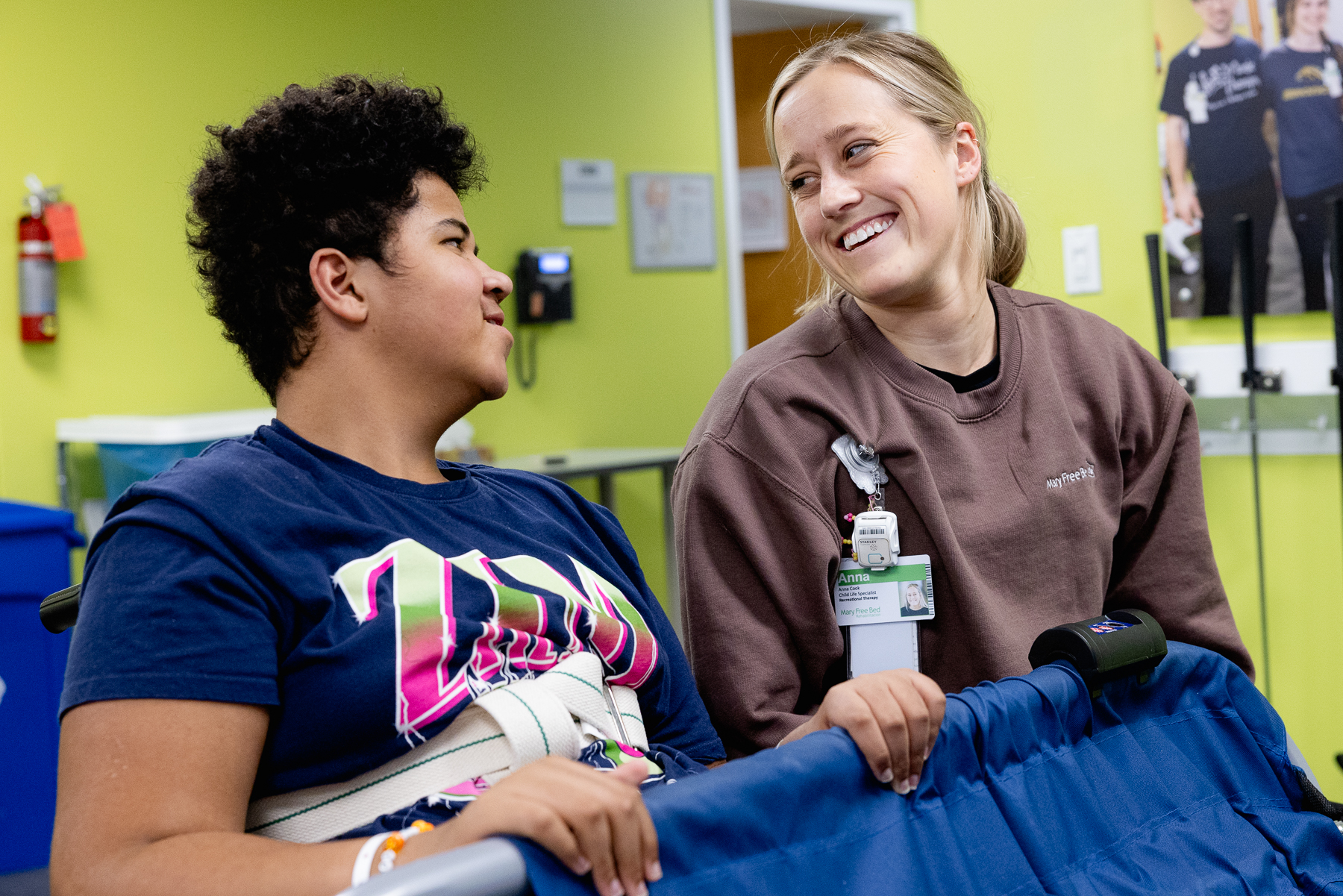
Speech therapy in brain injury rehabilitation focuses on communication, memory, cognition and safe swallowing. Occupational therapy focuses on activities like cooking, dressing, personal care and returning to routines. Physical therapy addresses mobility, strength and function.
Since no two brain injuries are alike, rehabilitation is tailored to each patient. Mary Free Bed therapy teams combine clinical expertise with compassion, meeting each patient exactly where they are in their recovery.
“I asked Maverick what he would tell his therapists, and he said he would tell them he loves them because they’re so good,” Jamie said.
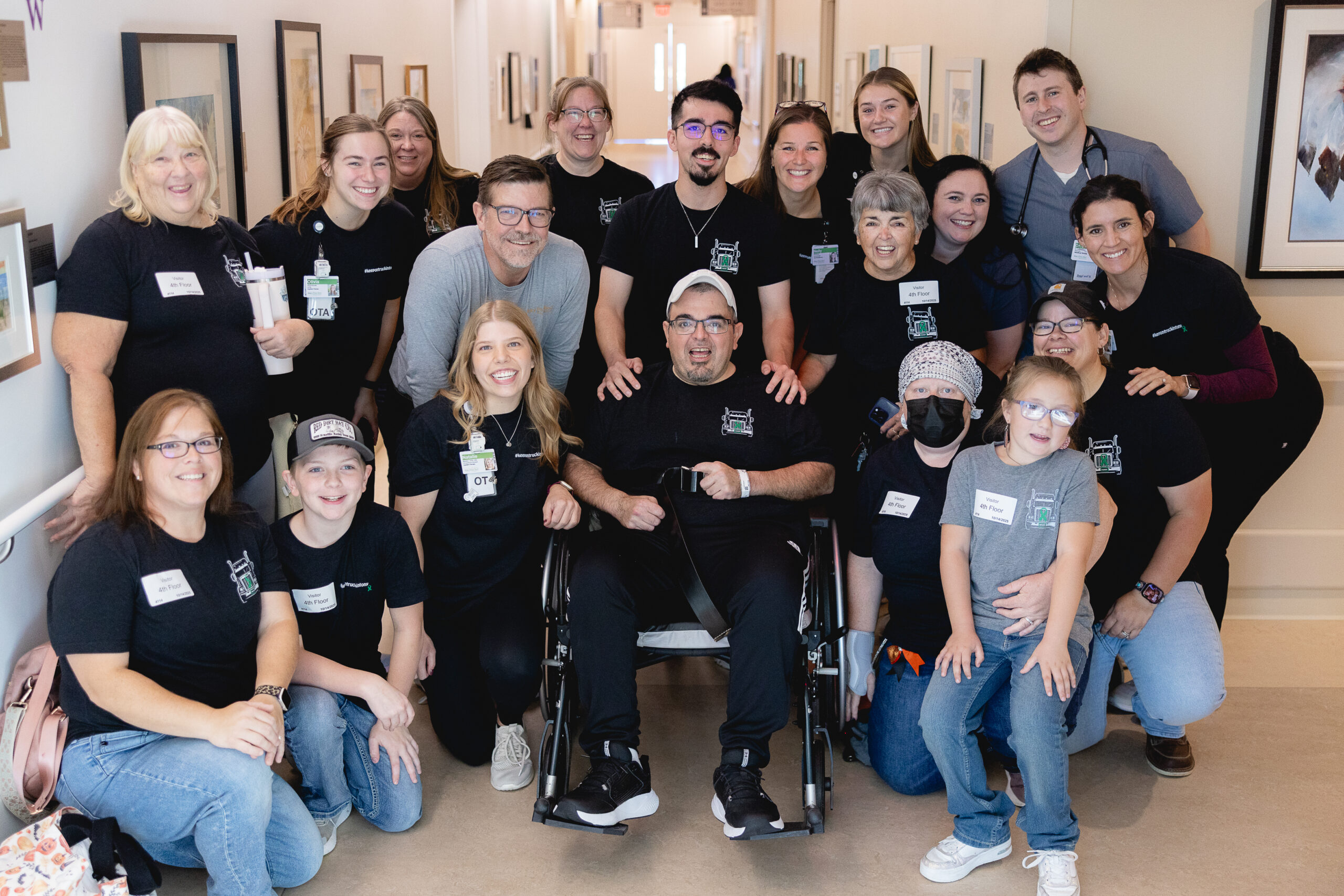
Maverick called the care “amazing.” Throughout his stay, his sense of humor never faltered, and Maverick’s care team quickly grew accustomed to his jokes. The Martin’s room became a social hub on the fourth floor. From the day of his cardiac arrest, Maverick was never alone; social gatherings with family, friends and staff were routine. “Keep moving forward” became his motto throughout his recovery.
“I’m so proud of him; he’s kept a good attitude through it all,” Jamie said.
After graduating from the Inpatient Brain Injury Rehabilitation Program in late October, Maverick returned home to a parade. Countless people in the village of Luther, Michigan, and surrounding towns showed up with firetrucks, balloons and handmade signs.
What does outpatient brain injury rehabilitation look like?
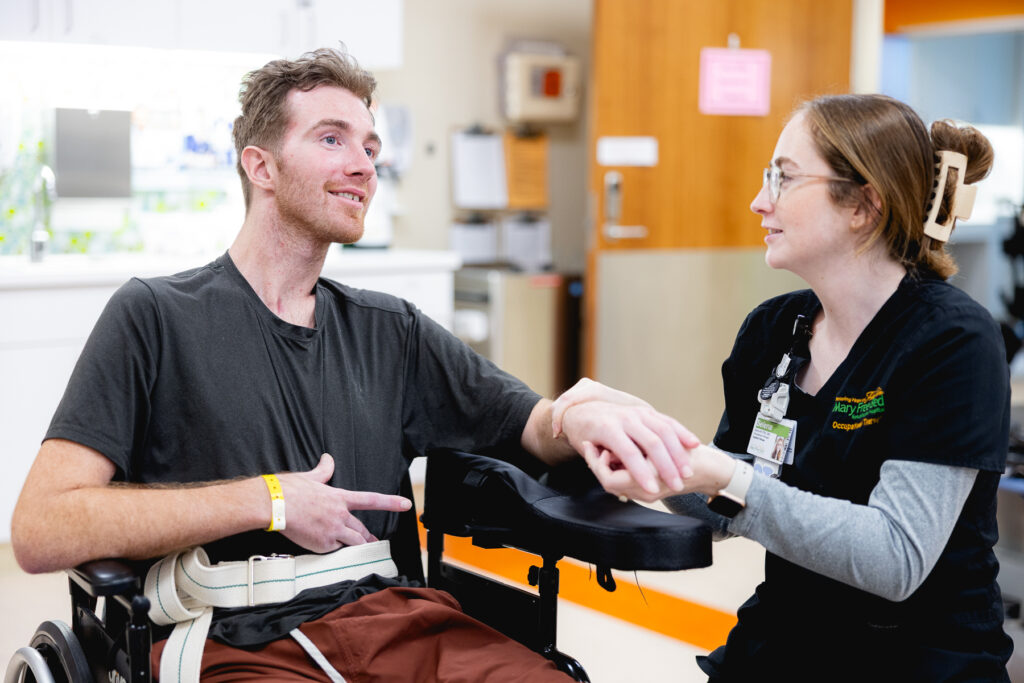
Maverick began outpatient therapy at Mary Free Bed in Cadillac, Michigan, shortly after returning home. His mom recalls being unable to imagine him working with anyone else outside of the Grand Rapids team but added that she’s been astounded with how the culture of compassionate care is the same nearly 100 miles away.
While inpatient rehabilitation includes round-the-clock medical care and access to nursing staff, outpatient rehabilitation is designed to fit into daily life, with sessions ranging from 45 minutes to an hour on a weekly or biweekly basis. Outpatient brain injury rehabilitation builds momentum for continued progress, working alongside the brain’s ability to form new neural pathways following illness or injury.
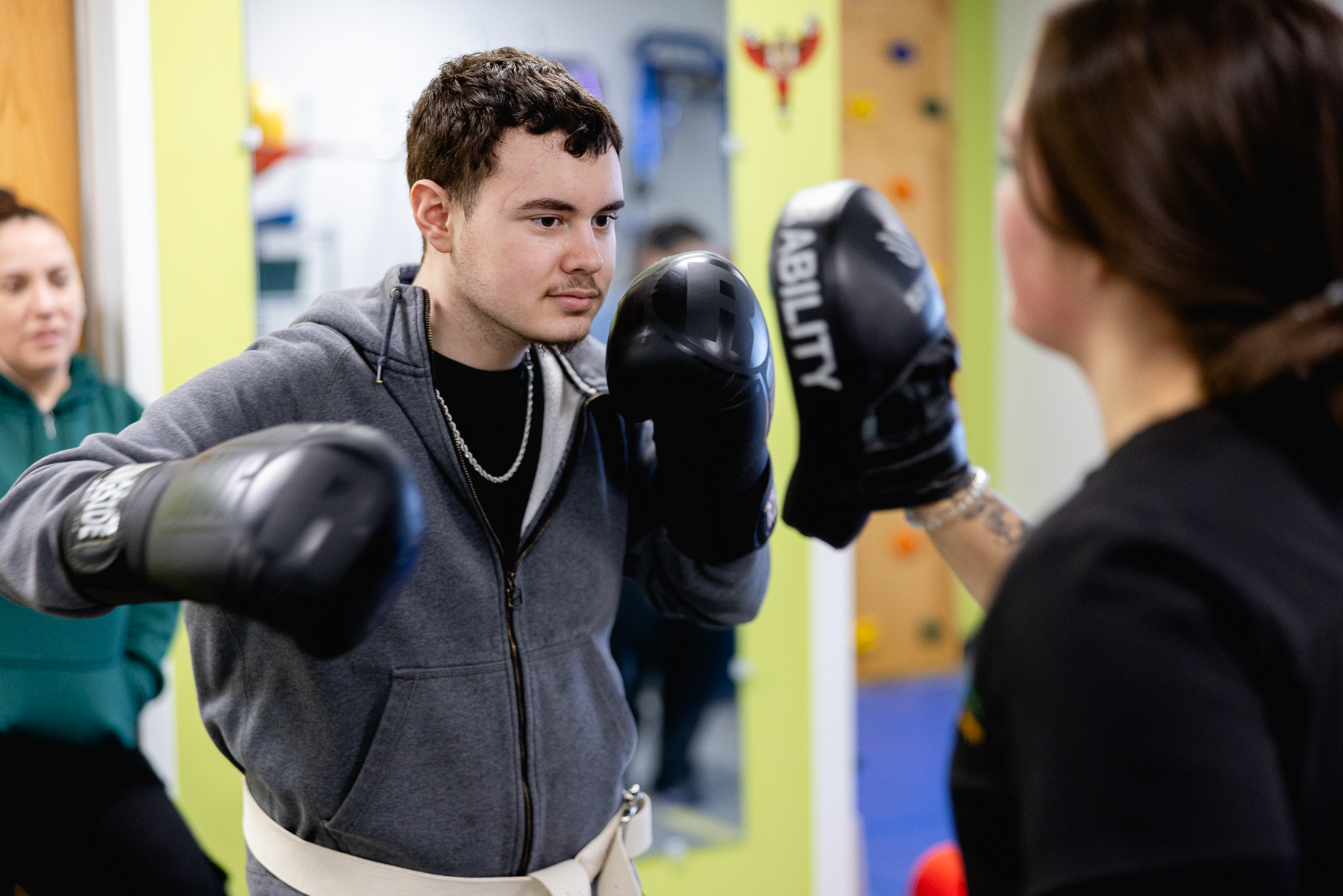
His rehabilitation journey still includes occupational therapy, physical therapy and speech therapy once or twice per week. In addition, a close friend of Maverick’s—who is a physical therapist—works with him on weekends to support his continued progress.
Making Strides Back Home
In the month following his inpatient discharge, Maverick stopped using his wheelchair at home and started feeding himself. He also saw continued improvements with his speech and vision and began sleeping through the night.
In early December, Maverick returned to the Mary Free Bed Grand Rapids Campus for a clinic visit. The on‑campus clinic gives patients an easy way to reconnect with their rehabilitation physicians after they return home. These visits help our care team understand how patients have been doing since leaving the hospital and offer support to keep their recovery moving forward.
Maverick hopes to see continued improvements with his speech, vision and mobility. His goal is to be able to hold his kids again and get back to being the athlete he was. He also aspires to run another 5k someday—within reason, clarifying, “not so fast.”
As Maverick continues working toward his recovery goals, even the smallest milestones are seen as extraordinary. The couple is grateful for the quick action of bystanders, for expert medical care and for the rehabilitation team that’s helping Maverick rebuild his life.
What is hands-only CPR?
Maverick’s story is also a powerful reminder—especially during Heart Health Month—that cardiac emergencies can happen to anyone, even those who are young and active. Maverick had no warning signs before his cardiac arrest.
What ultimately saved his life was fast CPR, immediate access to an AED and a community that didn’t hesitate to act.
If you witness someone collapse, you can do hands-only CPR, also known as compression-only CPR. This simple, but lifesaving technique has two steps:
- Call 911 and keep them on the phone. They can help you and dispatch emergency services to your location.
- Place both your hands on top of each other and push hard on the center of the chest. You should push at a rate of 100 to 120 beats per minute. To remember the pace, you can follow along to the beat of popular songs like “Stayin’ Alive” by the Bee Gees or “Walk the Line” by Johnny Cash.
If you’re interested in learning more about CPR, you can find courses in-person or online via the American Heart Association.
Maverick’s journey underscores why it’s so important for more people to learn hands-only CPR, know the signs of cardiac distress and advocate for heart health at every age.
This February, let Maverick’s story inspire you to take care of your heart, learn life‑saving skills and support those who continue to keep moving forward on their own recovery journeys.
About the Inpatient Brain Injury Rehabilitation Program at Mary Free Bed
Brain injuries are extraordinarily complex. At Mary Free Bed, brain injury recovery combines compassionate, multidisciplinary care with meaningful milestones. From returning to daily routines in occupational therapy to regaining balance and coordination in physical therapy, the inpatient Brain Injury Rehabilitation Program is designed to craft a comeback as unique as you are. Mary Free Bed is accredited by the Commission on Accreditation of Rehabilitation Facilities (CARF), recognizing Mary Free Bed’s commitment to rigorous standards for excellent rehabilitative care. Additionally, Mary Free Bed is also accredited by the Joint Commission, signifying a continual commitment to patient safety and providing quality care.
If you or a loved one are interested in specialty brain injury rehabilitation at Mary Free Bed, you can click here to learn more.