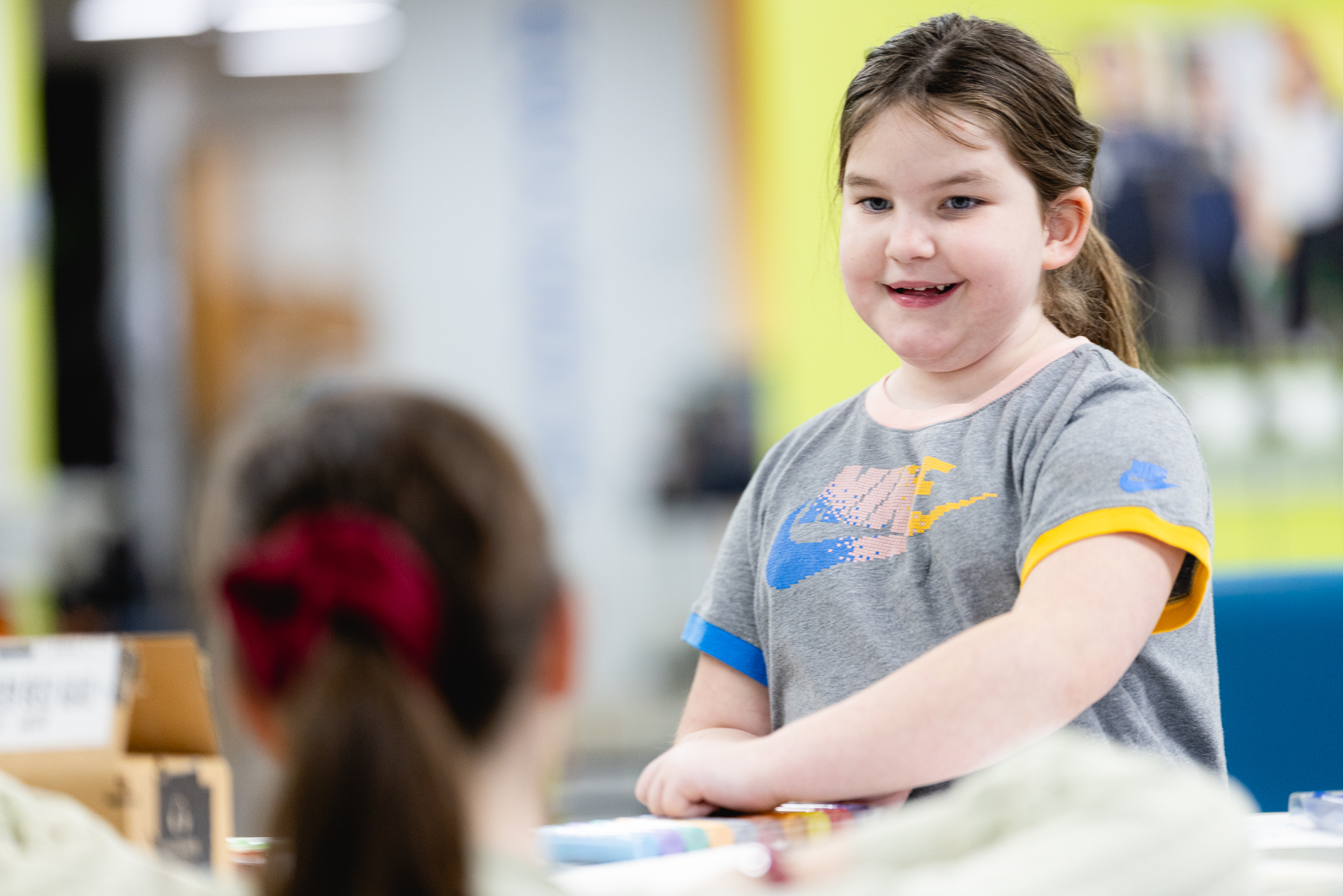
A stroke is something most people associate with adults. But for one West Michigan family, it arrived without warning—on a school field trip, in the middle of an ordinary day.
Cari Dennany was running errands when her phone rang. On the other end was her 8-year-old daughter’s teacher.
“She told me Amelia had fallen down,” Cari said. “They couldn’t get her to stand or sit up, and I knew right away this was serious.”
Amelia, a second grader at Bauerwood Elementary in Jenison, Michigan, was confused during class. Her speech was slurred. One side of her face had begun to droop. Her teacher, Christy Tease, trusted her instincts and called 9-1-1.
That decision changed everything.
Recognizing Stroke in Children
Cari rushed to her daughter, staying on speakerphone with the teacher and paramedics. When she arrived, she was gently warned that seeing Amelia might be frightening.
The symptoms were clear and urgent.
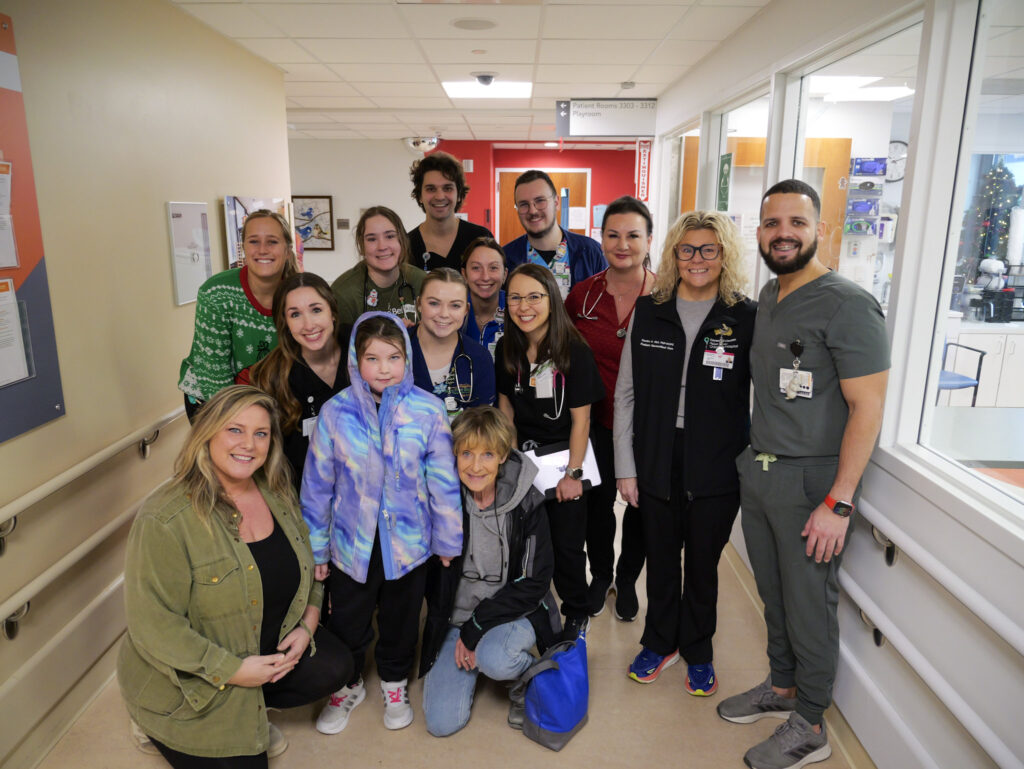
Amelia was taken by ambulance to Corewell Health Helen DeVos Children’s Hospital, where doctors confirmed what no parent expects to hear: Amelia had suffered a stroke.
While strokes are rare in children, they are still among the top 10 causes of death in pediatrics. Early recognition makes all the difference.
“Most pediatric stroke patients don’t arrive in time,” said Dr. George Lara Collado. “Amelia did.”
A Critical Window and a Historic Moment
Amelia had experienced an ischemic stroke caused by a blood clot blocking blood flow to the brain. In some cases, doctors can treat this type of stroke with tissue plasminogen activator (tPA), a clot-busting medication that must be administered within hours of symptom onset.
Amelia became the first pediatric patient at Helen DeVos Children’s Hospital to receive tPA.
“When we pushed the medication, within three minutes her legs started to move,” recalled Caroline Rich, pediatric neurology nurse practitioner. “Everyone at the bedside gasped.”
It was a moment of hope and the beginning of a long recovery journey.
The Role of Rehabilitation in Pediatric Stroke Recovery
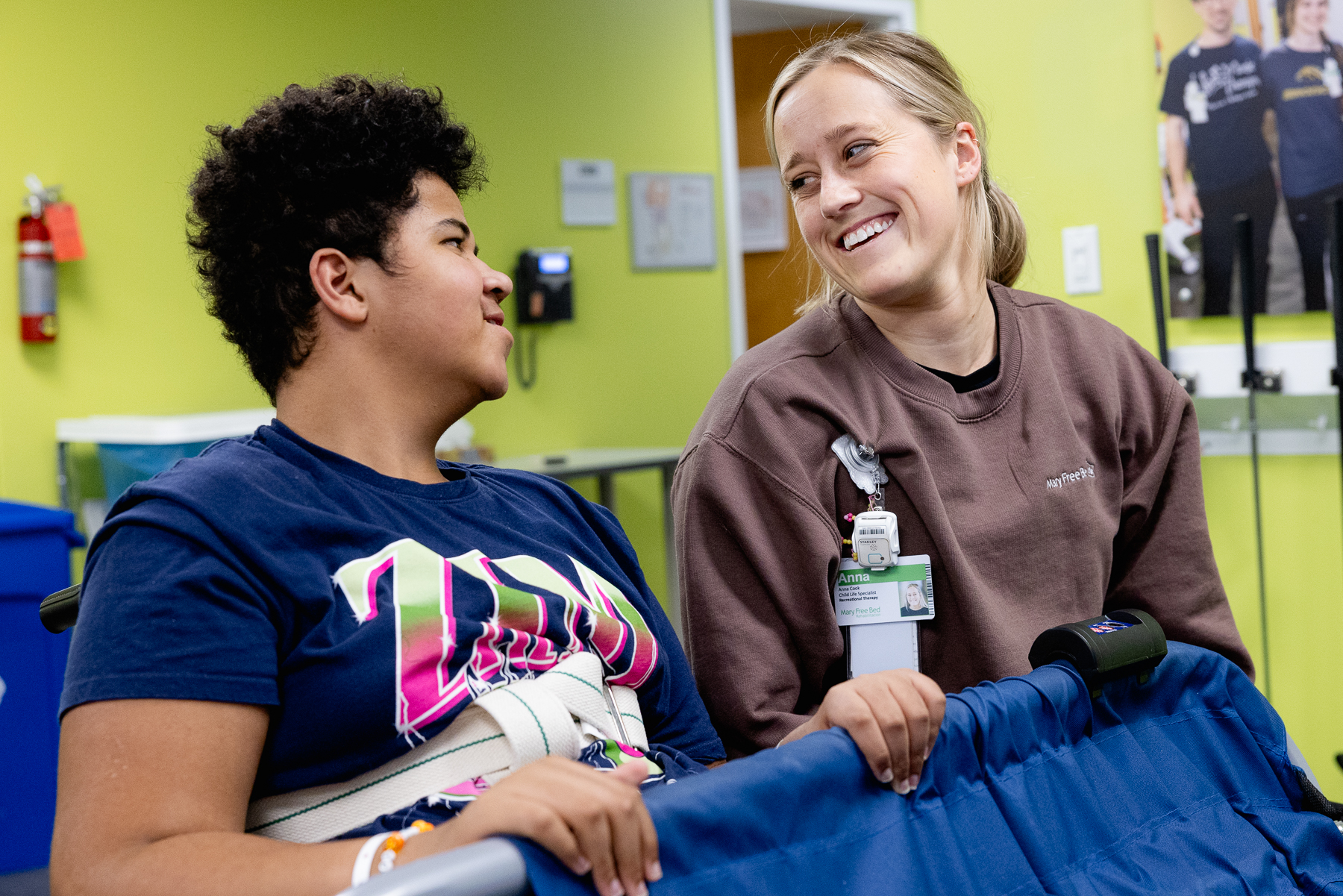
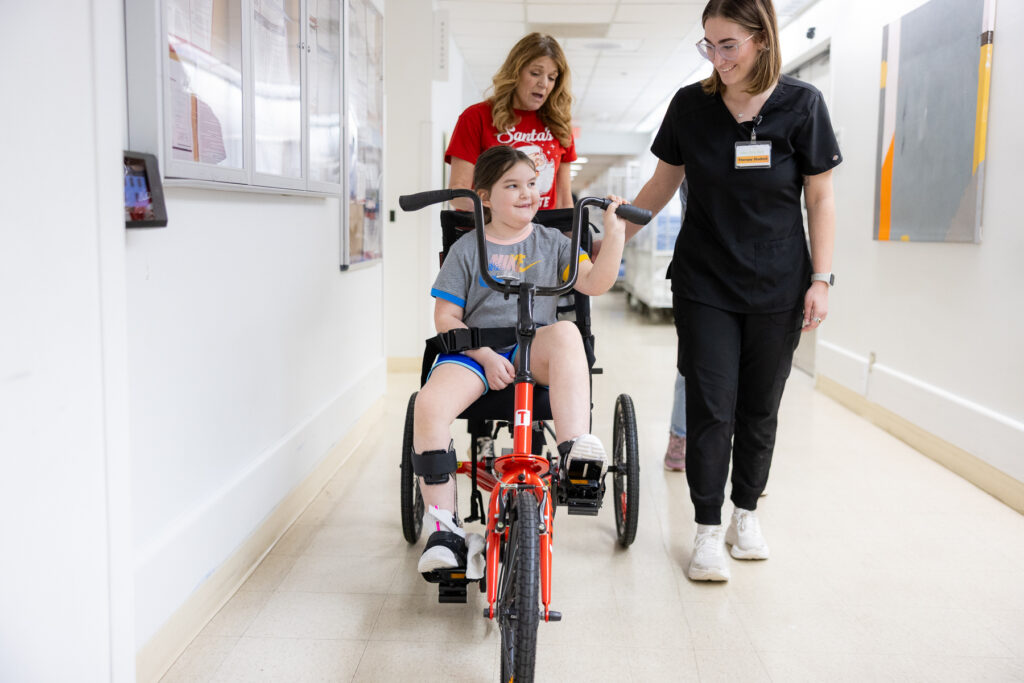
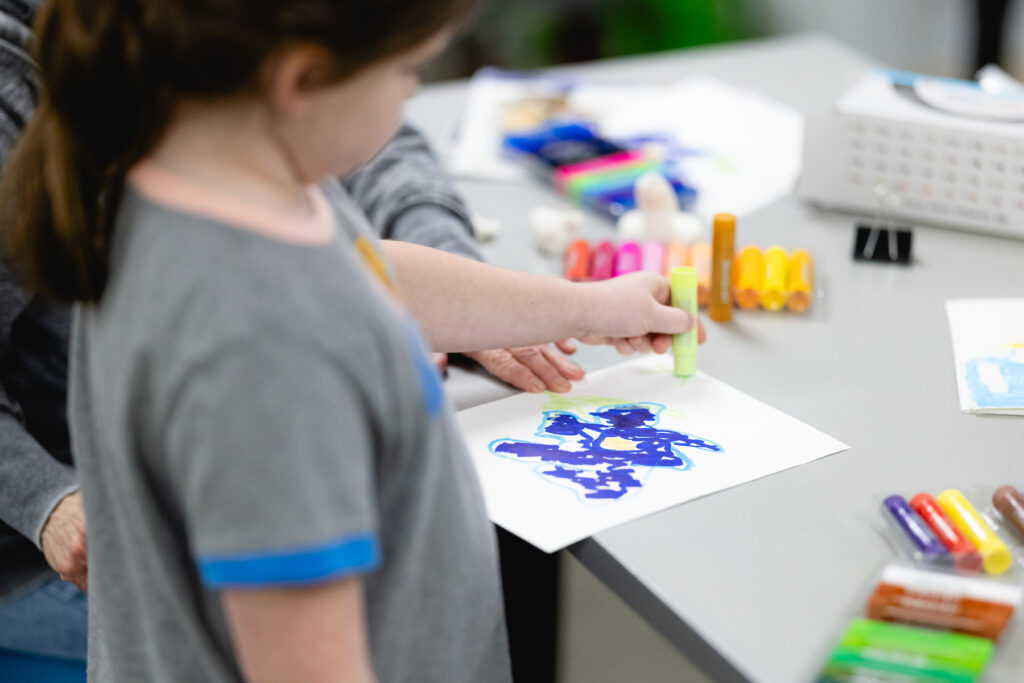
After acute care, Amelia was admitted to the Mary Free Bed Kids Inpatient Rehabilitation Program, where she spent several weeks rebuilding strength, confidence and independence.
The Mary Free Bed Kids Pediatric Stroke Rehabilitation Program takes a whole-child approach—addressing physical, emotional and psychological needs while helping kids return to the activities that make them kids.
Speech Therapy: Finding Her Voice Again
After a stroke, children may experience slurred speech, difficulty finding words, voice changes or challenges with swallowing and eating.
When Amelia arrived, she was facing apraxia of speech, a motor-speech disorder that’s common after stroke.
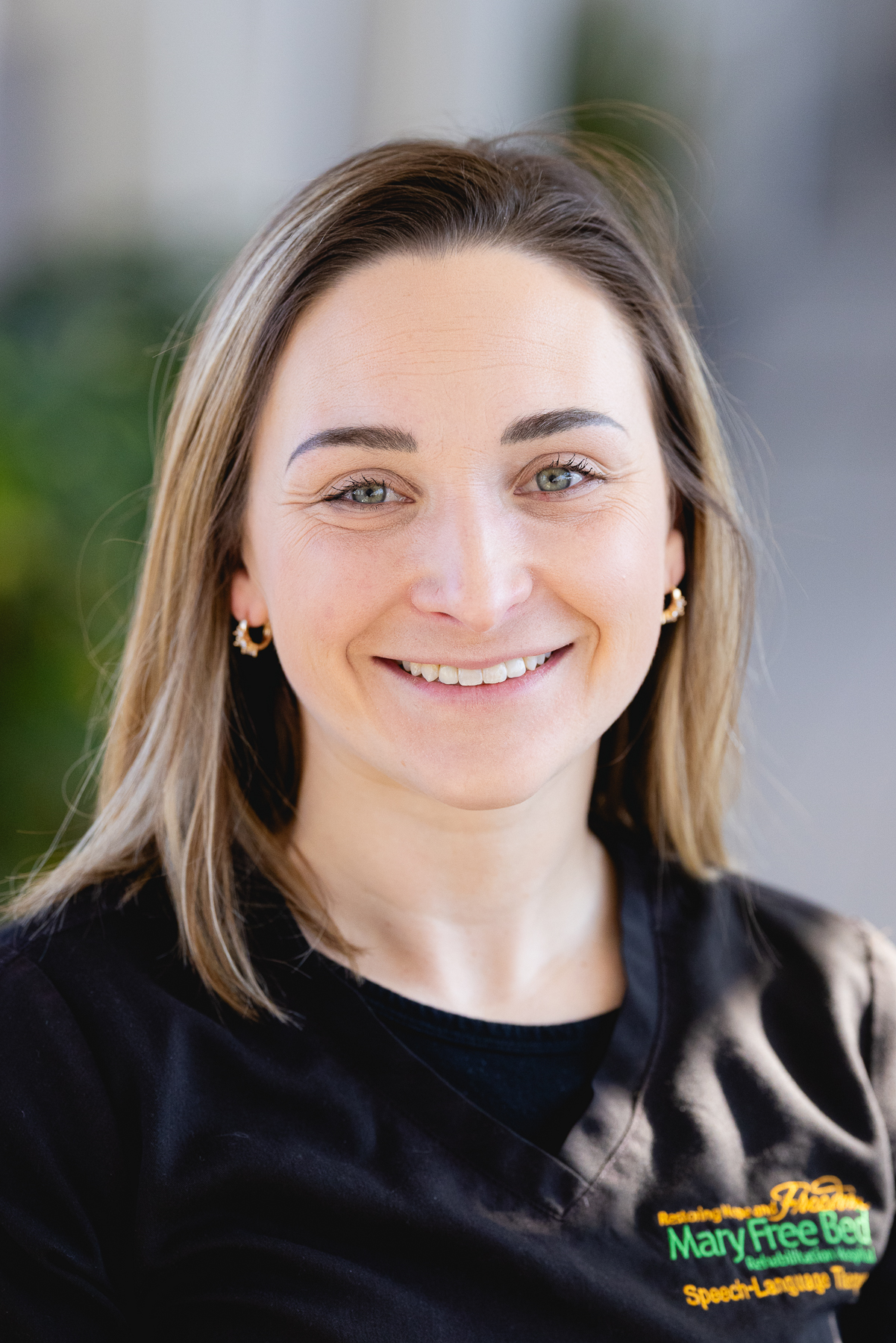
“The connection between the brain and the muscles that coordinate speech had been disrupted,” explained Mary Free Bed Kids speech-language pathologist Grace Kropiewnicki.
Amelia began a modified diet as her care team worked to strengthen her swallowing muscles and ensure safety. As her swallowing improved, therapy shifted toward helping Amelia rebuild speech and her speaking confidence.
The emotional side of speech therapy mattered just as much.
“She was embarrassed,” Grace said. “She was scared to speak because her voice didn’t sound like her anymore. That’s a lot for an 8-year-old. We took time to talk about that—to normalize it.”
Physical and Occupational Therapy: Learning to Trust Her Body Again
At Mary Free Bed Kids, interdisciplinary teams work closely together to tailor stroke rehabilitation around each patient’s life and goals, not just their diagnosis.
“You can feel the difference here,” said Mary Free Bed Kids physical therapist, Matthew Moraw. “The collaboration is immediate. It’s everywhere.”
Amelia’s physical and occupational therapists worked together to focus on restoring movement and balance, especially on Amelia’s affected side.
The progress came quickly, but not easily.
Today, Amelia continues to hit new milestones in outpatient physical therapy in Grand Rapids, working on single-leg balance, transitioning from kneeling to standing—movements that once felt impossible.
“All the things we’re doing now weren’t even options when she first arrived,” Matthew said.
Being F.A.S.T. Can Change Outcomes
Amelia’s care team said early recognition from the child’s teacher was key in both her treatment and recovery.
Christy Tease told FOX 17 that her decision to call 9-1-1 was instinctual.
“I think a lot of the staff members at Bauerwood would have acted in the same way. Especially in lower elementary, you wrap around kids; you love them before you educate them,” Christy said.
Stroke recovery looks different for every child. Goals are personal. Progress isn’t linear. And victories are counted in moments of all kinds. Amelia’s journey is a powerful reminder of the importance of early stroke recognition—and the life-changing impact of expert pediatric rehabilitation.
Because when kids are given the right care, at the right time, in the right place, remarkable things happen.
WATCH: Learn more about how to spot a stroke F.A.S.T. with the American Stroke Association.
About Pediatric Stroke Rehabilitation at Mary Free Bed Kids
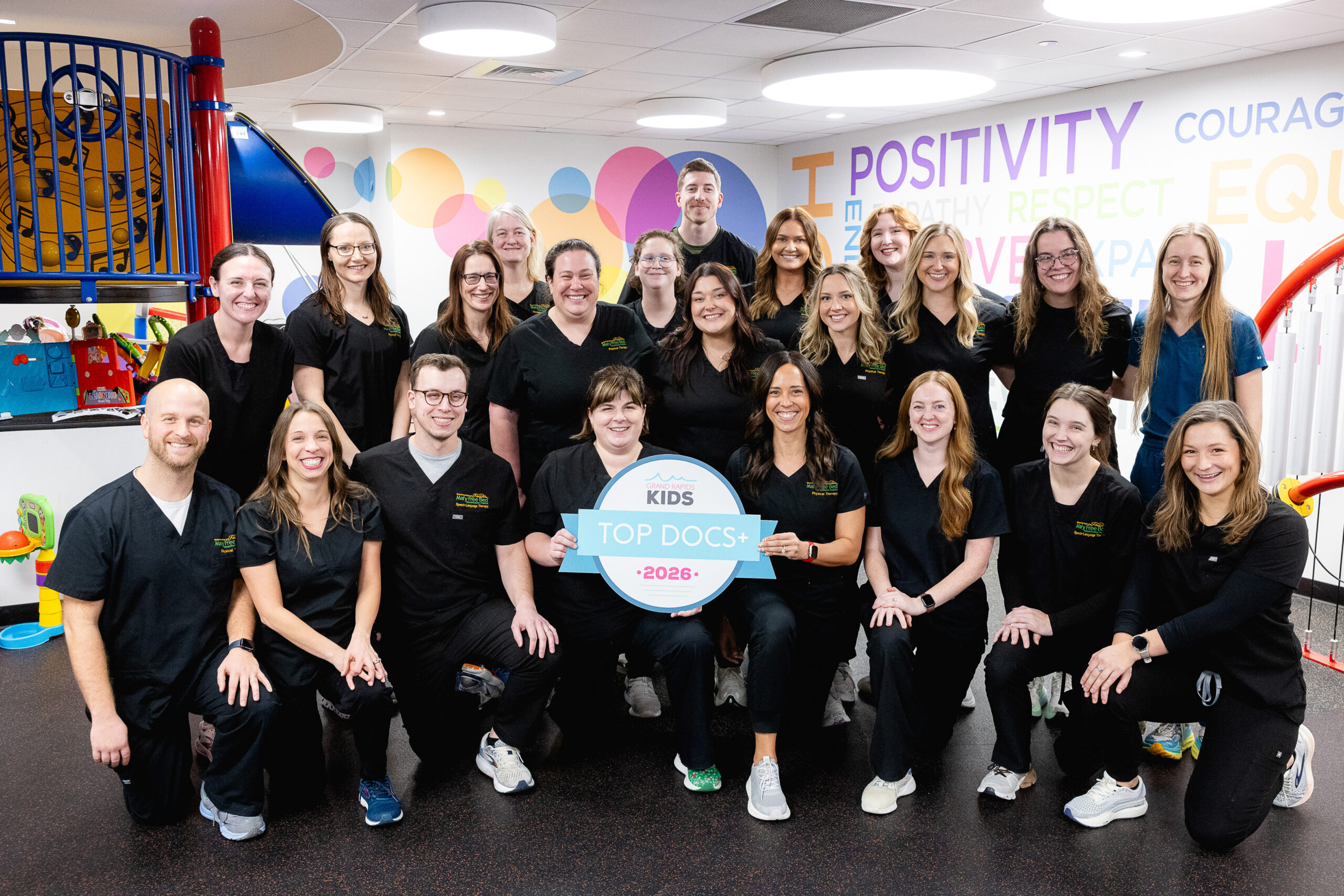
Mary Free Bed Rehabilitation Hospital offers one of the top stroke recovery programs in Michigan for both kids and adults. As a destination for inpatient pediatric rehabilitation, our comprehensive stroke program provides intensive therapy, advanced technology and expert care from a specialized team focused on helping each patient regain independence. With outcomes that exceed national benchmarks and satisfaction rates in the 94th percentile, Mary Free Bed delivers a proven path forward for survivors and their families. At Mary Free Bed, comeback stories like Amelia’s happen every day.
Learn more about stroke recovery at Mary Free Bed Kids.