Miguel Ortega loves boxing. Throughout his recovery from a severe traumatic brain injury, Miguel used the discipline and focus he found in the ring to craft his comeback at Mary Free Bed Rehabilitation Hospital in Grand Rapids, Michigan.
After a devastating car crash, the teenager sustained a severe traumatic brain injury and was clinically dead for eight minutes before paramedics revived him. What followed was the fight of his life: a long and uncertain road through pediatric brain injury recovery.
Like any great fighter, Miguel didn’t face it alone. With family, friends and therapists firmly in his corner, he began the slow climb back—one round, one milestone and one step at a time.
The Standing Eight: When Life Pauses After a Traumatic Brain Injury
Miguel sustained a severe traumatic brain injury (TBI) following a car crash in late October. He was clinically dead for eight minutes before paramedics revived him at the scene.
In boxing, the term “standing eight” refers to the moment when a boxer is knocked down and given eight seconds to regroup before deciding whether they can continue fighting.
For Miguel and his family, those first moments after the crash were their standing eight.
Miguel was transferred to Corewell Health Helen DeVos Children’s Hospital in Grand Rapids, Michigan, where he underwent lifesaving surgery.
“Not a lot of people get to live twice,” Miguel’s brother, Manny Jr., reflected.
Traumatic brain injuries occur when the brain experiences damage due to an external force, most commonly a car crash or accident involving sudden impact.
Brain injuries can affect the brain’s ability to:
• Understand the world through sensory input like sounds or touch
• Communicate verbally or respond to commands
• Interpret and control body movement
When someone, like Miguel, experiences a severe brain injury where blood flow is cut off to the brain, they often experience disorders of consciousness, medical conditions that impact awareness.
These include:
- Coma: People in comas cannot open their eyes or make voluntary gestures and do not experience sleep-wake cycles.
- Vegetative State: Eyes may open and close and sleep cycles return. People may make sounds or smile but still lack voluntary movement.
- Minimally Conscious State: Patients begin responding to simple commands, signaling yes or no and initiating voluntary movements.
For many teens recovering from a traumatic brain injury after a car crash, this early stage is just the beginning of a long rehabilitation journey.
Round One: Beginning Brain Injury Rehabilitation
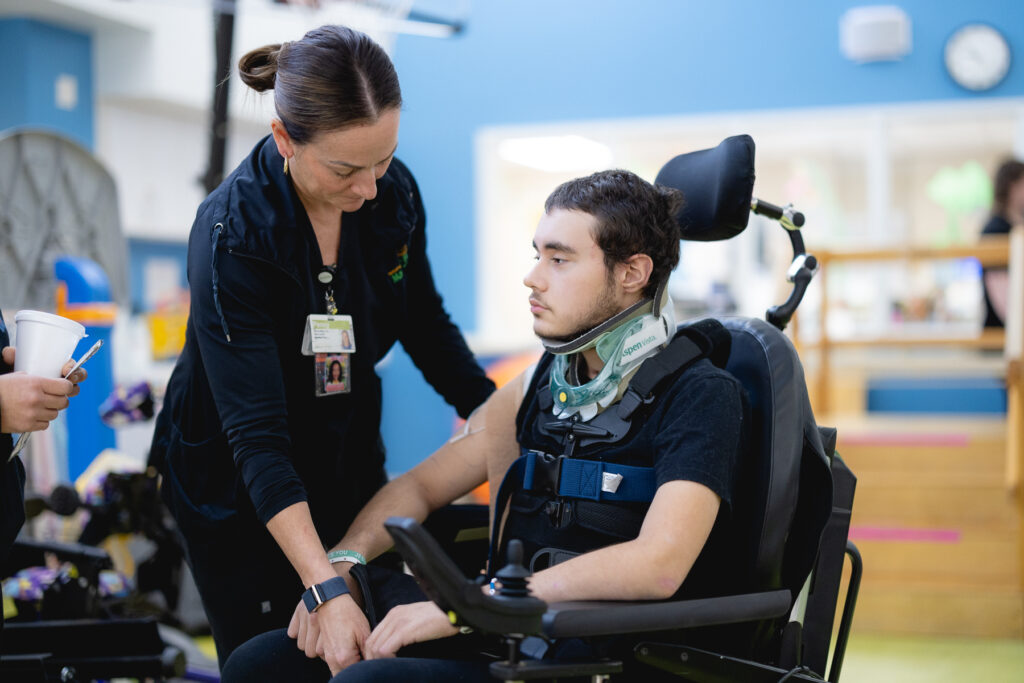
When Miguel arrived at the Mary Free Bed Kids Inpatient Pediatric Brain Injury Rehabilitation Program, he was still in a coma.
He wasn’t opening his eyes or following commands. He couldn’t sit up on his own or hold his head upright. A tracheostomy supported his breathing, and a feeding tube provided nutrition.
Boxing may look like a one-person sport, but no fighter enters the ring alone. Every boxer has a corner—the people who steady them between rounds, help them regroup and remind them they’re still in the fight.
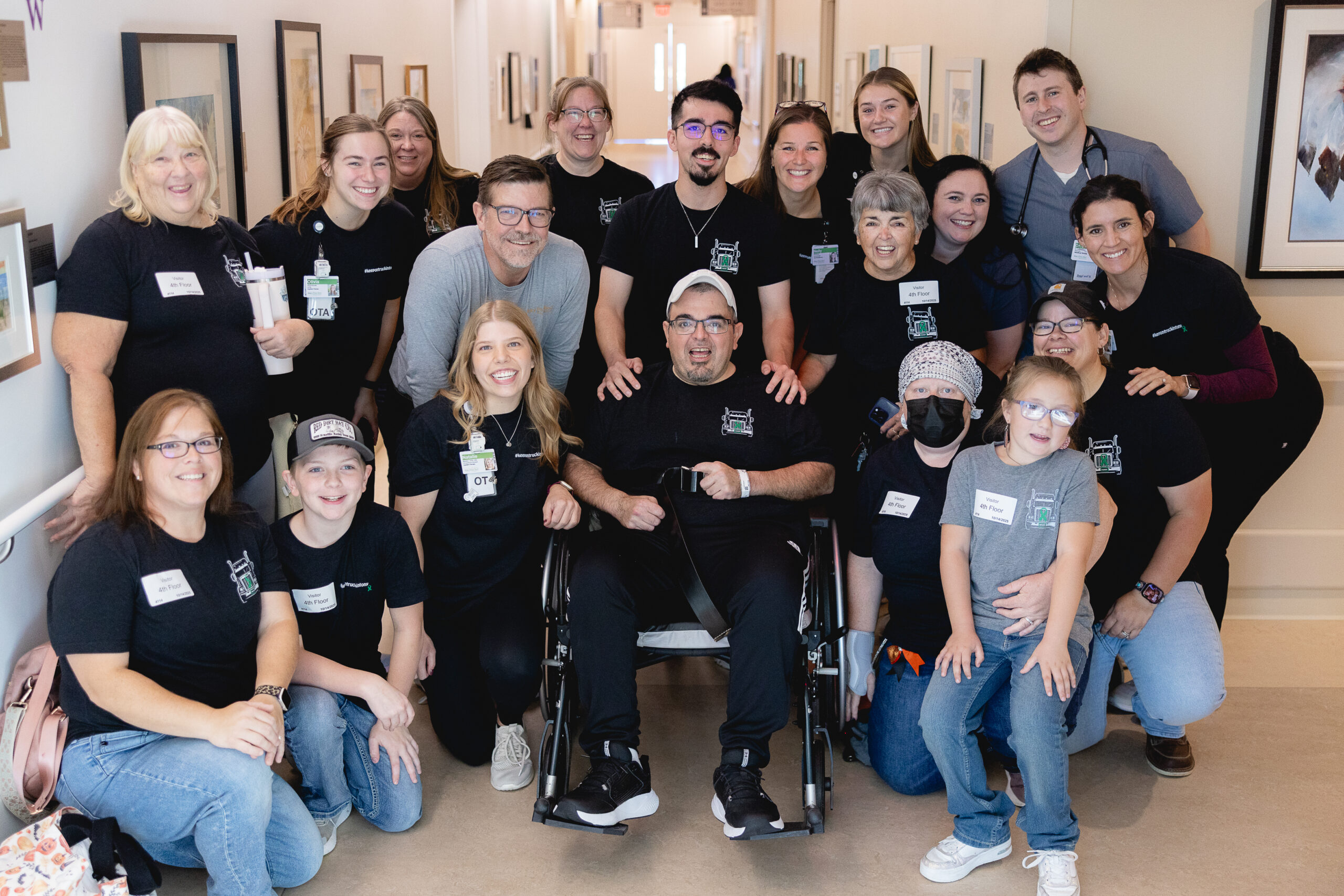
Miguel had a full corner behind him, including his dad, Manny; his mom, Maria; his brother, Manny Jr.; and his sister, Mia. His family attended every therapy session across multiple disciplines, including speech and physical therapy.
“The patients that have amazing recoveries are the ones who have great family support,” said pediatric occupational therapist Penny Adams.
But Miguel’s family didn’t just show up. They stepped in.
Manny Jr. quit his job so he could be present throughout Miguel’s recovery. With guidance from Miguel’s physical therapists, Manny learned how to help with exercises and mobility training.
“It was exciting,” Manny Jr. said. “Because then I was able to help my brother.”
On weekends, he continued the work—helping Miguel practice walking and keeping up with his therapy. The hands-on learning also helped prepare the family for Miguel’s transition home.
Support came from beyond the hospital, too. Cousins traveled from Puerto Rico and brought their priest with them. Together, the family gathered around Miguel’s bed to pray, believing he would pull through.
Speech therapist Kate Armstrong calls Miguel’s parents, “phenomenal humans.”
“They’re just such a huge blessing to the world,” she said.
Then came a moment the team will never forget.
Miguel and Manny Jr. were in the gym for occupational therapy when Penny asked Miguel to look for his brother. Slowly, Miguel turned his head and locked eyes with Manny.
Once.
Then again.
Four times in a row.
“I remember thinking, this kid is going to emerge,” Kate said. “He’s going to have communication skills.”
For everyone in Miguel’s corner—his family, community and rehabilitation team—it was the first sign that the comeback had truly begun.
Finding His Footing: Small Wins in Teen Brain Injury Recovery
Throughout Miguel’s recovery, the Ortega family formed close bonds with the care team at Mary Free Bed Kids.
“We’re so grateful for them. They’re amazing,” Maria said. “They’re family now.”
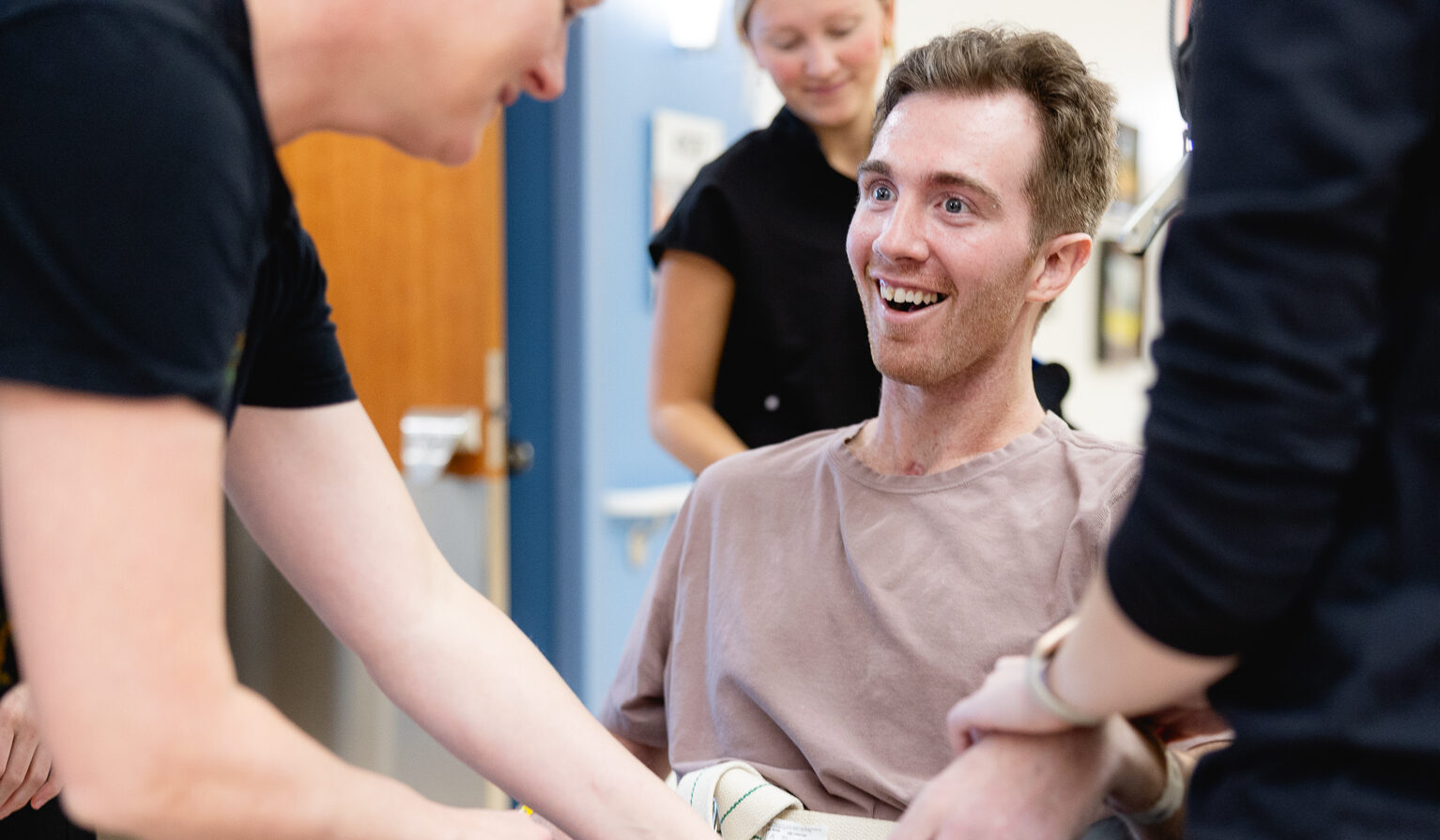
Step by step, Miguel began reclaiming his strength.
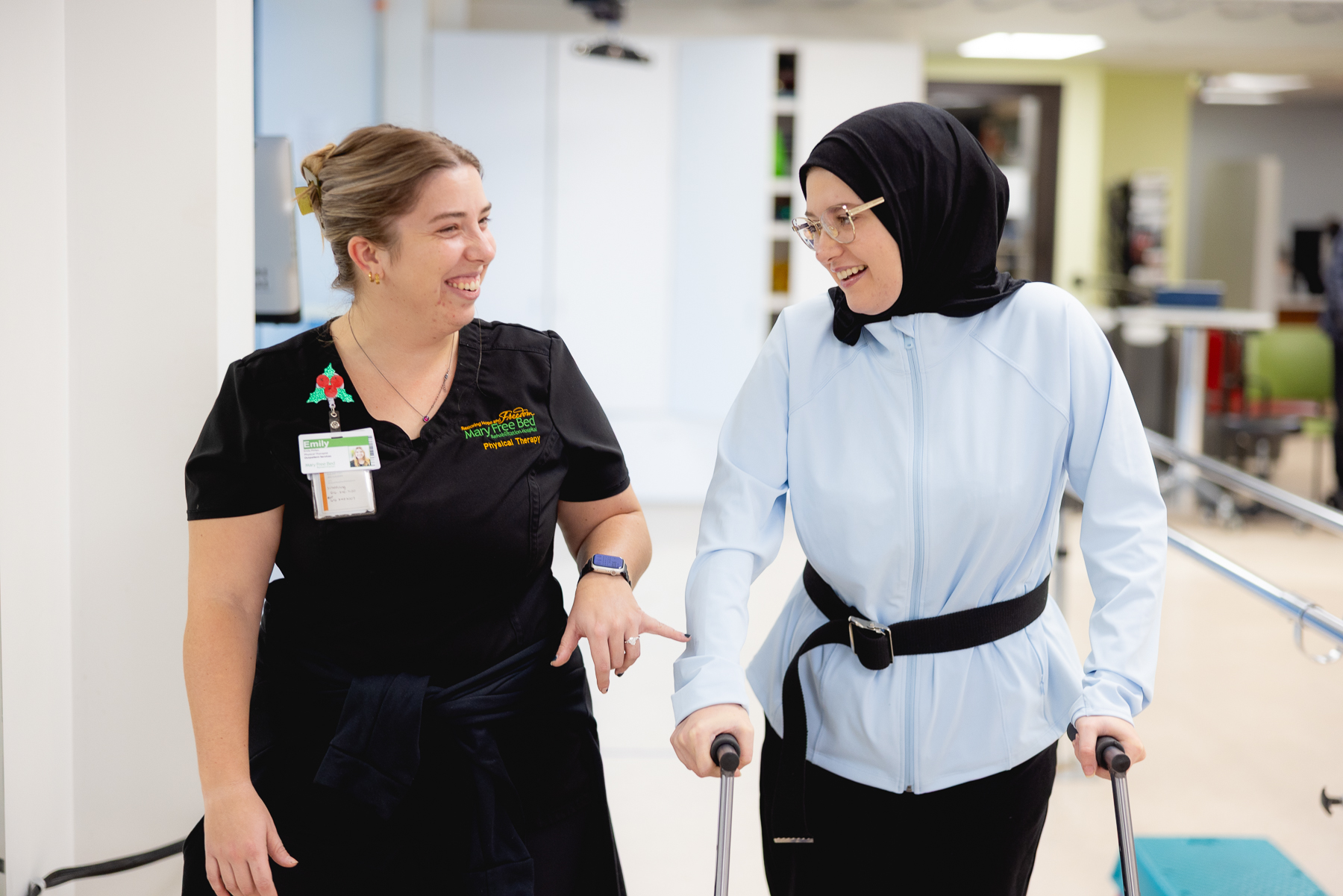
Working with speech therapy, he strengthened his airway enough to have his tracheostomy removed. In physical therapy, he slowly began moving again, carefully putting weight on the fractures he sustained in the crash.
He also became more alert—a huge milestone for someone recovering from a traumatic brain injury.
“Once you’re alert, your brain can learn new things and make new connections,” Penny explained.
Throughout Miguel’s recovery, his parents prayed constantly.
Miguel and his dad, Manny, are especially close. Prior to the car crash, Miguel and Manny spent countless afternoons in the garage together fixing cars. Miguel would always jump to help Manny around the house.
When Miguel first came to Mary Free Bed, Manny made a promise. He promised he would stop smoking if Miguel pulled through. As Miguel continued to progress, Manny cut down on cigarettes, motivated by the unshakable bond between father and son.
Maria had one specific wish. She prayed Miguel would begin speaking by her birthday.
Sure enough, Miguel spoke for the first time the day before.
“I was so happy when I heard him talking,” Maria remembered.
She calls his recovery a miracle, encouraging other families walking the same road:
“Do not lose hope.”
Strengthening the Comeback: Speech and Respiratory Therapy During Brain Injury Recovery
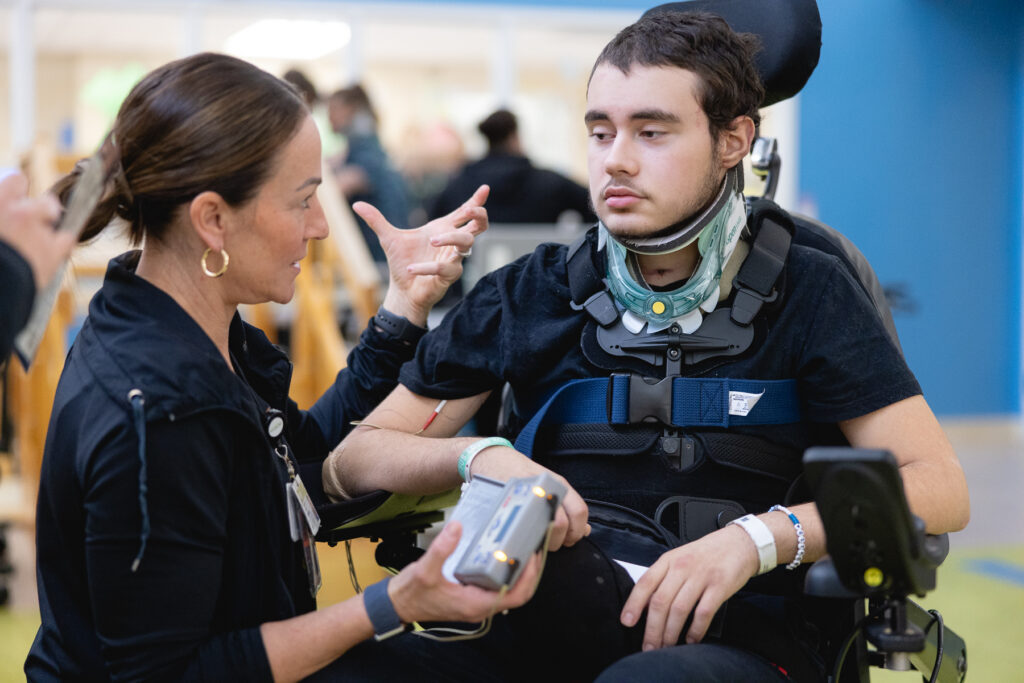
Speech therapy plays a key role in brain injury rehabilitation for teenagers, especially when injuries affect swallowing, communication and cognition.
When Miguel came to Mary Free Bed, he was breathing using a tracheostomy. The Respiratory Therapy Team worked closely with Miguel’s family, guiding them through the ins-and-outs of tracheostomy care.
As Miguel progressed, the Respiratory Therapy Team monitored him while he wore a speaking valve. Once Miguel was able to maintain a safe airway, the Respiratory Therapy Team collaborated with Kate to reintroduce liquids and solids into his diet.
Miguel fractured his jaw during the car crash, which meant he had to slowly relearn how to eat solid foods safely.
Kate guided him through the process by:
• Conducting a swallow study
• Using VitalStim Therapy to stimulate swallowing muscles
• Slowly reintroducing pureed foods
• Conducting a second swallow study to assess airway protection
• Transitioning Miguel to a controlled diet
Just in time for Thanksgiving, Miguel celebrated a major milestone: enjoying a home-cooked meal with his family.
Holiday Rounds: Recovery Doesn’t Pause for the Season
Miguel spent the holidays at Mary Free Bed Kids with a steady stream of classmates, family members and friends by his side.
His family traveled from North Dakota and Puerto Rico to support him.
At Mary Free Bed Kids, therapy teams intentionally incorporate the holiday season into rehabilitation.
On Thanksgiving, patients and families share a holiday meal while occupational therapists integrate cooking and meal preparation into therapy.
The Recreational Therapy Team also organizes festive outings, helping kids practice real-world skills like navigation, coordination and social interaction.
In December, Miguel joined other patients for a trip to LMCU Ballpark to see a Christmas lights show.
The outing carried extra meaning.
It was the first time Miguel had been in a car since the crash.
With his family and therapy team by his side, Miguel worked through his anxiety.
“Part of returning to life is getting back in a car and being able to do these things,” Penny explained.
By the end of the night, Miguel told Penny he’d had a good time.
“We spent Christmas here, with all the Mary Free Bed staff,” Maria said. “They were amazing.”
Training Like a Teen: Rehabilitation Built for Real Life
Brain injury recovery is complex—and brain injury rehabilitation for teenagers often looks different than recovery for adults.
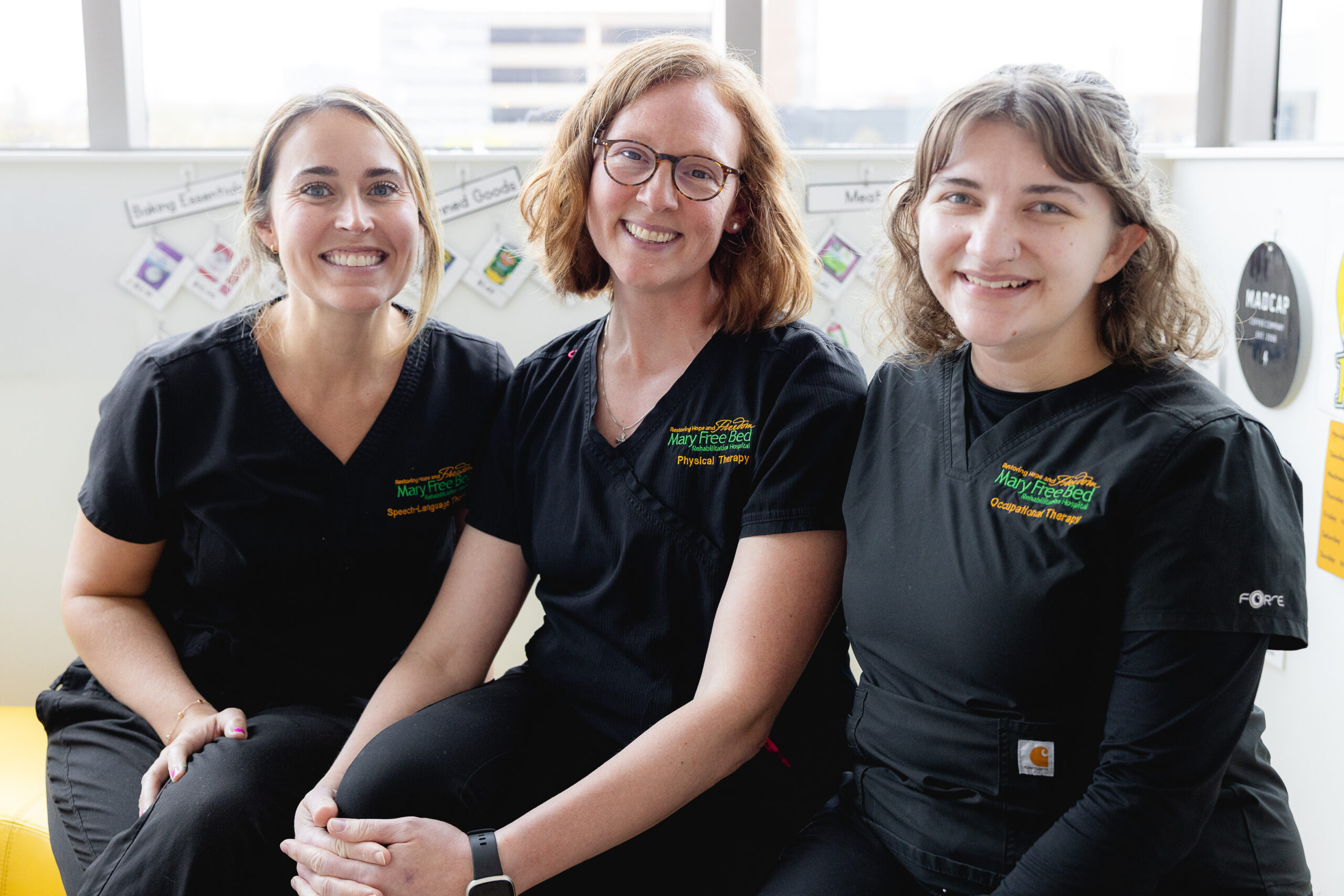
Miguel’s therapy team worked together to design a rehabilitation schedule that mirrored his real life.
“My team always tries to think, what’s important to a teenager?” Penny said.
While school is an important part of the Mary Free Bed Kids Inpatient Rehabilitation Program, Miguel was more motivated by returning to everyday life—spending time with friends, working on cars, seeing his girlfriend and getting back to the gym.
Fitness has always been a passion.
“I have no idea where it comes from,” Miguel said. “I just know I love it.”
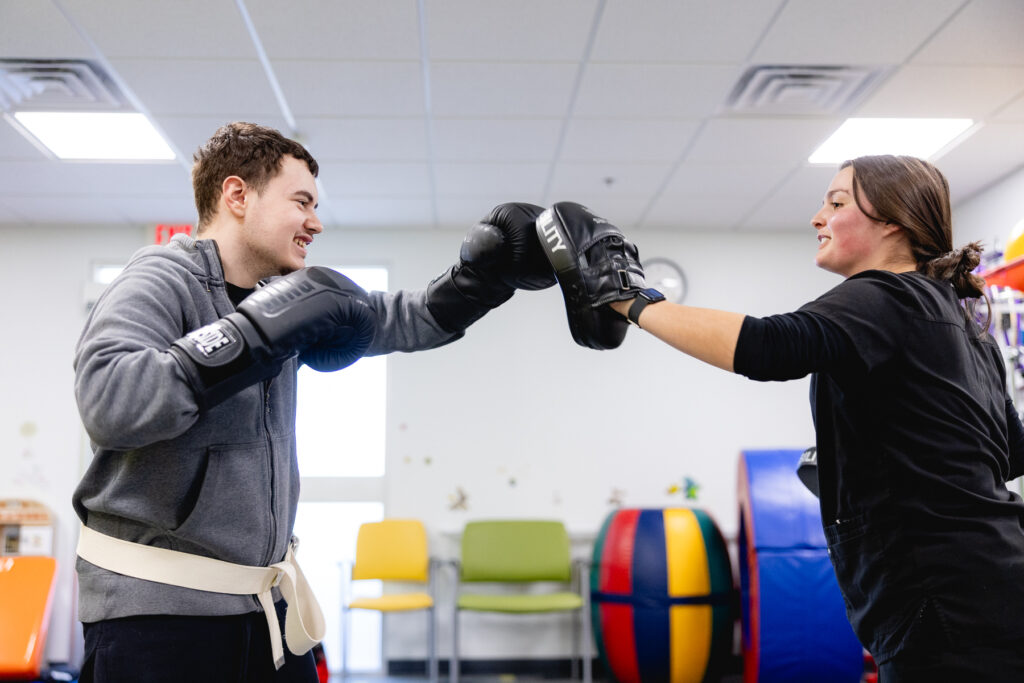
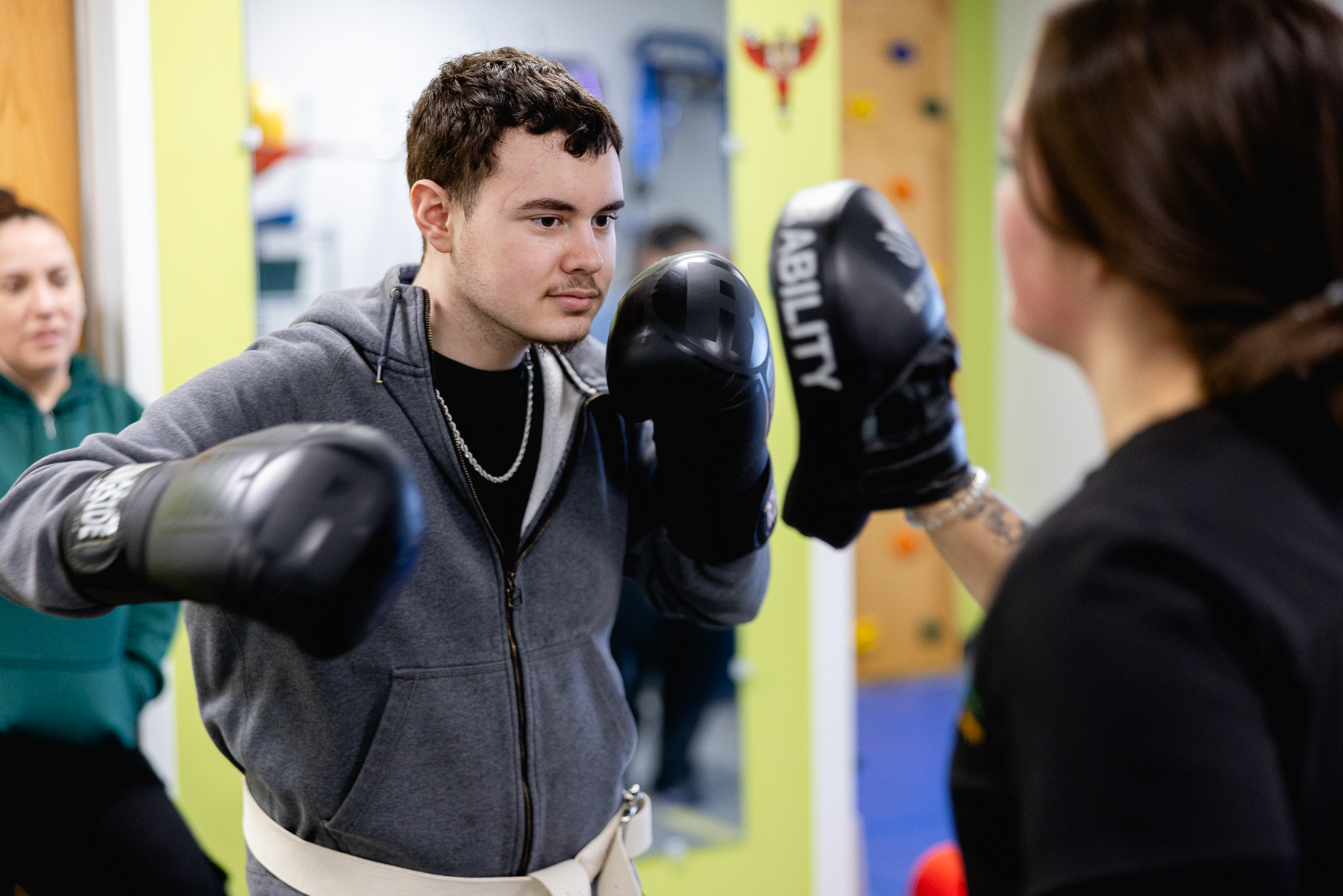
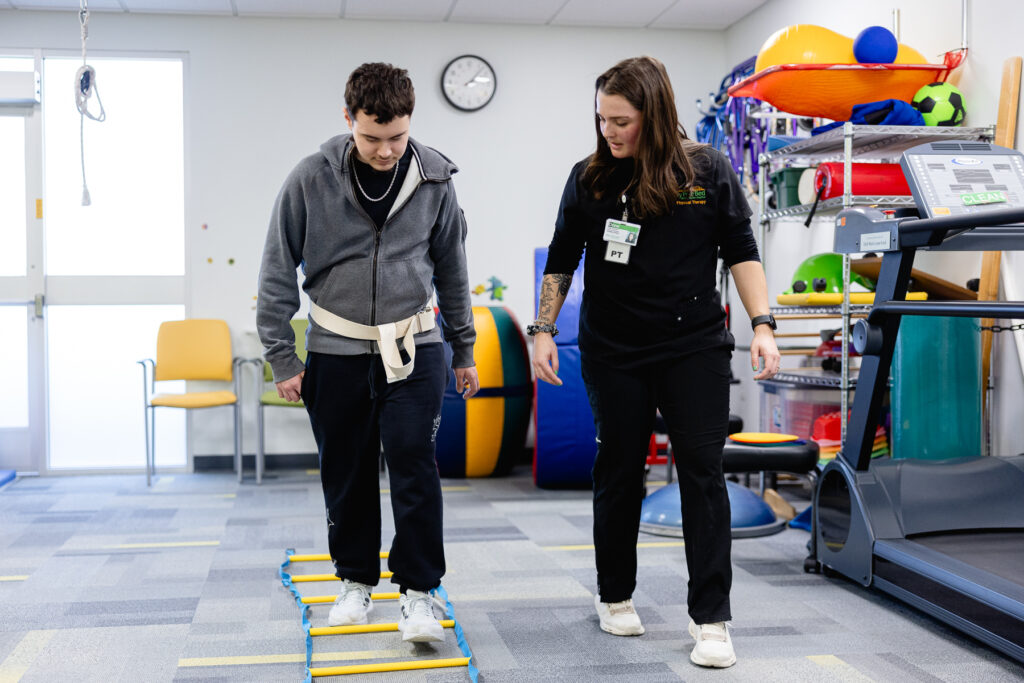
Strength training came naturally during physical therapy. When his therapists learned Miguel loved boxing, they incorporated boxing drills into therapy sessions.
His parents even brought his boxing gloves from home.
“He’s a strong boy. He’s always pushed himself,” Maria said.
Now back home, Miguel continues to train daily—walking on the treadmill and lifting weights.
Miguel is also an animal lover. He has a dog at home.
When he met Faith, an animal-assisted therapy dog, the two connected instantly and working with Faith continued to be a bright spot throughout his recovery.
“She’s a good girl,” Miguel said.
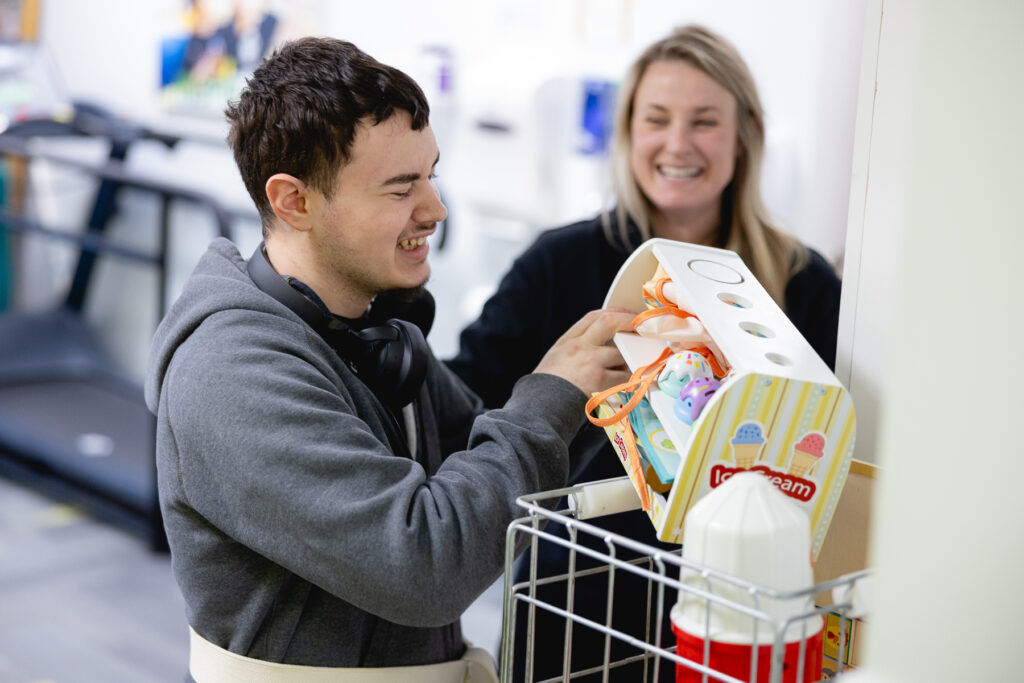
Miguel also practiced real-life cognitive tasks tied to his part-time job filling online orders at Walmart.
From a speech therapy perspective, the activity helped strengthen memory, reading and comprehension. By the time he graduated, Miguel could fill a ten-item order with speed and accuracy.
The Final Bell: Humor, Hope and Moving Forward
Ask anyone on Miguel’s therapy team and they’ll tell you the same thing: Miguel is a sweetheart. He’s got a bit of a Rocky Balboa vibe, with the moves to match. You’ll typically find him dressed in a hoodie, matching beanie and gray sweatpants. His mom, Maria, describes him as a happy and hard-working teenager, while his therapists say his laugh is “contagious.”
Best of all, he also doesn’t take himself too seriously.
Brain injury recovery can be frustrating. Many patients experience agitation during recovery as their brain heals.
But Miguel surprised everyone.
“He skipped the agitated stage,” Kate said. “Which everyone goes through. It’s wild to me.”
Instead, Miguel kept laughing.
“He could laugh at himself,” Penny said. “He could laugh at the situation.”
Maria noticed the same thing. “I thought he would be sad or in shock,” she said. “But he’s always laughing and happy.”
Now back home, Miguel continues to carry that optimism with him. Like a boxer rising after a standing eight, he’s back on his feet—stronger, supported and ready for the next round.
With his family by his side, he’s continuing his recovery journey closer to home with ongoing OT, PT and speech therapy at Mary Free Bed outpatient clinic in Holland, Michigan.
His advice to other patients facing recovery after a traumatic brain injury?
“Don’t give up.”
A Corner Full of Support: Family and Community in Brain Injury Rehabilitation
No boxer steps into the ring alone. Every fighter relies on the people in their corner, with voices offering guidance, hands helping them recover between rounds, and the faith that they can keep going.
The same is true for kids and teens recovering from a traumatic brain injury.
In pediatric rehabilitation, families aren’t just visitors. They’re part of the team. Parents, siblings and loved ones help reinforce therapy, celebrate small wins and bring the motivation that keeps kids pushing forward through long days of recovery.
Recovery after a traumatic brain injury is never a solo effort. It takes a full corner—family, community and clinicians working together—to help young patients like Miguel rise, rebuild and keep making progress.
About the Pediatric Brain Injury Rehabilitation Program at Mary Free Bed Kids
Brain injuries are extraordinarily complex. At Mary Free Bed, recovery combines compassionate, multidisciplinary care with meaningful milestones.
From regaining strength in physical therapy to rebuilding daily routines in occupational therapy and communication skills in speech therapy, the Mary Free Bed Kids Inpatient Brain Injury Rehabilitation Program helps teens rebuild their lives after traumatic brain injury.
Mary Free Bed is accredited by the Commission on Accreditation of Rehabilitation Facilities (CARF) and the Joint Commission, reflecting a commitment to the highest standards of rehabilitation care and patient safety.
If you or a loved one is seeking specialized brain injury rehabilitation for teens after a car crash or traumatic accident, learn more about the Mary Free Bed Kids program connect today.