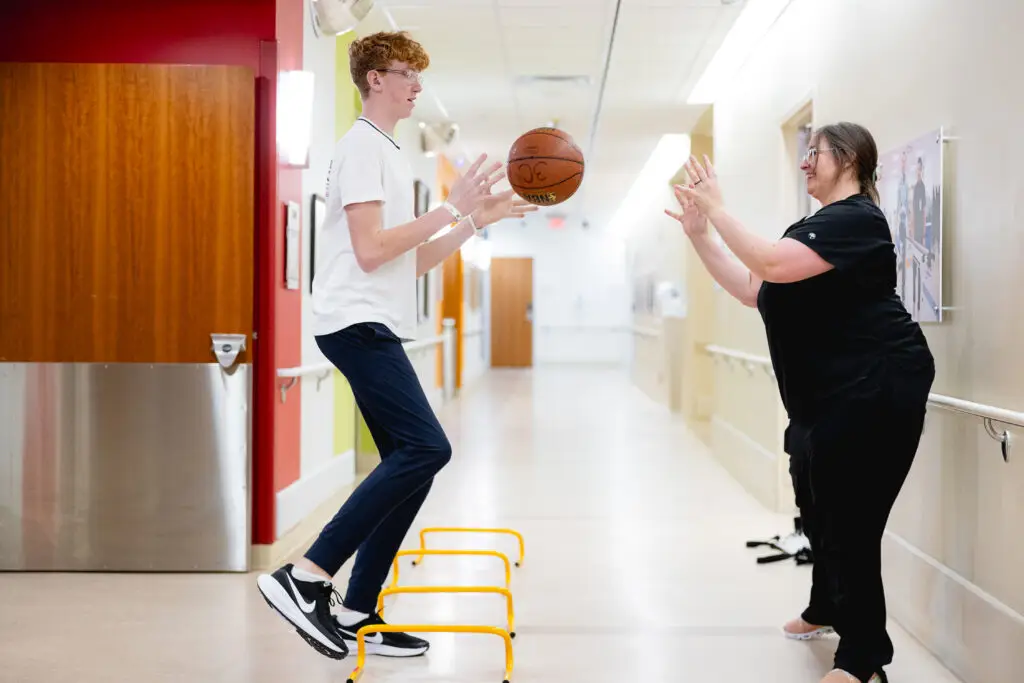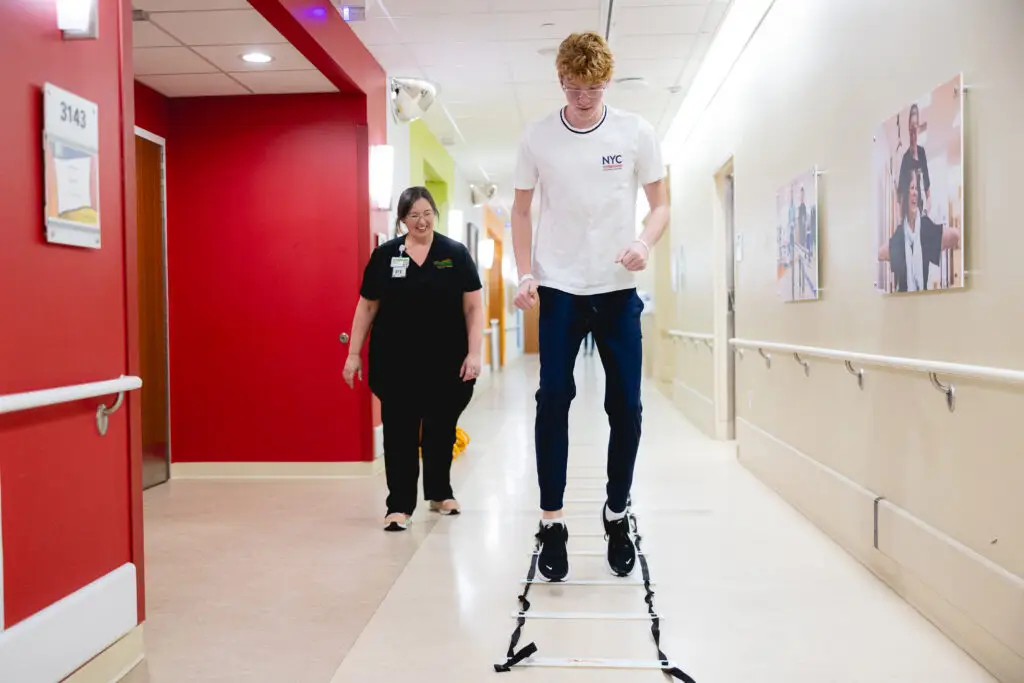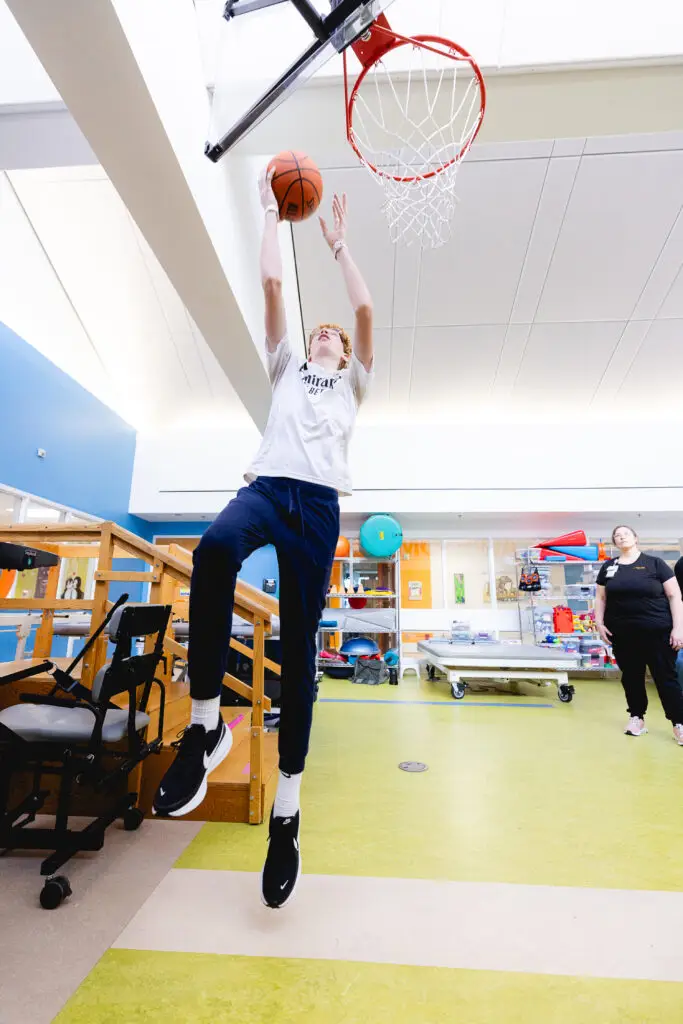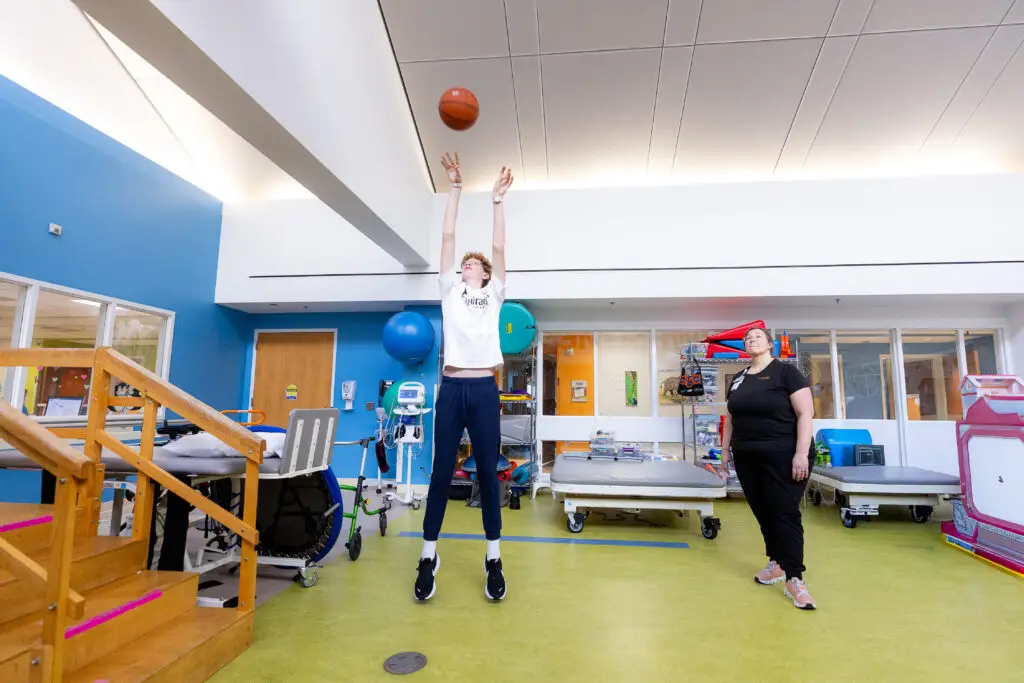
After a severe traumatic brain injury sustained in a Christmas Day skiing accident, northern Michigan teen Matthew Boven arrived at Mary Free Bed Kids facing the biggest challenge of his life. Less than a year later, he has returned to school full time, earned his driver’s license on schedule and achieved a strong score on the PSAT, milestones his family once could only hope for.
At 6 feet 6 inches tall and just 15 years old, Matthew is built to play his heart out. A three-sport athlete—basketball, soccer, baseball—he’s also been downhill skiing since he could stand. Safe to say that speed, adrenaline and winter are part of his DNA.
“Skiing is just a huge family activity for us,” said his mom, Erica. “Living in northern Michigan, you either embrace winter or it wins.”
“I love the speed,” Matthew added. “And the adrenaline.”
Every Christmas morning, the Boven family follows the same tradition: presents first, then the slopes. But last Christmas, what began as a day of celebration became a fight for recovery.
During one final run on a black diamond trail, Matthew lost control and suffered a severe traumatic brain injury. Witnesses alerted ski patrol, who found him unconscious but breathing. Erica credits the Schuss Mountain Ski Patrol and the medical teams who cared for him with helping save his life. After treatment at Munson Medical Center and Corewell Health Helen DeVos Children’s Hospital, Matthew spent several days in a medically induced coma before being transferred to Mary Free Bed Kids.
“I’ve seen tons of miracles and just amazing things along the way,” Erica said. “I still saw his passionate personality, even when he was coming out of sedation.”
At Mary Free Bed Kids, that determination became the foundation for the next stage of his recover
What Does Recovery Look Like After a Brain Injury?
A few days into the new year, Matthew was admitted to the Mary Free Bed Kids Pediatric Inpatient Brain Injury Program.
The crisis phase of his injury had passed. Rehabilitation was just beginning.
For many families, transferring from acute medical care to rehabilitation can feel overwhelming. The focus shifts from survival to recovery, and recovery often requires tremendous patience.
A traumatic brain injury can affect nearly every aspect of daily life, including memory, attention, communication, problem-solving, balance, emotional regulation and physical endurance.
Brain injury recovery can be a long process, and it rarely happens all at once. Instead, it comes through many small victories. Learning to remember a schedule. Following a sequence of directions. Managing fatigue. Regaining confidence. Returning to school. Reconnecting with friends. Participating in favorite activities again.
After a brain injury, these milestones represent extraordinary progress.
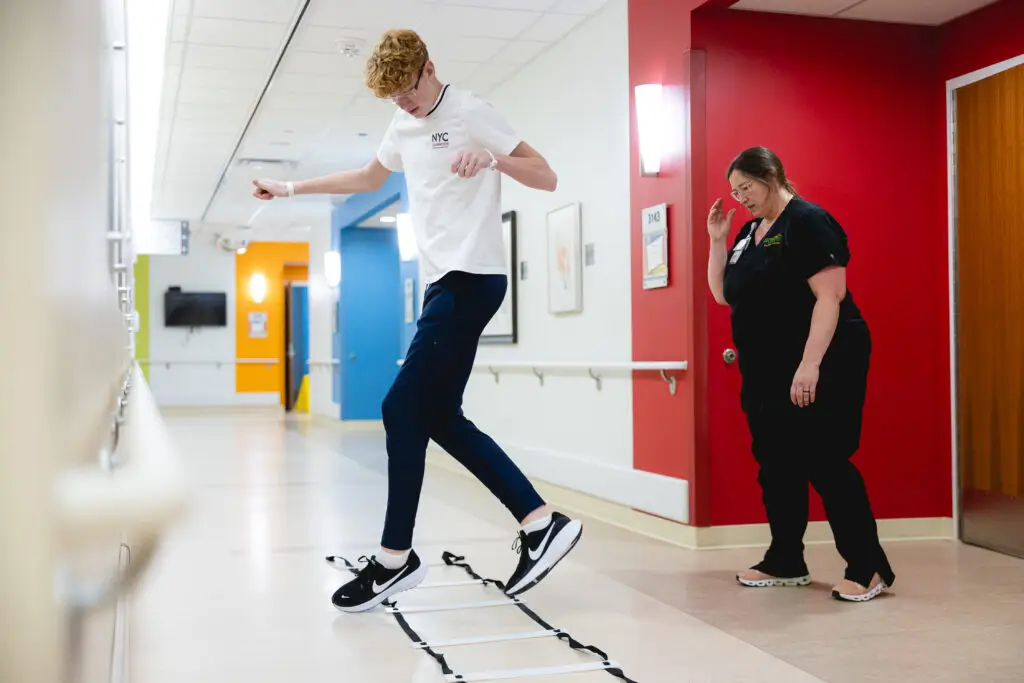
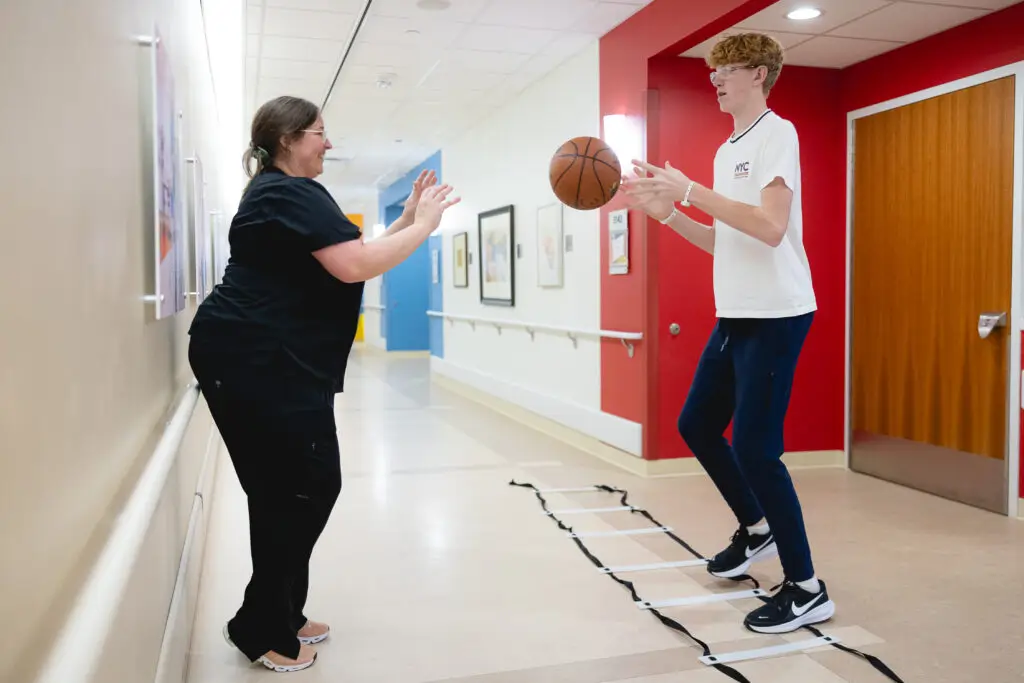
At Mary Free Bed Kids, rehabilitation is designed to help kids and teens rebuild the skills they need to return to their lives, their families and the activities they love most. For Matthew, that meant addressing challenges that weren’t always visible from the outside.
What Does Brain Injury Rehab Look Like for a Teenager?
Pediatric brain injury rehabilitation is never one-size-fits-all, especially for teenagers.
Teens are navigating academics, friendships, sports, independence and future goals. A brain injury can disrupt all of those areas at once. That’s why rehabilitation at Mary Free Bed Kids focuses on each child’s individual goals.
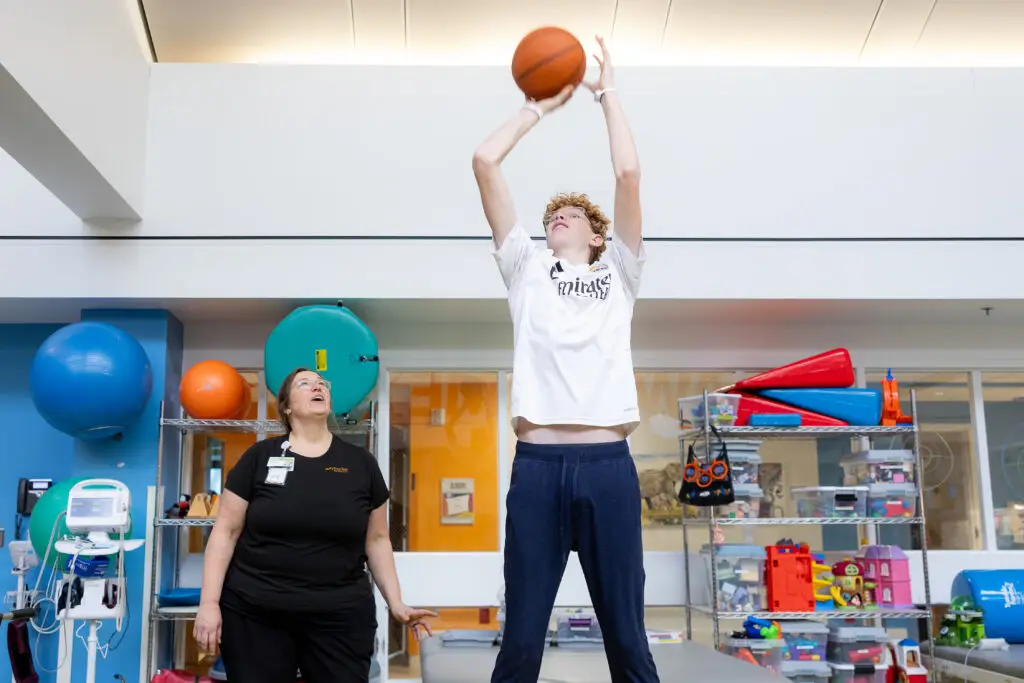
For Matthew, his years of athletic training helped provide a strong physical foundation. But some of the most difficult challenges involved memory and recall.
“The hardest part is cognitive ability,” Matthew said.
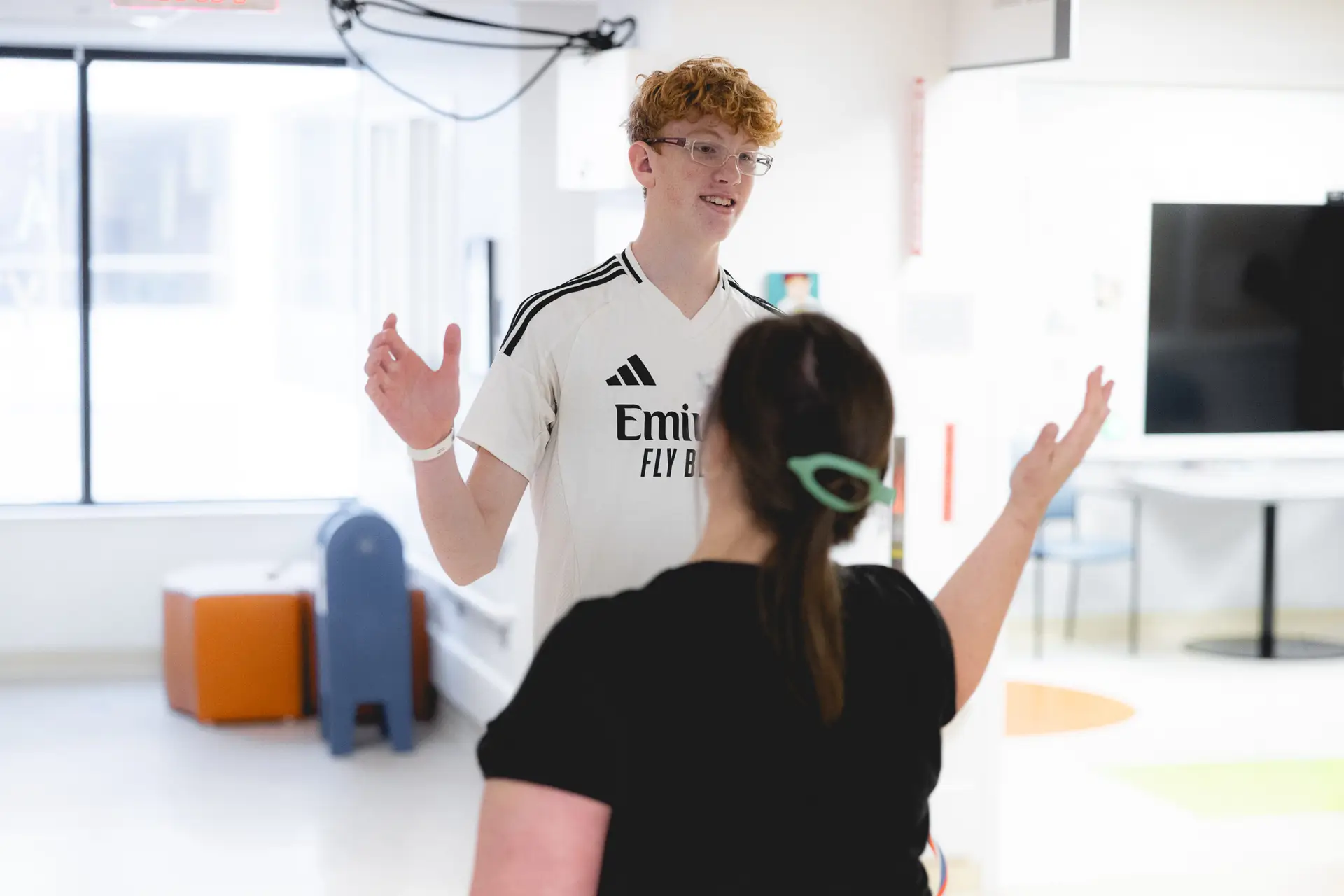
Mary Free Bed Kids speech-language pathologist Grace Kropiewnicki worked closely with Matthew to rebuild skills that are critical for everyday life and a successful return to school. Together, they worked on reading comprehension, memory, money management, organization and scheduling.
Matthew has always been a strong student. Adjusting to cognitive challenges wasn’t easy. Still, he approached rehabilitation the same way he approached sports: with perseverance, patience and determination.
Day after day, session after session, he continued moving forward. His therapists saw determination. His family saw resilience. And little by little, Matthew began seeing progress for himself. For Erica, the changes felt remarkable.
“I can’t express how miraculous his recovery has been so far,” she said.
How can Families be Involved in Brain Injury Rehabilitation for Teens?
One of the most important parts of pediatric rehabilitation is recognizing that recovery affects the entire family. Parents often become caregivers, advocates and cheerleaders all at once. Siblings experience changes, too. Daily routines are disrupted. Future plans may suddenly feel uncertain. That’s why family involvement is a central part of rehabilitation at Mary Free Bed Kids.
Therapists help families understand the long-term effects of brain injury. They also provide education about recovery and create strategies for success at home, school and in the community.
For teenagers like Matthew, rehabilitation is also about rebuilding confidence.
Each achievement, whether remembering a sequence of tasks, completing a school assignment or participating in a favorite activity, helps create momentum for the next step forward.
Staying Safe on the Slopes
The Boven family understands winter sports come with risks.
“We always wear helmets,” Erica said. “Matthew’s helmet saved his life.”
It’s a message they hope other families take seriously.
According to the Brain Injury Association of America, traumatic brain injuries account for nearly half of skiing and snowboarding injuries and are the leading cause of death in these sports. While helmets don’t eliminate risk entirely, experts agree they play a critical role in reducing the severity of head injuries. eliminate risk entirely, experts agree they play a critical role in reducing the severity of head injuries.
“You can break bones, and modern medicine can put them back together,” said Mary Free Bed physical therapist Chris Wise. “The brain is different. That’s why helmets are vital in risky activities.”
Whether you’re an experienced skier or heading to the slopes for the first time, simple safety precautions can make a meaningful difference.
Ski and Snowboard Safety Tips
- Always wear a properly fitted helmet.
- Respect trail conditions, warnings and closures.
- Ski within your abilities and avoid taking unnecessary risks.
- Stay aware of weather and visibility conditions.
- Know when to stop. Fatigue can affect judgment, reaction time and coordination.
- Model safe behavior for children and teens.
Taking these precautions can’t prevent every accident, but they can help reduce the risk of serious injury.
Little Steps Toward a Big Future
Today, Matthew’s back at school full-time. He earned his driver’s license on schedule and even achieved a strong score on the PSAT.
For Erica, those milestones represent far more than academic or personal accomplishments. They’re reminders of how much Matthew has overcome.
Matthew’s recovery didn’t happen overnight. It was built through hundreds of small victories that accumulated over time: remembering details, rebuilding endurance, regaining confidence and trusting himself again. Each step forward created momentum for the next.
Throughout the process, Matthew remained focused on the same goal.
“Just keep plugging along and keep making the little steps toward recovery,” he said.
His story is a powerful reminder that recovery is rarely one dramatic moment. More often, it’s a series of small milestones that add up to something extraordinary.
For the Boven family, Matthew’s journey is filled with moments they’ll never forget and blessings they’ll always celebrate.
“God is so good,” Erica said.
Specialized Brain Injury Rehabilitation for Children and Teens
Mary Free Bed Kids provides specialized pediatric brain injury rehabilitation for children and teens from across Michigan and beyond.
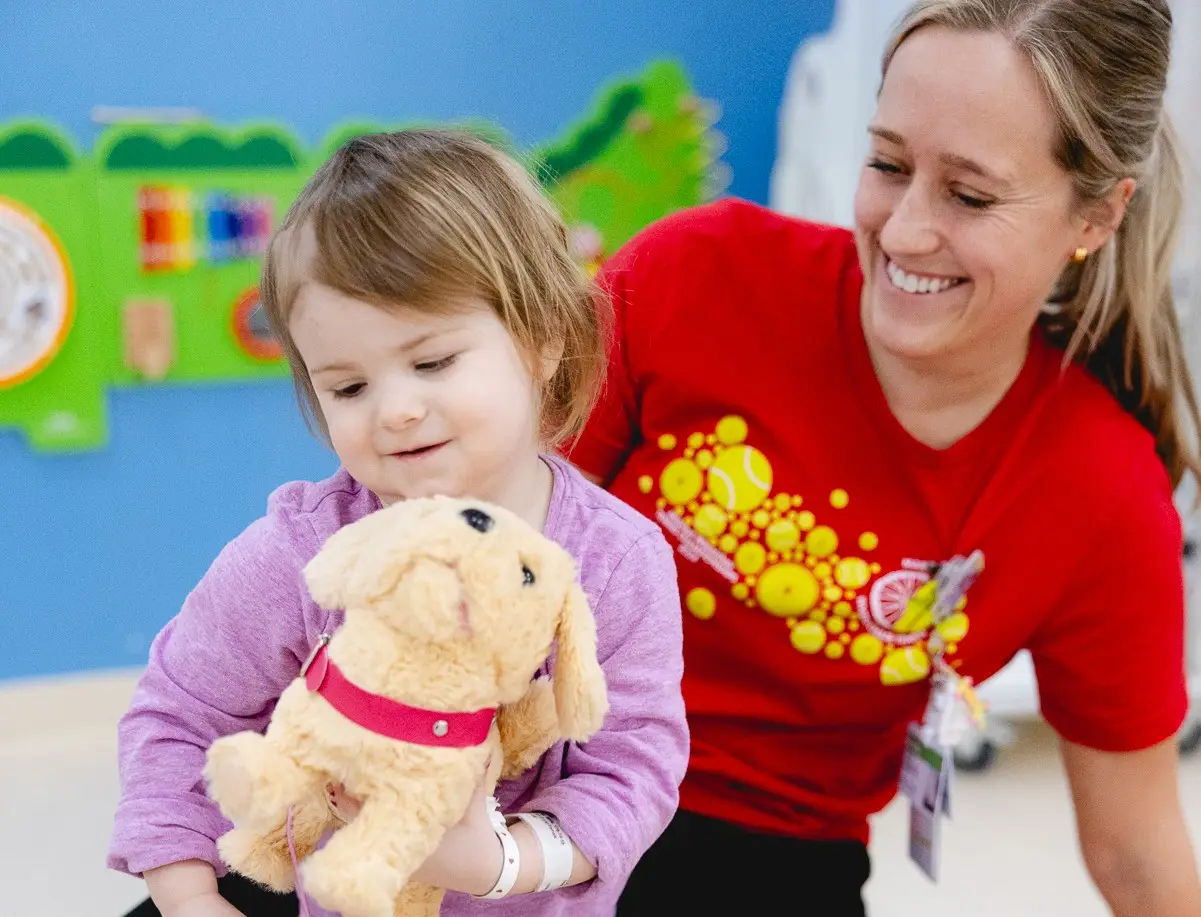
Our multidisciplinary team includes physicians, nurses, therapists, psychologists, educators and child life specialists who work together to help kids regain the skills and confidence they need to return to the activities that matter most.
From inpatient rehabilitation to outpatient therapy and long-term follow-up, care is personalized, family-centered and rooted in hope.
How Brain Injury Rehabilitation Helps Kids Heal
If your child has experienced a traumatic brain injury from sports, a fall, a car crash or another event, specialized rehabilitation can play a critical role in recovery.
At Mary Free Bed Kids, we help families understand what’s happening, what recovery may look like and what support is available today and in the future.
We partner with parents every step of the way, creating individualized rehabilitation plans that support each child’s goals, development and long-term independence.
When the path forward feels uncertain, expert guidance can help families find clarity, confidence and hope.
Learn more about our Kids Brain Injury Rehabilitation Program.
Ready to get started? Ask for Mary and request a referral.
About Mary Free Bed Kids
Mary Free Bed Kids provides comprehensive inpatient and outpatient care for kids and their families across West Michigan and beyond, including an innovative Orthotics & Prosthetics + Bionics Program. Opening in December 2026, the Mary Free Bed Kids Joan Secchia Children’s Rehabilitation Hospital, located on the Grand Rapids Campus, will offer a full continuum of pediatric rehabilitation services in a new, cutting‑edge facility designed exclusively for kids and their families. The hospital will be the first in Michigan dedicated exclusively to pediatric rehabilitation care.