March is Kidney Disease Awareness Month, a time to raise awareness about a condition that often progresses quietly until it dramatically alters daily life. For me, kidney disease is not just a diagnosis. It’s the chapter that reshaped my future, strengthened my resilience and ultimately led me to my role as a certified occupational therapy assistant at Mary Free Bed Rehabilitation Hospital.
Chronic kidney disease, or CKD, occurs when the kidneys gradually lose their ability to filter waste and excess fluid from the blood. According to national health data, millions of Americans are living with kidney disease, and many don’t know it.
Early symptoms of kidney disease include:
- Fatigue
- Swelling
- Changes in urination
- Difficulty concentrating
- Nausea
Since these symptoms are subtle, they can be easily dismissed. Without routine screening, kidney function can decline significantly before it’s detected.
As kidney function worsens, treatment may include dialysis, a life-sustaining therapy that filters waste and excess fluid from the bloodstream when the kidneys can no longer perform this essential role. Dialysis requires strict scheduling, dietary restrictions fluid limitations and continuous laboratory monitoring. It’s not simply a medical appointment. Dialysis becomes the framework around which daily life is organized.
One month before I went into kidney failure, I met my husband on Match.com. We were just beginning to build a relationship when my health rapidly declined. Within weeks, I started dialysis, and our lives quickly became intertwined with chronic illness in ways neither of us anticipated.
Dialysis demanded discipline and endurance. Treatment days left me physically depleted, and even routine activities required pacing and intentional rest. I monitored fluid intake carefully, followed dietary restrictions and tracked lab values closely. The fatigue went beyond ordinary tiredness. It was systemic and unrelenting. Chronic illness doesn’t only affect organ systems. It reshapes identity, independence and the ability to plan confidently for the future.
Four months after beginning dialysis, while hospitalized and navigating kidney failure, my husband proposed. In the midst of uncertainty, we chose commitment. We chose hope before we knew what the outcome would be. His proposal wasn’t just romantic. It was an act of faith during a time when so much felt fragile.
After two years of dialysis, our lives changed when he donated a kidney to me. Living kidney donation is a profound and selfless gift that requires extensive evaluation, surgical expertise and coordinated multidisciplinary care.
Kidney transplantation involves:
- Surgical precision
- Immunosuppressive medication management
- Lifelong monitoring to prevent rejection.
It’s an ongoing partnership between patients and medical teams.
Recovery was gradual. Frequent lab draws, medication adjustments and strict infection precautions became part of my routine. I had to learn how to protect my transplanted kidney while rebuilding strength and endurance. My energy returned over time. The mental and physical fog that accompanied dialysis began to lift, and I could imagine a future that was no longer defined by treatment schedules.
Three months after my transplant, we were married. Shortly thereafter, we were invited to share our story on The Today Show. What began as a private journey through kidney failure became an opportunity to advocate for organ donation and raise awareness about the impact of living donation. While the national spotlight was surreal, what mattered most was sharing hope with others facing similar circumstances.
When I was on dialysis, I didn’t have children. Pregnancy during kidney failure carries significant medical risk, and physically my body wasn’t strong enough. It was only after my transplant, once my kidney function stabilized and my health improved, that motherhood became possible.
With close monitoring from my transplant team, I safely carried pregnancies while protecting my transplanted kidney. My care required coordination between nephrology and obstetrics to safeguard both maternal health and graft function. Because of organ donation, expert medical oversight and diligent follow-up, my husband and I are now raising two beautiful children.
Motherhood is something I once feared might never happen. Today, it’s one of my greatest privileges and a daily reminder of the power of medical innovation, organ donation and hope.
That season of rebuilding transformed me. I relearned how to trust my body, monitor my energy and gradually resume meaningful routines. I experienced firsthand what it means to rebuild my identity after serious illness. Recovery wasn’t just physical. It was emotional, psychological and deeply personal.
Through that experience, I realized I wanted to become the clinician I once needed, someone who understood both the science of recovery and the emotional weight of vulnerability.
Occupational therapy aligned naturally with my experience because it focuses on restoring participation in meaningful life activities. It addresses strength and coordination while also rebuilding confidence, independence and dignity. It recognizes that healing isn’t measured solely by lab values or imaging results but by a person’s ability to return to the roles and routines that give life meaning.
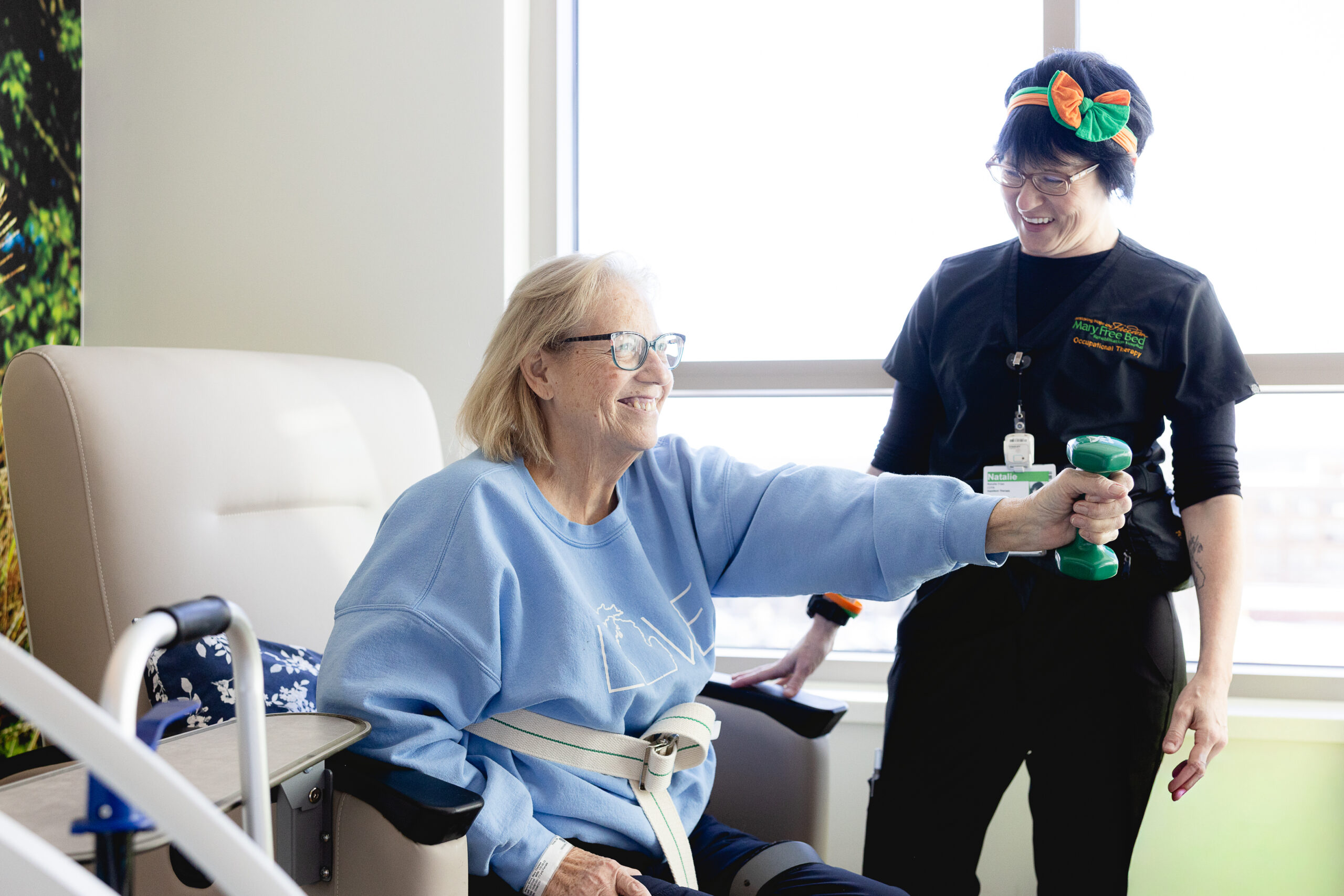
Today at Mary Free Bed Rehabilitation Hospital, I work with individuals recovering from neurological injuries, orthopedic procedures, complex medical diagnoses and chronic conditions. Mary Free Bed’s mission to restore hope and freedom through rehabilitation resonates deeply with me because I understand what it feels like to fight for both.
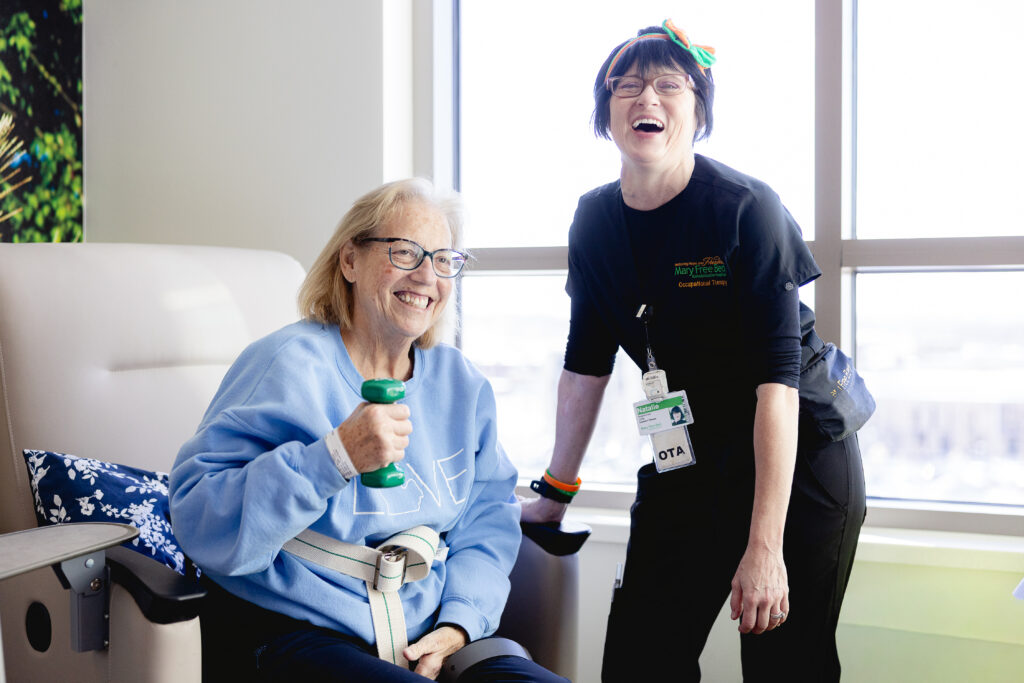
As a certified occupational therapy assistant, I implement evidence-based interventions designed to improve functional performance and promote safe engagement in daily routines. Treatment may include upper extremity strengthening, neuromuscular re-education, fine motor retraining, adaptive equipment instruction, energy conservation strategies and task-specific training for activities such as dressing, bathing, cooking and community mobility.
At Mary Free Bed, care is collaborative and patient-centered. Interdisciplinary teams work together to address not only impairments, but also the goals and roles that matter most to each individual. Returning home safely, preparing meals independently or regaining the ability to care for loved ones often guides the rehabilitation plan. Progress is measured not just in strength gains, but in restored confidence and renewed independence.
What may appear to be small milestones, such as buttoning a shirt independently, stepping safely into a shower or preparing a meal without assistance, represent significant progress toward autonomy and self-efficacy. These moments matter deeply because they signal reclaimed freedom.
Because I’ve been a patient, I approach each session with empathy and perspective. I understand lingering fatigue, fear of complications and the vulnerability that accompanies relying on others. That lived experience allows me to offer not only clinical skill but genuine compassion. It reminds me that behind every diagnosis is a person navigating change. Mary Free Bed’s commitment to whole-person rehabilitation mirrors the care that changed my life. The organization prioritizes education, partnership, innovation and evidence-based practice, empowering patients to actively participate in their recovery journey and reclaim independence.
If I could offer advice to someone facing kidney transplant, it would be this:
- Recovery is both physical and emotional.
- Follow your medical plan closely.
- Protect your transplant.
- Ask questions.
- Advocate for yourself.
- Surround yourself with support.
- Allow healing the time it requires.
Kidney Disease Awareness Month is an opportunity to emphasize early detection, routine screening and the life-changing impact of organ donation. It’s also a reminder that resilience can grow in uncertain seasons and that comprehensive rehabilitation plays a vital role in helping individuals return to meaningful life.
At Mary Free Bed, I’m honored to transform my lived experience into purposeful practice, walking alongside individuals as they rebuild strength, reclaim meaningful roles and move forward with renewed hope.
About Kidney Donation
Donating a kidney is a life-saving act. If you’re interested in donating a kidney, you can click here to learn more.
About Natalie
Natalie Frias is a certified occupational therapy assistant at Mary Free Bed Rehabilitation and a proud kidney transplant recipient. At Mary Free Bed, Natalie combines her clinical training and personal experience to support patients through recovery, while advocating for kidney disease awareness and the power of rehabilitation to restore independence and hope.